


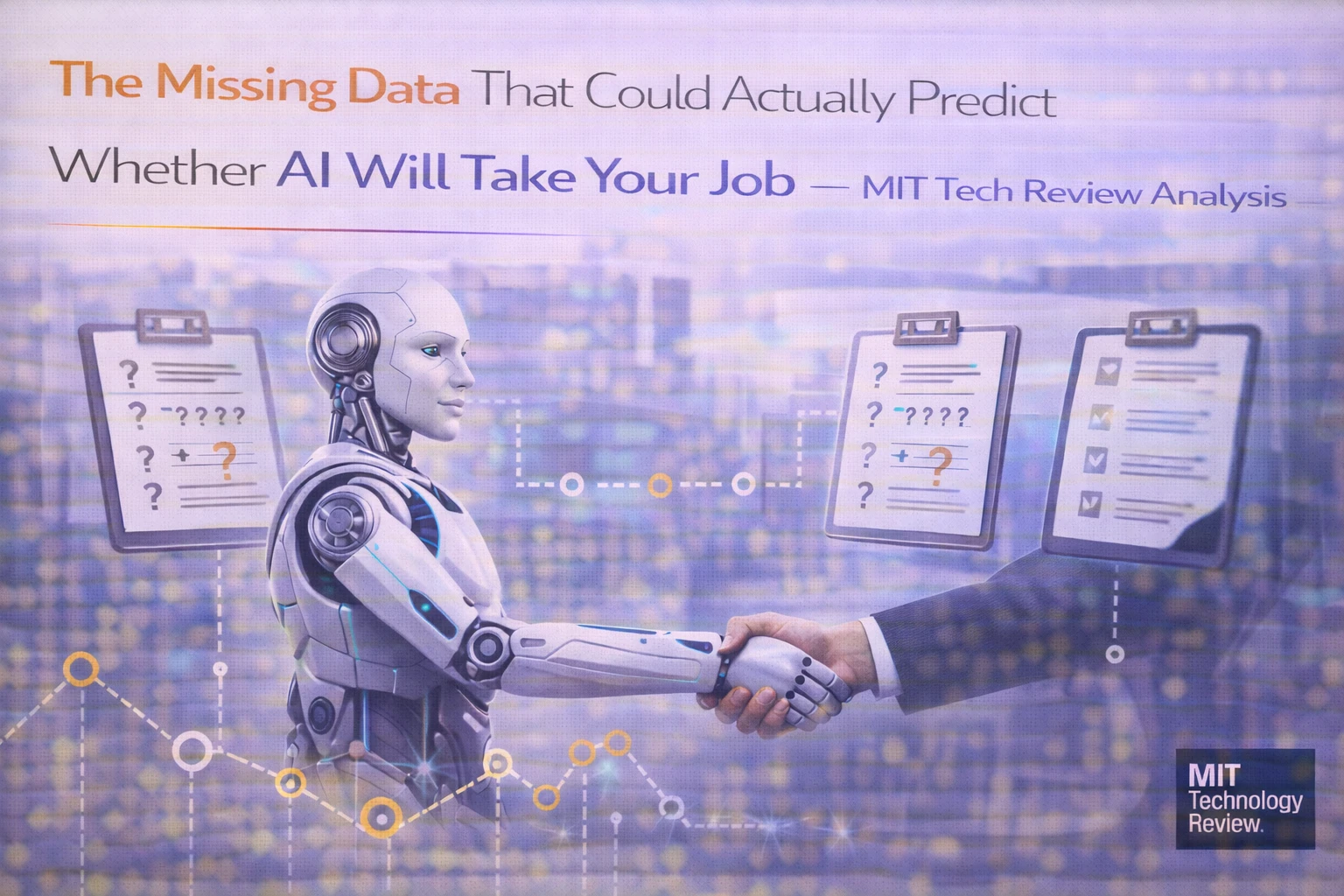
AI-ன் Jobs Impact-ஐ ஏன் யாராலும் உண்மையில் Predict செய்ய முடியவில்லை — Missing Variable
AI உங்கள் வேலையை பறிக்குமா? எல்லோரிடமும் ஒரு கருத்து இருக்கிறது, ஆனால் யாரிடமும் data இல்லை. MIT Technology Review (ஏப்ரல் 6, 2026) ஒரு provocative article-ல், AI மற்றும் employment பற்றிய முழு discourse-ம் incomplete data-ன் மீது கட்டப்பட்டுள்ளது என்று argue செய்கிறது — மற்றும் உண்மையில் answer கொடுக்கக்கூடிய ஒரே missing information-ஐ identify செய்கிறது.
University of Chicago-ன் economist Alex Imas: AI-ன் jobs impact predict செய்வதற்கான current tools "pretty abysmal" — economists missing data collect செய்ய "call to arms" விடுக்கிறார்.
Missing Price Elasticity of Demand
யாரிடமும் இல்லாத price elasticity of demand — AI automation காரணமாக ஒரு service-ன் cost குறையும்போது demand எப்படி மாறுகிறது என்ற அளவீடு.
ஏன் இது முக்கியம் — ஒரு simple example:
AI tutoring-ஐ 10 மடங்கு cheaper ஆக்கினால், மக்கள் 10 மடங்கு அதிக tutoring வாங்குவார்களா? ஆம் என்றால், tutors உண்மையில் MORE work பெறலாம்! Demand proportionally increase ஆகவில்லை என்றால், tutors displaced ஆகுவார்கள்.
Grocery items (cereal, milk) க்கு price elasticity data இருக்கிறது. ஆனால் tutors, web developers, dietitians, accountants போன்ற job categories-க்கு comparable data இல்லை.
Imas: "இந்த data-ஐ collect செய்ய Manhattan Project போன்ற effort தேவை."
"AI Exposure" மட்டும் Meaningless ஏன்?
பெரும்பாலான AI-jobs research "task exposure" measure செய்கிறது — ஒரு job-ன் எத்தனை tasks-ஐ AI செய்ய முடியும். OpenAI research (December 2025) 36% occupations AI use செய்வதாக estimate செய்தது. இது scary, ஆனால் Imas: "Exposure alone displacement predict செய்வதற்கு completely meaningless."
ஏனென்றால் displacement இரண்டு variables-ஐ depend செய்கிறது:
Variable 1: Consumer Demand Elasticity
Service cheaper ஆனால், மக்கள் அதிகம் வாங்குவார்களா?
- High elasticity: Tutoring, content creation, legal advice — 10x cheaper ஆனால் அதிகம் பயன்படுத்துவார்கள்
- Low elasticity: Tax preparation — taxes-ஐ இரண்டு முறை செய்ய மாட்டீர்கள், cheap ஆனாலும்
High-elasticity jobs AI automation-ஆல் grow ஆகலாம். Low-elasticity jobs risk-ல் உள்ளன.
Variable 2: Job Dimensionality
Job-ல் எத்தனை tasks இருக்கின்றன?
- Low-dimensional (குறைவான tasks): ஒரு core task automate ஆனால், job போயிடும். உதாரணம்: data entry operator
- High-dimensional (பல tasks): AI சில tasks automate செய்யும், ஆனால் மற்றவை இல்லை. உதாரணம்: doctor — diagnose, counsel, procedures, team manage
தற்போது என்ன Data இருக்கிறது?
OpenAI Research (December 2025)
- O*NET task catalogue-ஐ use செய்து AI "exposure" measure
- 36% occupations — tasks-ன் கால் பகுதிக்கு AI use
- 4% மட்டுமே — tasks-ன் முக்கால் பகுதிக்கு AI use
Anthropic Research (February-March 2026)
- 2 மில்லியன் Claude conversations analyze செய்யப்பட்டன
- Theoretical coverage (AI என்ன செய்ய முடியும்): Computer/math 94.3%, Business/finance 94.3%
- Observed coverage (AI என்ன செய்கிறது): Computer/math 37.2%, Business/finance 7.6%
- Theoretical-க்கும் observed-க்கும் உள்ள gap massive — AI இன்னும் நிறைய செய்ய முடியும், ஆனால் செய்யவில்லை
இந்தியாவுக்கு என்ன அர்த்தம்?
இந்தியாவின் tech workforce இந்த uncertainty-க்கு particularly exposed:
- IT Services (TCS, Infosys, Wipro, HCL) — கோடிக்கணக்கான workers high AI exposure tasks செய்கிறார்கள். Key question: cheaper AI-powered IT services global clients-ல் இருந்து MORE demand உருவாக்குமா?
- BPO Industry — Call center, back-office — classic low-dimensional job risk. AI 80% customer queries handle செய்தால், companies fewer agents hire செய்வார்களா அல்லது more queries handle செய்வார்களா?
- Freelancers — India world-ன் இரண்டாவது largest freelancer base. Content writing, web development, graphic design — highly AI-exposed. Elasticity determine செய்யும்: thrive or struggle?
- Education — Ed-tech (Byju's, Unacademy, PhysicsWallah) — AI tutoring 10x cheaper ஆனால், demand explode ஆகுமா (good) அல்லது human tutors தேவையில்லாமல் போகுமா?
உங்கள் வேலையை எப்படி Think செய்வது — Framework
| High Elasticity (demand grows) | Low Elasticity (demand flat) | |
|---|---|---|
| High Dimensional (பல tasks) | SAFEST — job grows, AI routine handle | MIXED — சில tasks automated |
| Low Dimensional (குறைவான tasks) | GROWING — demand அதிகம், AI differently work | MOST AT RISK — limited tasks, limited demand |
என்ன நடக்க வேண்டும்?
- Systematic price elasticity measurement — நூற்றுக்கணக்கான service categories-ல்
- Real-time tracking — AI adoption demand patterns-ஐ எப்படி மாற்றுகிறது
- Policy preparation — predict செய்ய முடியாத displacement-க்கு governments prepare செய்ய முடியாது
- Worker education — job-ன் எந்த dimensions AI-resistant என புரிந்துகொள்ள help
இந்த data இல்லாத வரை, AI மற்றும் jobs பற்றிய ஒவ்வொரு prediction-ம் — optimistic ஆக இருந்தாலும் pessimistic ஆக இருந்தாலும் — essentially guesswork. India, massive tech workforce மற்றும் rapidly growing AI adoption-உடன், இதை சரியாக புரிந்துகொள்வதில் மிகவும் அதிக stake வைத்திருக்கிறது.




கருத்துகள் (0)
Be the first to comment!