


What happened?
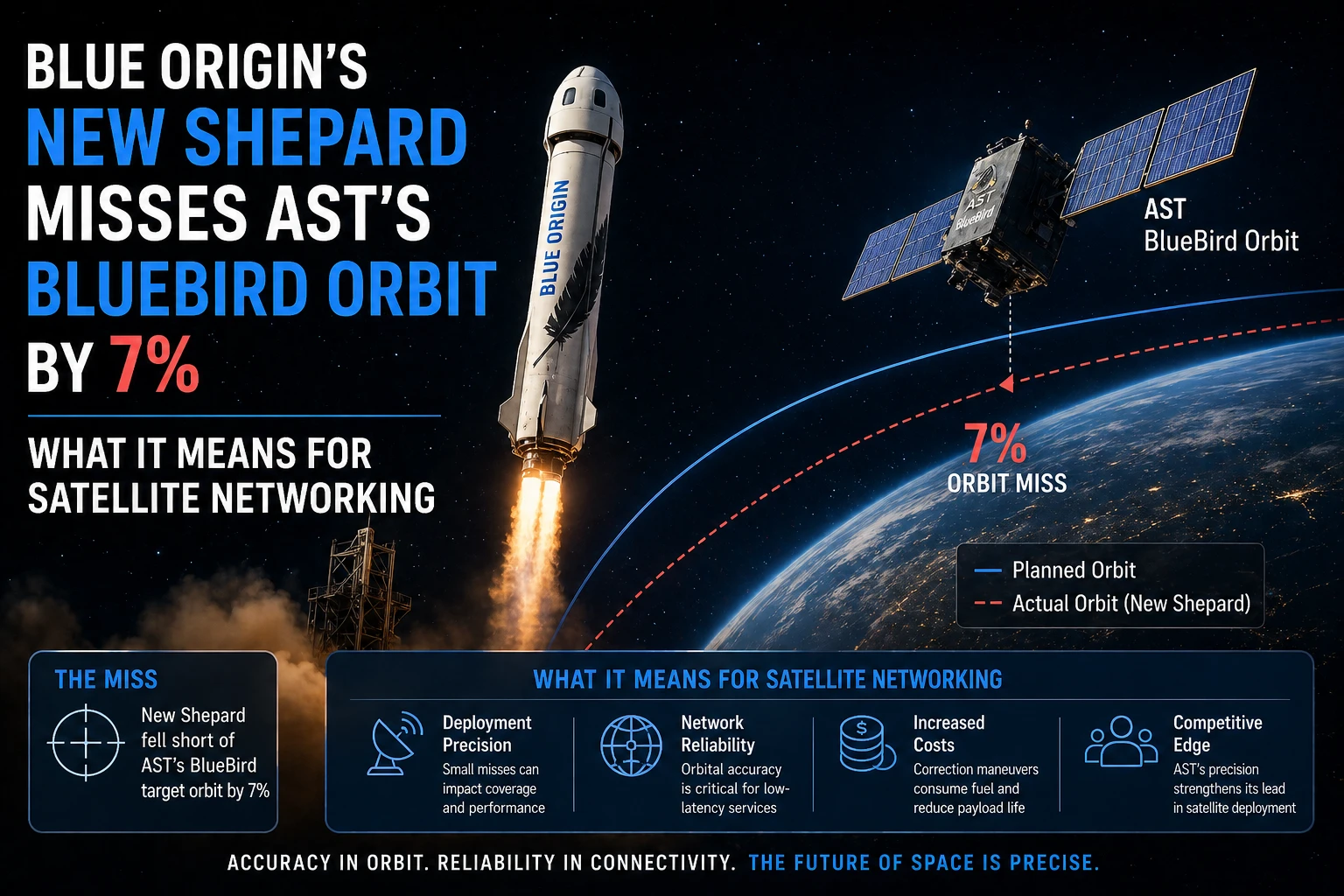
On Thursday, Blue Origin lifted off its New Shepard sub‑orbital vehicle from West Texas with AST’s BlueBird communications satellite aboard. The plan was to drop the payload into a low‑Earth orbit (LEO) that lines up with AST’s global mesh network. Instead, telemetry showed the satellite ended up about 7% lower than the intended 500 km altitude – roughly a 35 km shortfall.
Why the shortfall matters
Satellite networking firms like AST rely on precise orbital insertion to guarantee link‑budget calculations. A few kilometres off can mean reduced coverage, weaker signal strength, and extra fuel consumption for on‑board thrusters to correct the orbit. In AST’s case, the satellite will have to fire its propulsion system for weeks, cutting into its operational lifespan and delaying service roll‑out.
Technical breakdown
New Shepard uses a single‑stage, liquid‑hydrogen/liquid‑oxygen engine that is normally praised for its reusability. For this mission, the vehicle performed a “boost‑back” burn to achieve the desired orbital insertion. The telemetry data indicates a 0.8 second under‑burn during the final stage, which translates to the 7% altitude deficit.
AST’s BlueBird is a 150 kg LEO communications node equipped with electric propulsion – a Hall‑effect thruster that can raise the orbit by up to 50 km over six months. While the satellite can recover, the extra propellant usage reduces the time it can spend actively beaming data, impacting revenue forecasts.
Impact on India’s satellite ecosystem
India has seen a boom in low‑cost LEO constellations – companies like Skyroot, Pixxel and the upcoming Kawa Space are eyeing the same market. A failure like this highlights two things for Indian players:
- Launch reliability matters more than price. While a $2 million launch might look cheap, a missed orbit can cost twice as much in satellite lifespan and service delays.
- On‑board propulsion is becoming a must‑have. Indian startups are already integrating electric thrusters; this incident reinforces that trend.
What Indian customers should watch
If you’re a telecom operator or a data‑center provider planning to use AST’s network, expect a slight delay in service activation – possibly a month or two. AST has promised to compensate customers with extended service credits, but the real impact will be seen in the network’s early performance metrics.
TamilTech’s take
We think Blue Origin’s mishap is a wake‑up call for all launch providers. The era of “cheapest launch” is over; reliability and precise orbital delivery are the new currency. For Indian startups, the lesson is clear: partner with rockets that have a proven track record, even if the ticket price is a bit higher.
What’s next?
Blue Origin has pledged a thorough post‑flight analysis and will adjust its guidance software. AST plans a second launch in Q4 2026 with a newer version of BlueBird that includes a larger propellant tank, mitigating the risk of future under‑performance.
Keep an eye on ISRO’s upcoming SSLV missions – they promise sub‑orbital precision that could be a home‑grown alternative for Indian LEO networking firms.






Comments (0)
Be the first to comment!