


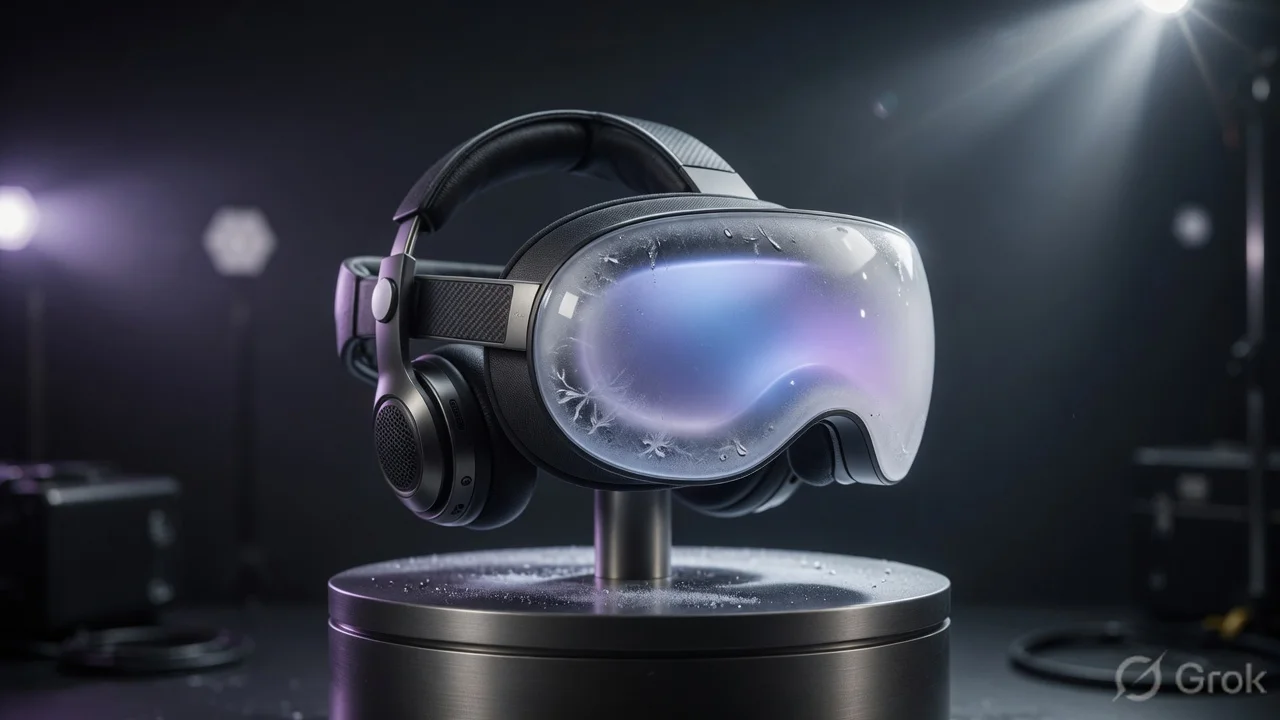
Hey crew, the buzz we’ve been hearing on X just turned official
Yesterday (March 20 2026) Apple finally slapped a price tag on its much‑talked‑about Vision Pro mixed‑reality headset for the Indian market. Reuters broke the story and the hashtag #VisionProIndia exploded across X within minutes. The headline number? About ₹2.3 lakh (≈ US$2,800). If you’ve been waiting for Apple to step into the Indian AR/VR arena, this announcement will set the tone for the next year of immersive tech.
Quick price breakdown (including GST and duties)
- Base price (GST included): ₹2,32,000
- Import duty (15 % on premium electronics): ₹33,000
- Customs handling & logistics: roughly ₹15,000
- Optional accessories (extra battery pack, premium silicone strap): ₹12,000‑₹18,000 each
All told, a fully‑kitted Vision Pro will sit at around ₹2.5 lakh. For reference, the latest iPhone 15 Pro Max tops out at roughly ₹1.2 lakh, so Apple’s headset is more than double the price of its flagship phone.
Why the price feels like a shock
According to the National Sample Survey Office, the median household income in India for 2025 was about ₹3.4 lakh per year. That means a Vision Pro would eat up nearly 70 % of an average family’s annual earnings. Apple defends the premium price by pointing to the headset’s flagship components:
- Dual 2 K micro‑OLED displays (one per eye) with a 120 Hz refresh rate.
- Custom Apple M2‑Pro chip – 16‑core CPU, 12‑core GPU, 16‑core Neural Engine.
- 12 GB unified memory and a 512 GB SSD (base configuration).
- 12‑camera array, eye‑tracking, hand‑gesture sensors and LiDAR for true spatial interaction.
- Spatial audio with dynamic head‑tracking and a battery that lasts about two hours of active use.
All those pieces are built in the United States, and the import duty plus the logistics chain adds a hefty surcharge when the product lands in India.
Specs at a glance (for the tech‑savvy reader)
| Feature | Details |
|---|---|
| Display | 2 K micro‑OLED per eye, 120 Hz refresh, 4 K combined pixel count |
| Processor | Apple M2‑Pro – 16‑core CPU, 12‑core GPU, 16‑core Neural Engine |
| Memory | 12 GB unified RAM, 512 GB SSD (base) |
| Tracking | 12‑camera array, eye‑tracking, hand‑gesture sensors, LiDAR |
| Audio | Spatial audio with dynamic head‑tracking |
| Battery | ≈ 2 hours active use, 30‑minute quick‑charge |
| Weight | ≈ 722 g with strap |
Vision OS lets you run iOS, iPadOS and macOS apps side‑by‑side, essentially turning the headset into a full‑blown “spatial computer”. Developers can ship Vision OS apps through the dedicated Vision App Store, which launched earlier this year.
What’s the conversation on X looking like?
The chatter splits into three camps:
- Early‑adopter techies: They love the specs, see Vision Pro as the next platform for immersive gaming, 3D design and remote collaboration, and are already hunting for pre‑order links.
- Price‑sensitive consumers: Many are rolling their eyes at the ₹2.3 lakh tag, pointing out that most Indian smartphones still cost half that amount.
- Industry analysts: They are debating whether the Indian market can sustain such a premium device, given the limited content ecosystem and the high price point.
Potential use‑cases that could justify the cost
- Enterprise remote‑collaboration: Companies like Infosys and TCS are piloting Vision Pro for multi‑user design reviews, virtual client meetings and 3D data visualisation.
- Education & training: Engineering colleges in Bengaluru and Hyderabad are experimenting with VR labs for mechanical design, medical anatomy and safety simulations.
- Creative production: Mumbai‑based film studios are testing Vision Pro for pre‑visualisation, virtual set design and story‑boarding.
- High‑end gaming: Indian gamers are already talking about titles like “Resident Evil 4 VR” and “Minecraft Spatial” as marquee experiences.
If you belong to any of these segments, the headset could become a productivity booster that pays for itself over time.
Import duties, GST and the Indian tax landscape
Apple’s statement notes a 15 % import duty on premium electronics. The Indian customs classification for AR/VR headsets puts them in the same HS‑code as high‑end display devices, which attracts a higher duty than standard smartphones (10 %). On top of that, a customs handling fee of roughly ₹5,000‑₹10,000 per shipment applies, and GST (18 %) is levied on the cleared value.
What does this mean for the AR/VR ecosystem in India?
Historically, India’s AR/VR market has been dominated by inexpensive Chinese headsets (₹30,000‑₹45,000). Apple’s entry creates a premium tier that could push content creators to raise the quality of experiences. In the long run we may see a trickle‑down effect where Indian developers first build for Vision OS and later port their apps to cheaper platforms, enriching the overall ecosystem.
Challenges and concerns
- Affordability: Even with financing options from Apple’s partner banks, the monthly EMI will be above ₹15,000, keeping the device out of reach for most consumers.
- Content scarcity: As of March 2026 Vision OS hosts fewer than 150 native apps, most of them from the US. Indian developers have a huge opportunity—but also a massive workload.
- Supply‑chain bottlenecks: The headset’s custom optics and Apple‑made silicon are produced in the US, meaning Indian inventory may face delays, especially during festive‑season spikes.
- Health & safety: Extended mixed‑reality sessions can cause eye strain. Apple recommends a 30‑minute break every hour.
Financing and bundle offers
Apple India has teamed up with HDFC Bank to roll out a 12‑month EMI plan with 0 % interest for customers with a credit score above 750. Telecom operators like JioFiber are also bundling Vision Pro with a 5G broadband plan, offering a modest ₹10,000 discount on the headset (excluding import duties).
Future roadmap – what’s next from Apple?
Apple hinted at a “Vision Pro 2” slated for late 2027, promising a lighter form factor (≈ 600 g) and a lower price target (≈ ₹1.9 lakh). Additionally, Apple announced a developer grant of $500,000 for Indian studios that create Vision OS apps with at least 10 % Tamil language support.
Bottom line for TamilTech readers
If you’re a tech‑savvy early adopter with a decent disposable income, Vision Pro is a glimpse of the future—a spatial computer that can replace your laptop for design work, act as a conference‑room for remote meetings, and serve as a high‑end gaming console. If you’re price‑sensitive, the headset remains a niche product; you may want to wait for the second‑generation version or explore cheaper Chinese alternatives.
Stay tuned to TamilTech for our hands‑on review, financing tips and a curated list of must‑try Indian Vision OS apps as they roll out.
Quick FAQ
- When will Vision Pro be available in India? Pre‑orders start on April 5 2026, with the first shipments arriving in early May.
- What is the final landed cost after duties and taxes? Base price ₹2,32,000 (incl. GST). Adding 15 % import duty, customs handling and optional accessories pushes it to roughly ₹2.5 lakh.
- Does it support Indian languages? Yes – the OS can be switched to Hindi, Tamil, Bengali, Telugu, Marathi, Kannada, Malayalam or Gujarati.
- Are there financing options? Apple partnered with HDFC Bank for a 0 % interest 12‑month EMI for eligible customers with a credit score above 750.

Comments (0)
Be the first to comment!