


Key Takeaways
- Bengaluru-based Saubha Aerial Systems has developed an autonomous parachute trigger for drones
- The system can deploy within milliseconds of detecting motor failure
- India's drone market is projected to reach $13 billion by 2026
- The safety kit is priced at approximately ₹25,000 per unit
- The technology is being tested in major Indian cities including Delhi and Mumbai
What's the news
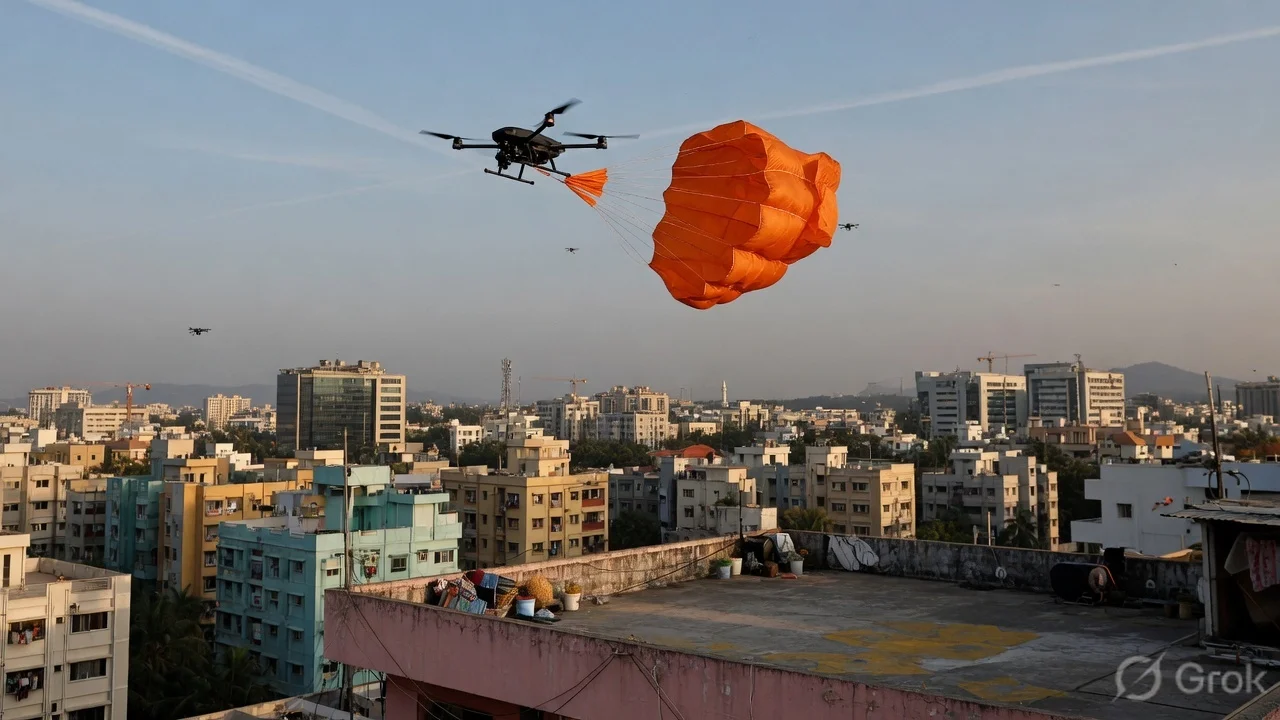
Bengaluru-based drone safety startup Saubha Aerial Systems has unveiled an autonomous parachute trigger system designed to prevent drones from becoming falling objects in urban environments. The company's innovative safety kit can detect motor failure within milliseconds and deploy a parachute to safely land the drone, potentially saving lives and property in densely populated Indian cities.
Details
The Saubha Aerial Systems safety kit utilizes advanced sensors and AI algorithms to monitor drone performance in real-time. When a motor failure is detected, the system automatically triggers a parachute deployment within 150 milliseconds. The parachute is designed to slow the drone's descent to a safe speed, preventing damage upon impact.
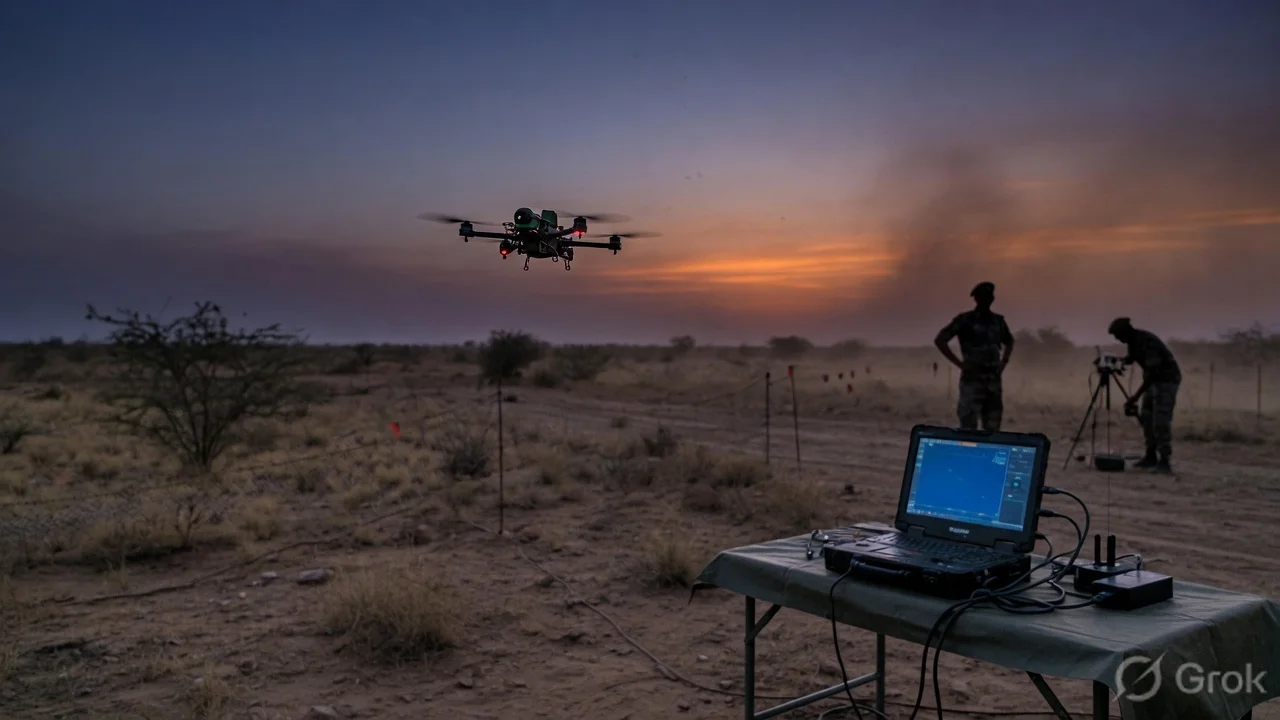
In addition to the parachute system, the startup has also developed a netgun capable of catching hostile drones. This technology could be particularly useful for security applications in sensitive areas such as airports, government buildings, and large public events across India.
The technical architecture includes multiple redundant sensors including IMU (Inertial Measurement Unit), GPS tracking, and motor current monitoring. The AI algorithms are trained on thousands of flight scenarios to distinguish between normal flight anomalies and actual motor failures. The system weighs approximately 300 grams, making it suitable for most commercial drones used in India.
India impact
With India's drone market growing rapidly, projected to reach $13 billion by 2026, safety concerns have become increasingly important. The Ministry of Civil Aviation has been working on regulations to govern drone operations, especially in urban areas. Saubha's technology could play a crucial role in making drone operations safer and more acceptable to the public.
The startup's solution is particularly relevant for India, where high population density and frequent use of drones for delivery, surveillance, and entertainment create unique safety challenges. The system is priced at approximately ₹25,000 per unit, making it accessible to both commercial drone operators and individual users.
India's drone ecosystem includes over 100 startups and more than 200 drone service providers. The government has allocated ₹12,000 crore for drone infrastructure development across various states. Saubha's technology aligns with the Digital India initiative and could support the government's vision of using drones for everything from agricultural monitoring to emergency response.
Use cases
The parachute trigger system has several potential applications in India. Delivery drones, which are becoming increasingly common in cities like Delhi and Mumbai, could benefit greatly from this safety feature. Companies like Amazon India, Flipkart, and local startups are already testing drone delivery services in select areas.
Agricultural drones are another significant market. India has over 160 million hectares of agricultural land, and drones are increasingly being used for crop monitoring, pesticide spraying, and yield prediction. The safety system would be particularly valuable in rural areas where people and livestock might be present during drone operations.
Security applications are another key use case. The netgun technology could be deployed at airports, seaports, and other sensitive locations to neutralize hostile drones. Event organizers could also use these systems to ensure safety at large gatherings such as festivals and political rallies. Given the security concerns around major events in India, this technology could be in high demand.
Emergency services represent another important application. Police departments, fire brigades, and disaster response teams could use drones equipped with this safety system for surveillance and rescue operations. During natural disasters like floods or earthquakes, these drones could safely operate in affected areas without posing additional risks.
Implementation challenges
While Saubha Aerial Systems' safety kit represents a significant advancement in drone safety, there are still challenges to overcome. The system adds weight to the drone, which could reduce flight time and payload capacity. For delivery drones, this could mean fewer packages per trip.
Additionally, the parachute deployment mechanism needs to be reliable in various weather conditions, which can be challenging in India's diverse climate. During monsoon season, high winds could affect parachute deployment. The system is being tested across different weather conditions in various parts of India.
Regulatory approval is another consideration. The Directorate General of Civil Aviation (DGCA) will need to certify the safety system before it can be widely adopted. Saubha is working closely with aviation authorities to ensure compliance with Indian regulations.
Market outlook
The global drone safety market is expected to grow at a CAGR of 28% through 2030, with India representing one of the fastest-growing markets. Saubha Aerial Systems is well-positioned to capture a significant share of this market, given its early mover advantage and focus on the Indian context.
The company has already received interest from several major drone manufacturers and service providers in India. They are also exploring partnerships with government agencies for large-scale deployment in public safety applications.
Honest take
While Saubha Aerial Systems' safety kit represents a significant advancement in drone safety, there are still challenges to overcome. The system adds weight to the drone, which could reduce flight time and payload capacity. Additionally, the parachute deployment mechanism needs to be reliable in various weather conditions, which can be challenging in India's diverse climate.
However, the potential benefits far outweigh these drawbacks. In a country like India, where drones are increasingly being used in crowded urban areas, having a reliable safety system is not just a luxury but a necessity. Saubha's innovation could help build public trust in drone technology and pave the way for more widespread adoption.
FAQs
Q: How does the parachute trigger system work?
A: The system uses advanced sensors and AI algorithms to monitor drone performance in real-time. When a motor failure is detected, it automatically triggers a parachute deployment within 150 milliseconds.
Q: What is the cost of the safety kit?
A: The safety kit is priced at approximately ₹25,000 per unit, making it accessible to both commercial drone operators and individual users.
Q: Can the system be retrofitted to existing drones?
A: Yes, the safety kit is designed to be retrofitted to most commercial drones available in the market.
Q: How does the system perform in different weather conditions?
A: The system has been tested in various weather conditions across India, including monsoon conditions. The parachute deployment mechanism is designed to function reliably in wind speeds up to 25 km/h.
Q: Is regulatory approval required for this system?
A: Yes, the system requires certification from the Directorate General of Civil Aviation (DGCA) before widespread deployment. Saubha is working with aviation authorities to ensure compliance.



Comments (0)
Be the first to comment!