


Who Should Buy a Phone Under ₹15,000 This Festive Sale?
The sub-₹15,000 segment is the most competitive corner of the Indian smartphone market, and the October festive sale season is when it gets even more interesting. This price band is built for first-time smartphone buyers, students, parents buying a second or backup phone for the family, and anyone upgrading from an ageing 4G handset who wants 5G-readiness without overspending. It's also a sweet spot for buyers who mainly use a phone for calls, WhatsApp, YouTube, social media, light gaming, and everyday photos — not heavy mobile gaming or professional photography.
If you're chasing flagship-level cameras, buttery-smooth gaming, or premium build materials, this isn't your segment — you'll want to look at phones well above ₹20,000. But if your priority is a reliable daily driver with a big battery, a decent display, and enough software support to last a few years, the Samsung Galaxy M07, Moto G35 5G, and Redmi 14C 5G are three of the most talked-about options this festive season.
What Specs Actually Matter in This Price Range
Processor and 5G Support
All three phones in this guide are 5G-capable, which matters more than ever as telecom operators expand 5G coverage beyond metro cities. That said, don't obsess over benchmark numbers at this price point — the chipsets used here are entry-level, so real-world performance differences for WhatsApp, browsing, and basic apps will feel similar. Where it does matter is multitasking with many apps open and casual gaming; a slightly better chipset and more RAM make app-switching noticeably smoother.
Display Quality
Look for a high refresh-rate panel (90Hz or 120Hz) — it makes scrolling feel far smoother even on a basic HD+ resolution screen. Full-HD+ panels are rare under ₹15,000, so HD+ is the norm; that's perfectly fine for everyday use but worth knowing so you don't expect flagship sharpness. Outdoor brightness is another practical factor Indian buyers should check, since many of these phones are used outdoors in strong sunlight.
Battery and Charging
A 5,000mAh-class battery is now standard in this segment, and it should comfortably deliver a full day of moderate use. Charging speed varies more than you'd expect — some phones still ship with basic 10W-15W chargers in the box, while others support 18W-25W fast charging. If all-day battery life with minimal top-ups matters to you, this is a key differentiator to check carefully before buying.
Cameras
A 50MP primary sensor is common across this price band, but sensor size, software processing, and low-light performance vary a lot more than the megapixel count suggests. Don't expect DSLR-like results; judge these cameras for daylight shots, casual social media photos, and video calls rather than serious photography.
Software and Updates
This is often the most overlooked factor. A phone that gets 2 years of Android OS updates and security patches will stay safer and more usable for longer than one that stops updating after a year. Check the brand's stated update policy before you buy, not just the version of Android it ships with.
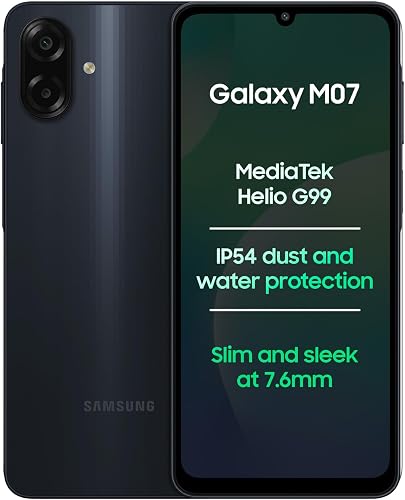
Samsung Galaxy M07: Short Take
The Galaxy M07 brings Samsung's brand trust and One UI software experience to the budget segment. It's aimed at buyers who value a clean, familiar interface, Samsung's after-sales service network (a big plus in smaller Indian towns), and steady software support. The design leans practical rather than flashy, with a large battery and a straightforward camera setup that handles daylight and indoor shots reasonably well. If you or your family already use Samsung phones and appreciate the ecosystem — Samsung Cloud, SmartThings, familiar settings menus — the M07 will feel instantly comfortable. It's a safe, dependable pick for first-time or non-tech-savvy users.
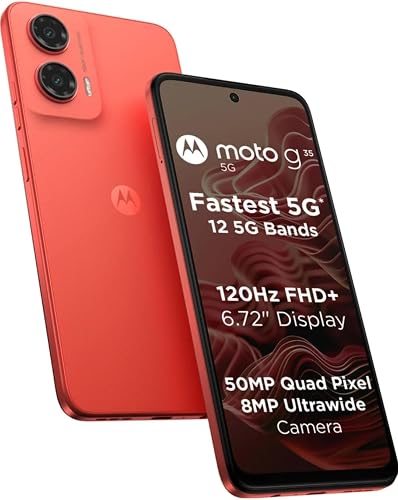
Moto G35 5G: Short Take
Motorola has built a loyal following in this price range with near-stock Android, which means minimal bloatware, fewer intrusive ads in the UI, and a lighter, faster-feeling experience on modest hardware. The G35 5G continues that tradition, pairing a high refresh-rate display with a capable primary camera and a design that looks and feels a notch above its price. Moto's software also tends to be quick with basic customisation options like gesture controls. This is the pick for buyers who want an "Android as Google intended" experience without ads cluttering the home screen and app drawer.
Redmi 14C 5G: Short Take
Redmi (Xiaomi's sub-brand) has long dominated India's budget segment on sheer value, and the 14C 5G continues that strategy with a large display, a big battery, and 5G connectivity bundled together at an aggressive price-to-spec ratio. The trade-off is Xiaomi's HyperOS/MIUI skin, which is feature-rich but can feel busier than stock Android, with more pre-loaded apps out of the box (most of which can be uninstalled). For buyers who prioritise screen size, battery capacity, and raw specs-on-paper over software minimalism, the 14C 5G is a strong contender.
Samsung Galaxy M07 vs Moto G35 5G vs Redmi 14C 5G: Specs Comparison
| Spec | Samsung Galaxy M07 | Moto G35 5G | Redmi 14C 5G |
|---|---|---|---|
| Display | Large HD+ display, 90Hz refresh rate | Large HD+ display, up to 120Hz refresh rate | Large HD+ display, up to 120Hz refresh rate |
| Processor | Entry-level 5G chipset | Unisoc-class 5G chipset | Snapdragon-class 5G chipset |
| Rear Camera | 50MP primary sensor with AI support | 50MP primary sensor with OIS support | 50MP primary sensor with AI support |
| Battery | 5,000mAh-class battery | 5,000mAh-class battery | 5,000mAh-class (or larger) battery |
| Charging | Standard fast charging | Fast charging support | Fast charging support |
| Software | One UI (Android-based) | Near-stock Android | HyperOS/MIUI (Android-based) |
| Build | Plastic/polycarbonate frame | Plastic frame, textured back options | Plastic frame, large display footprint |
| 5G Bands | Supported | Supported | Supported |
Note: Exact specifications may vary slightly by variant and region; always confirm the exact configuration (RAM/storage) on the product listing before purchasing.
Festive Sale Buying Tips: Don't Fall for the Hype
Bank Offers and No-Cost EMI
Festive sales on Flipkart, Amazon, and brand websites often bundle instant bank discounts with specific credit or debit cards, plus "no-cost EMI" options. Read the fine print: no-cost EMI usually means the interest is pre-added into the product price rather than charged separately, so the total you pay is effectively the same as paying upfront — it just spreads the payment over months. Bank instant discounts are usually genuine savings, but they're often capped, so check the maximum discount amount, not just the percentage advertised.
Check the Price History
Before clicking "buy," use a price-history tool or browser extension to see how the phone's price has moved over the past few months. Festive sale prices are sometimes only marginally lower than prices available a few weeks earlier under regular "bank offer" promotions. Knowing the real price trend helps you judge whether a sale price is a genuine drop or just clever marketing timing.
Watch Out for Fake MRP Tricks
A common festive-sale tactic is inflating the "original price" or MRP shown with a strikethrough, so the advertised discount percentage looks bigger than the actual savings. Always compare the final payable price across platforms (Flipkart, Amazon, Reliance Digital, Croma, brand website) rather than trusting the discount percentage alone. If a deal looks unusually aggressive compared to the phone's typical price over the past month, treat it with healthy scepticism and verify before purchasing.
Limitations and Risks to Know Before You Buy
Phones under ₹15,000 come with real trade-offs that buyers should accept going in. Cameras will struggle more in low light compared to pricier phones, and video recording quality is usually capped at basic resolutions with limited stabilisation. Build materials are almost always plastic, so these phones may feel less premium in hand, though they're generally durable for everyday use. Gaming performance is adequate for casual titles but will struggle with graphically demanding games at high settings. Software update timelines also tend to be shorter than flagship phones, so factor in that you may need to upgrade again within 2-3 years for the best security and performance. Finally, during festive sales, stock of the most popular colour and storage variants often sells out fast, so don't wait till the last day if you've decided on a specific configuration.
Final Verdict: Which One Should You Pick?
There's no single "best" answer here — it depends on what you value most. Choose the Samsung Galaxy M07 if you want brand trust, wide service network access, and a familiar interface, especially for a parent or first-time user. Choose the Moto G35 5G if a clean, ad-free, near-stock Android experience and a slightly more premium feel matter to you. Choose the Redmi 14C 5G if you want the most aggressive specs-on-paper — bigger display, strong battery, and 5G — and don't mind a more feature-packed (if busier) software skin. Whichever you pick, use the live price block on this page to compare current festive pricing, and apply the bank-offer and price-history tips above before you finalise your purchase.



Comments (0)
Be the first to comment!