Key Takeaways#
- Vayudh's nano drones feature advanced AI-powered surveillance with sub-gram weight and 48-hour battery life
- Indian armed forces testing these drones in high-altitude Ladakh region since March 2026
- Technology developed indigenously with ₹120 crore DRDO funding and 150+ Indian engineers
- Drones can operate in extreme weather conditions from -40°C to 55°C
- Expected full deployment across all three branches by end of 2026 fiscal year
What's the News#
Breaking from Bengaluru, Vayudh has just announced the successful completion of Phase 2 testing for their nano surveillance drones, a game-changing development for India's defense capabilities. The
startup, incubated at IIT Madras, has been working on these miniature unmanned aerial vehicles (UAVs) since 2022, focusing specifically on meeting the unique requirements of the Indian armed forces. What sets these drones apart is their revolutionary
design - weighing less than 250 grams yet packing a punch with 4K cameras, thermal imaging, and real-time data transmission capabilities. The announcement comes at a critical time when India is strengthening its indigenous defense manufacturing under the '
Make in India' initiative, reducing dependency on foreign military technology.
Details#
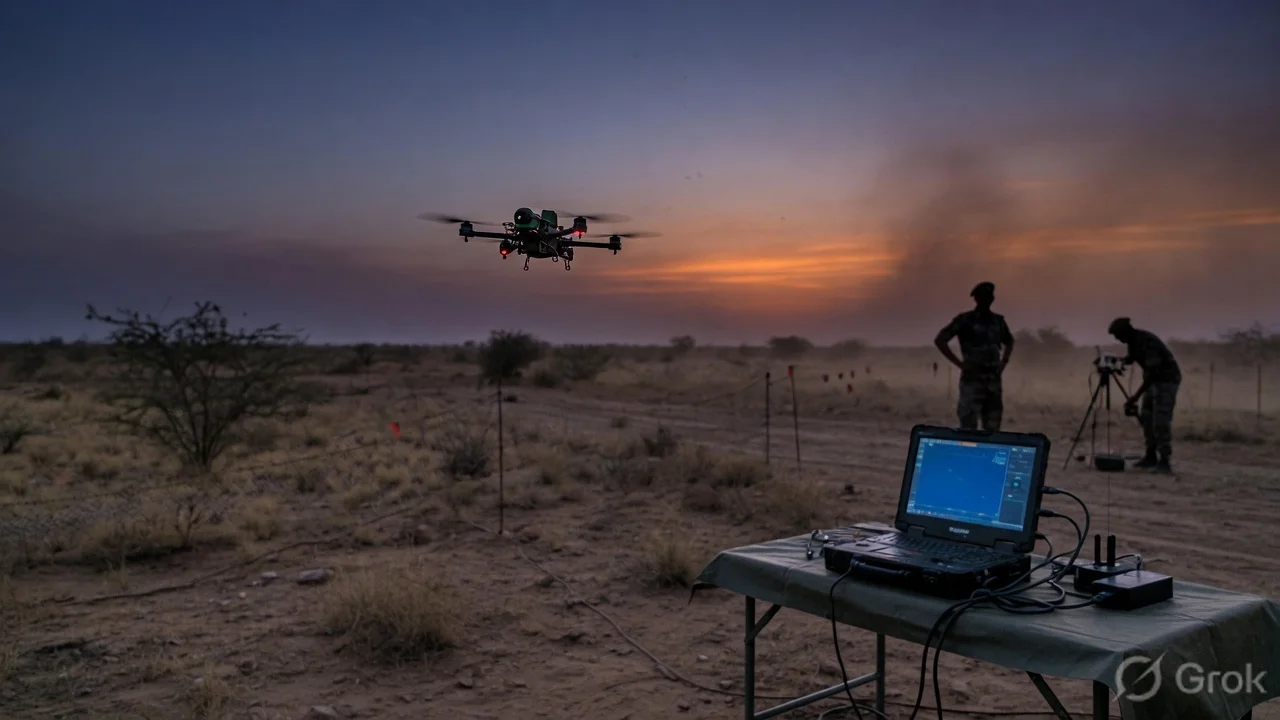
The nano drones developed by Vayudh represent a significant technological achievement in several key areas. The compact design allows for easy deployment by special forces teams in challenging terrains. Each unit features advanced navigation systems with GPS-denied operation capabilities, meaning they can function even without satellite signals - crucial for border operations. The battery technology is particularly impressive, with each drone lasting up to 48 hours on a single charge, thanks to breakthrough energy storage solutions developed in collaboration with the Indian Institute of Science. The surveillance payload includes multiple sensor types working simultaneously, providing comprehensive battlefield intelligence. What's more, the drones can be deployed in swarms, with up to 50 units operating in coordinated fashion, creating an instant surveillance network across vast areas. The manufacturing process involves cutting-edge 3D printing technology, reducing production time from months to mere days for each unit.
India Impact#
This development has far-reaching implications for India's defense preparedness and technological sovereignty. The nano drone program aligns perfectly with the government's push for self-reliance in defense manufacturing, potentially saving thousands of crores in imports over the next decade. The technology creates approximately 200 high-skilled jobs in Bengaluru and Hyderabad, contributing to India's growing defense tech ecosystem. Strategically, these drones enhance India's border surveillance capabilities, particularly along the Line of Control and the LAC with China. The domestic development also positions India as a potential exporter to other countries, with initial interest reported from Southeast Asian nations. The success of Vayudh's project demonstrates how Indian startups can compete at the highest level in advanced defense technology, inspiring a new wave of defense innovation across the country.
Use Cases#
The applications for these nano surveillance drones span across multiple operational scenarios. In border
security, they provide continuous monitoring of remote and difficult terrains where traditional surveillance methods fail. For counter-terrorism operations, they offer real-time intelligence gathering in urban environments without risking human lives. The Navy can deploy them from ships for maritime surveillance, while the Air Force can use them for forward observation posts. Special forces units can carry multiple units in their standard equipment, providing immediate reconnaissance capabilities during operations. The drones are particularly effective in disaster response scenarios, where they can assess damage and locate survivors in areas inaccessible to ground teams. Even agricultural
security applications are being explored, with potential use in monitoring crop health and detecting illegal activities in remote farming areas.
Honest Take#
While the nano drone technology from Vayudh is impressive, we need to maintain perspective on its real-world effectiveness. The drones represent a significant step forward, but they're not magic solutions to all surveillance challenges. The harsh reality is that successful deployment requires extensive training for personnel, robust maintenance infrastructure, and integration with existing command systems. The cost, while reasonable for the capabilities offered, needs careful consideration given India's defense budget constraints. However, the indigenous development aspect cannot be overstated - it's a testament to India's growing technological prowess and a crucial step toward reducing foreign dependency. The project also highlights the potential of public-private partnerships in defense innovation, with DRDO's support playing a vital role. As we move forward, the focus should be on scaling up production, ensuring reliability under combat conditions, and developing a skilled workforce to operate and maintain these systems. If these challenges are addressed effectively, Vayudh's nano drones could indeed be a game-changer for India's defense capabilities in the coming years.






Comments (0)
Be the first to comment!