


Key Takeaways
- Raana Semiconductors is raising ₹100 Cr ($10.4 Mn) in Series A funding round
- The funds will be used to purchase silicon-growth equipment for semiconductor manufacturing
- This move aligns with India's broader semiconductor self-reliance initiatives
- The startup aims to reduce dependency on imported semiconductor manufacturing equipment
- The funding could help establish India's domestic semiconductor equipment ecosystem
What's the News
Raana Semiconductors, a promising Indian semiconductor startup, is currently in advanced discussions to secure ₹100 crore ($10.4 million) in its Series A funding round. The startup plans to utilize these funds specifically for acquiring silicon-growth equipment, which is crucial for semiconductor wafer manufacturing. This development comes at a time when India is aggressively pushing for semiconductor manufacturing capabilities within its borders.
The semiconductor industry has traditionally been dominated by a few countries, with China, Taiwan, South Korea, and the United States leading the charge. India's entry into this space has been relatively modest, but recent policy initiatives and funding rounds suggest a shift in this landscape. Raana Semiconductors' move to secure funding for specialized equipment indicates a maturing ecosystem where Indian startups are moving beyond software and services into hardware manufacturing.
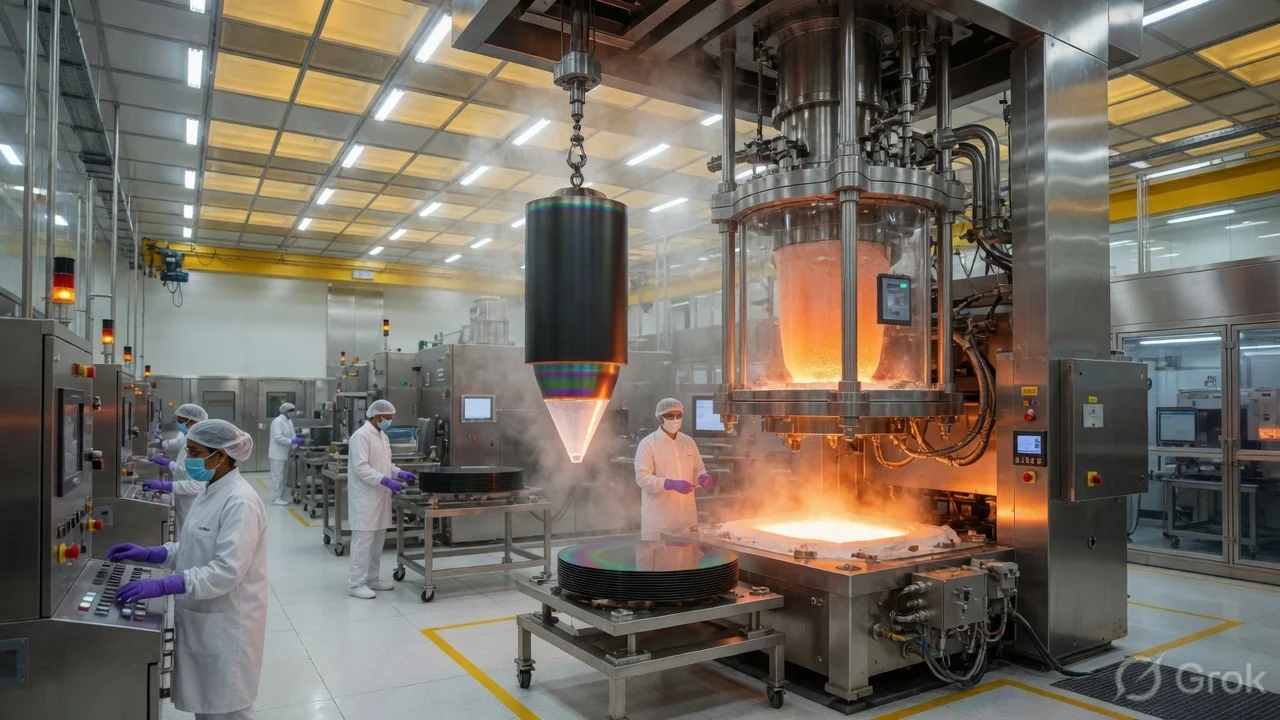
Silicon-growth equipment, specifically Chemical Vapor Deposition (CVD) systems and related technologies, are essential for producing silicon wafers – the foundational material for most semiconductor devices. These systems are expensive and technologically complex, which has been one of the barriers for India's semiconductor ambitions.
Details of the Funding and Plans
The ₹100 crore funding round represents a significant milestone for Raana Semiconductors, which was founded by a team of semiconductor industry veterans. The company has been working on developing indigenous capabilities in semiconductor manufacturing equipment, with a focus on reducing India's reliance on imports from countries like Germany, Japan, and the United States.
The silicon-growth equipment that Raana plans to acquire will be used for producing silicon wafers of various diameters, including 200mm and 300mm wafers, which are the industry standards for modern semiconductor manufacturing. These wafers serve as the substrate on which integrated circuits are built through complex photolithography and etching processes.
Industry sources suggest that the company is in talks with both domestic and international investors for the funding round. The startup has already secured initial seed funding from prominent Indian angel investors and is now looking to scale up operations with Series A capital. The funds will also be used to expand their R&D team and establish a small-scale manufacturing facility in India's semiconductor hub.
India Impact: What This Means for the Country's Semiconductor Ambitions
Raana Semiconductors' funding round is more than just another startup's success story – it's a significant development for India's semiconductor ecosystem. The country has been working to build its semiconductor capabilities through initiatives like the India Semiconductor Mission (ISM), which has an outlay of ₹76,000 crore ($9.2 billion) to support semiconductor and display manufacturing.
Having domestic companies like Raana develop semiconductor manufacturing equipment is crucial for India's long-term semiconductor goals. Currently, India imports most of its semiconductor manufacturing equipment, which not only increases costs but also creates supply chain vulnerabilities. By developing indigenous capabilities, India can reduce these dependencies and build a more resilient semiconductor ecosystem.
The development of silicon-growth equipment capabilities in India could also create a ripple effect, encouraging other startups and established companies to enter the semiconductor equipment space. This could lead to the creation of a complete semiconductor value chain in India, from design to manufacturing to equipment supply.
Furthermore, this development aligns with the government's 'Make in India' initiative and the broader push for self-reliance in critical technologies. As geopolitical tensions continue to affect global supply chains, having domestic capabilities in semiconductor manufacturing becomes increasingly important for national security and economic stability.
Use Cases: What Will the Silicon-Growth Equipment Be Used For?
The silicon-growth equipment that Raana Semiconductors plans to acquire will have several important applications in the semiconductor industry. The primary use case is the production of silicon wafers, which are the foundational material for semiconductor devices. These wafers will be used by various semiconductor companies in India for manufacturing integrated circuits (ICs) and other semiconductor products.
Silicon wafers produced using this equipment could be used in a wide range of applications, including consumer electronics, automotive semiconductors, industrial automation, telecommunications equipment, and defense systems. As India's electronics manufacturing sector continues to grow, the demand for locally produced silicon wafers is expected to increase significantly.
The equipment could also be used for research and development purposes, allowing Indian companies and research institutions to experiment with new semiconductor technologies and processes. This could accelerate innovation in the Indian semiconductor ecosystem and help develop new applications for semiconductor technology.
Additionally, having domestic silicon-growth capabilities could enable India to participate in the global semiconductor supply chain more effectively. Instead of just being a consumer of semiconductor products, India could become a producer and potentially an exporter of certain semiconductor components, contributing to the country's export targets.
Honest Take: Is This a Game-Changer for India's Semiconductor Industry?
While Raana Semiconductors' funding round is certainly a positive development, it's important to maintain perspective on its actual impact. The semiconductor industry is incredibly complex and capital-intensive, with established players like Applied Materials, Lam Research, and Tokyo Electron dominating the equipment market. Breaking into this space will be challenging for any startup, let alone an Indian one.
That said, the company's focus on silicon-growth equipment is strategic. This is a critical component of the semiconductor manufacturing process, and developing indigenous capabilities here could have significant downstream benefits. Even if Raana doesn't become a global player, its success could pave the way for other Indian companies to enter the semiconductor equipment space.
The timing of this funding round is also noteworthy. With the global semiconductor industry facing supply chain disruptions and increasing geopolitical tensions, there's growing recognition of the need for diversified semiconductor manufacturing capabilities. India's push for semiconductor self-reliance is gaining momentum, and companies like Raana are crucial to this effort.
However, it's worth noting that developing semiconductor manufacturing equipment capabilities is a long-term endeavor. It will take years, possibly decades, for India to develop the same level of expertise as established players. The success of Raana Semiconductors and similar companies will depend on various factors, including access to talent, continued government support, and the ability to develop cost-competitive technologies.
Despite these challenges, I'm cautiously optimistic about the potential impact. India has demonstrated its ability to develop complex technologies in other sectors, and there's no reason to believe it can't do the same in semiconductors. Raana Semiconductors' funding round is a step in the right direction, and I'll be watching their progress with interest.
Frequently Asked Questions
Q: How much funding is Raana Semiconductors trying to raise?
A: Raana Semiconductors is in advanced talks to raise ₹100 crore (approximately $10.4 million) in its Series A funding round.
Q: What will the funding be used for?
A: The funds will be used to acquire silicon-growth equipment for semiconductor manufacturing, expand the R&D team, and establish a small-scale manufacturing facility.
Q: Why is silicon-growth equipment important for semiconductors?
A: Silicon-growth equipment, particularly Chemical Vapor Deposition (CVD) systems, is essential for producing silicon wafers, which are the foundational material for most semiconductor devices. These wafers serve as the substrate on which integrated circuits are built.
Q: How does this fit into India's semiconductor strategy?
A: This aligns with India's broader semiconductor self-reliance initiatives, including the India Semiconductor Mission with an outlay of ₹76,000 crore. Developing domestic semiconductor equipment capabilities reduces dependency on imports and strengthens India's position in the global semiconductor supply chain.
Q: Who are the investors in this funding round?
A: While specific investor details haven't been disclosed, the company is reportedly in talks with both domestic and international investors for the Series A round.





Comments (0)
Be the first to comment!