


Key Takeaways
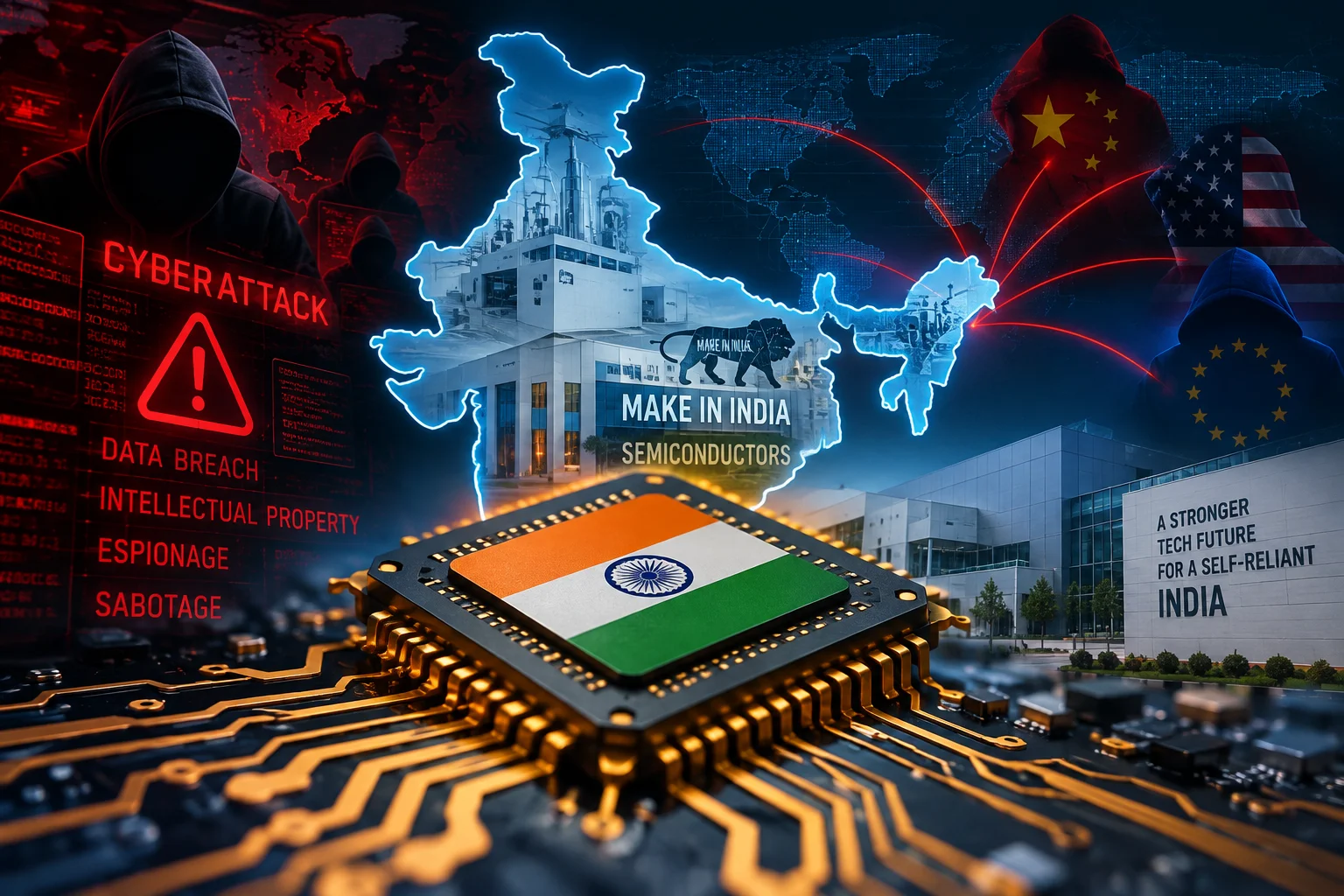
- Union IT Minister Ashwini Vaishnaw has cautioned the electronics industry to stay on high alert against targeted cyberattacks eyeing India's emerging semiconductor capabilities.
- As domestic design hubs and chip fabrication units gain global traction, intellectual property theft and operational disruption have become serious security threats.
- Securing semiconductor ecosystems requires protecting both proprietary RTL chip blueprints and the operational technology running cleanroom equipment.
- A resilient chip ecosystem directly safeguards everyday Indian tech, from Jio 5G towers and UPI payment terminals to smart power meters and electric scooters.
What just happened?
Picture this over a warm cup of filter coffee at your neighborhood tea stall. For decades, the global tech story labeled India as the world's premier software back-office. If an investment bank in London needed core banking code or an airline in Chicago needed booking engines maintained, Indian tech teams took care of it.
Today, that story is changing completely. From high-end design houses spread across Bengaluru, Hyderabad, and Noida to fabrication units setting up base in Gujarat and Assam, India is stepping into the big leagues of hardware. We are moving from simply writing code on top of someone else's silicon to actually designing and stamping our own microchips.
That kind of shift does not go unnoticed on the global stage. Union Minister for Electronics and IT Ashwini Vaishnaw recently sounded a clear alarm for the industry: stay on non-stop vigil against cyberattacks and deliberate disruption attempts aimed squarely at India's growing chip momentum.
When you build something the entire world is scrambling to control, you inevitably end up with a target on your back. The warning is simple. Building multi-billion-rupee factories is only half the battle; defending the digital and physical pipelines that run them is just as critical.
How does this actually work?
To see why chip manufacturing attracts this level of hostility, you have to look at how semiconductors are actually built. It is nothing like spinning up a cloud server or deploying a mobile app on the weekend. The process sits on two distinct, highly vulnerable pillars.
First is the design side. Before a chip ever touches a physical silicon wafer, teams of engineers spend years building digital blueprints. They write register-transfer level (RTL) code, run countless circuit simulations, and fine-tune proprietary intellectual property (IP). Think of this as the secret formula for a global pharmaceutical giant or the source code of an operating system. If state-backed threat actors or rogue hackers breach a design server, years of research worth hundreds of crores can be copied and exfiltrated in seconds.
Second is the factory floor, known as the fab. Semiconductor fabs are some of the most complex facilities on earth. They rely on ultra-clean cleanrooms where specialized robotic tools process silicon wafers with nanometer-level precision. These machines do not run on ordinary Windows or Android systems; they operate on industrial control systems and operational technology (OT) networks.
An attacker targeting a fab does not even need to steal files to cause mayhem. Merely pushing malware into an industrial controller to alter chemical gas ratios, tweak furnace temperatures by two degrees, or disrupt power calibrations can instantly spoil entire batches of 300mm silicon wafers. A single incident like that halts production for weeks, wastes massive capital, and knocks global supply commitments completely off schedule.
Why is hardware security so tricky?
Most software bugs can be patched overnight. When a vulnerability shows up in a mobile banking app, developers write a quick fix, push an update to the app store, and users tap update by morning.
Silicon does not work that way. Once a microchip is etched into silicon, packaged, and soldered onto a circuit board inside a car, a satellite, or a mobile tower, you cannot just rewrite the physical circuits. If malicious logic or a hardware Trojan gets slipped into a chip design before it goes to the foundry, that vulnerability stays there for the entire physical lifespan of the device.
This makes the semiconductor supply chain a prime target for supply chain contamination. Hackers look for weak links among third-party IP vendors, testing labs, and electronic design automation (EDA) software providers. By compromising one small component supplier, an adversary can quietly compromise millions of downstream devices.
What changes for people in India?
Why should someone scanning a QR code for a dosa on PhonePe or checking train seat availability on IRCTC care about cleanroom cybersecurity?
The answer is that every single digital convenience we take for granted runs on silicon chips. The 5G base stations handling high-speed data across rural Tamil Nadu, the engine control modules inside electric two-wheelers, the fast chargers powering your phone, and the secure elements verifying biometric cards all rely on microchips.
When global supply crunches hit a few years back, car waiting periods shot up to nearly a year, laptop prices jumped on Flipkart, and basic networking gear became scarce. India's multi-billion-dollar push to establish local chip manufacturing is meant to shield our economy from those exact global choke points.
If cyber disruption knocks domestic fabs offline or forces local designers to stall projects, that digital cushion gets compromised. Delays in chip yields translate directly into higher manufacturing costs for domestic device makers, which ultimately trickles down to what you pay for an everyday gadget or home appliance.
Where does the industry go from here?
This heightened threat environment is fundamentally altering how Indian tech firms recruit and build. We are seeing an immediate jump in demand for hardware security professionals, side-channel analysis experts, and zero-trust security architects who understand both software code and silicon logic.
For startups and established hardware firms, the immediate priority is air-gapping critical design environments, enforcing hardware-based cryptographic keys, and running strict audits on all incoming third-party design blocks. Treating cybersecurity as an annual checklist item handled by an external consultant will no longer cut it.
For engineering graduates and developers, this shift marks a massive career avenue. Moving beyond basic web development into embedded firmware security, secure boot verification, and silicon testing will place you right at the heart of India's hardware transformation over the coming decade.





Comments (0)
Be the first to comment!