


முக்கிய விஷயங்கள்
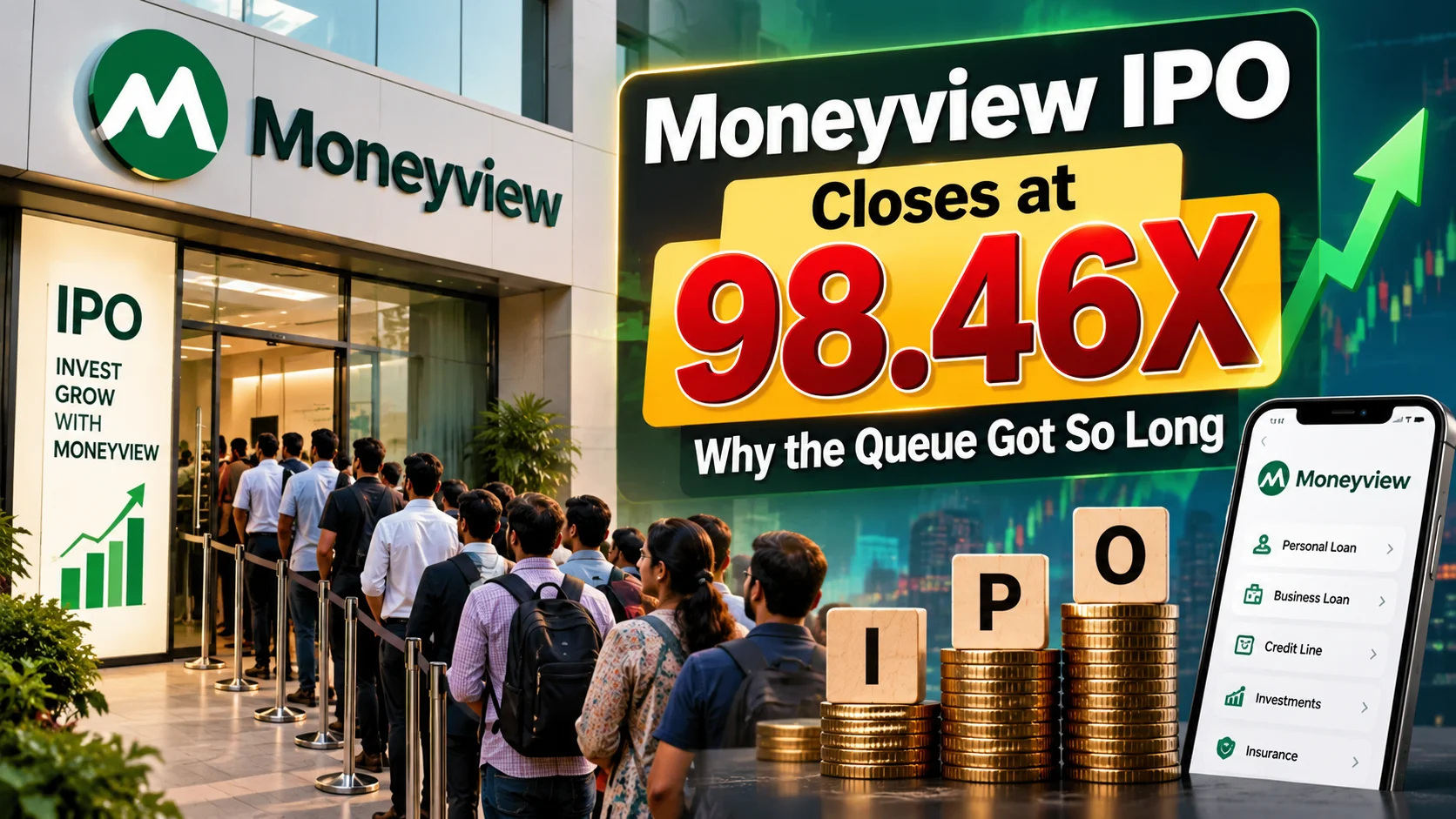
- Moneyview’s ₹1,092 crore IPO closed on 28 September with overall oversubscription of 98.46X.
- Demand came from across investor categories, not just one big cheque book.
- Oversubscription this high usually means allotment for retail is a lottery, not a sure shot.
- Listing gains are never guaranteed — hype and first-day price are two different things.
- If you use personal loan or credit apps already, the brand heat matters more than the IPO ticker for daily life.
What just happened?
Moneyview’s IPO is done. The window shut today, and the final tally is loud: 98.46 times subscribed on a ₹1,092 crore issue. In plain talk, that means buyers wanted nearly a hundred times more shares than the company put on the table. When that happens, your application is not a booking confirmation. It is a raffle ticket with better odds in some buckets than others.
Fintech IPOs in India still pull a crowd. People know the app logo from loan ads, UPI-era credit pushes, and those “check your offer” notifications. That familiarity spills into the bid book. You do not need a research PDF to recognise the name on your phone.
Still, a 98.46X print is not normal Tuesday noise. It is the market saying demand crushed supply. Whether that demand was smart money, FOMO, or a mix of both is the part nobody can prove from a single headline.
How does this actually work?
An IPO is simple at the surface. Company sells fresh or offer-for-sale shares in a fixed window. You bid in your category. Merchant bankers add it up. If bids exceed shares, you get oversubscription.
98.46X means total valid demand was about 98 times the shares on offer. Categories matter. Qualified institutions, non-institutional buyers, and retail do not sit in one pot. Each bucket has its own multiple. The overall figure is the headline; your personal odds sit inside your bucket.
When retail is heavily oversubscribed, allotment often goes by lottery for the minimum lot. Apply for one lot, you might get it. Apply for ten lots in a frenzy issue, you still might get one lot — or nothing. Bigger application size does not scale like a supermarket bulk pack.
ASBA and UPI mandates lock your money while the bid is live. If you get zero shares, the block lifts after finalisation. If you get allotted, only the allotment amount stays used. That part is boring plumbing, but it is why your bank app looks frozen for a few days after a hot issue.
Grey market premium chatter usually spikes on numbers like this. Treat that premium like tea-stall gossip with a price tag. It can vanish overnight if listing sentiment flips. No regulator stamps GMP as a promise.
Listing day is a separate movie. Strong subscription helps mood. It does not write the opening price. Global cues, peer stock moves, and how much “flip on day one” supply hits the screen all play a role.
What changes for people in India?
If you never applied, life continues. Your Moneyview login, if you have one, does not suddenly change colour because the IPO printed a big multiple.
What does change is attention. A loudly subscribed fintech IPO puts digital lending back in group chats. Friends forward screenshots. Relatives ask whether “that loan app” is now a stock. That social layer is real in India, same way Flipkart sale memes travel faster than product specs.
For borrowers, the useful question is product, not ticker. Rates, foreclosure rules, late-fee behaviour, and how hard recovery calls get — those decide your month. Listing fireworks do not rewrite your EMI schedule.
For small investors who did bid, the practical shift is patience and paperwork hygiene. Watch the allotment status on the registrar side once it goes live. Keep demat details clean. Do not plan EMI money around assumed listing profit. That habit burns people every IPO season.
Broader market mood also matters. When a consumer-facing fintech draws nearly 100X interest, other primary market issues in the same lane feel the heat. Bankers love the comps. Retail traders refresh more IPO calendars. That cycle can stay warm for weeks, then cool the moment one listing disappoints.
On the policy and credit side, India already runs on UPI rails and app-first borrowing. A successful book build does not equal “credit risk is solved.” It only says public markets wanted a slice of the story. Underwriting quality, collection discipline, and funding cost still decide who thrives after the confetti.
If you work in startups or adjacent SaaS, the signal is simpler: brand recall plus a clean enough narrative still sells in Indian IPOs. That is not a license to ignore unit economics. It is a reminder that household-name apps enter the bid room with a head start.
What should you do now?
Already applied? Stop refreshing every ten minutes like it is a cricket over. Allotment timelines follow the issue timetable. Use the official registrar or exchange-linked routes when status opens. Ignore random “guaranteed listing” forwards on WhatsApp.
Got allotted a small lot? Decide your exit rule before the bell. Some people book partial profit on listing strength. Some hold for the business story. Both are fine if you chose them calmly, not because a reel screamed a target price.
Got nothing? That is normal at 98.46X. Do not chase the stock on listing purely to “recover the FOMO.” Chasing is how average buy price goes wrong.
Did not apply and still curious? Read the business like a customer. What does the app sell? How does it make money? What breaks if funding tightens or defaults rise? IPO brochures are marketing plus disclosures. Your job is to separate the two.
If you use personal loan products from any app, do a boring health check this week. Outstanding amount, rate, tenure, and whether a cheaper balance transfer actually saves money after fees. That exercise beats screenshotting subscription multiples.
Keep position size sane on any fresh listing buy. Hot IPOs attract day-one volume and sharp swings. Money you need for rent, school fees, or a half-built emergency fund does not belong in that volatility.
And if someone pitches “next Moneyview” tips in a Telegram channel, walk away. Subscription history is public theatre. Private tips with urgency are usually someone else’s exit liquidity.
What does 98.46X really tell you?
It tells you demand outran supply by a mile in this window. It does not tell you the company will compound forever. It does not tell you retail will mint easy money. It does not tell you digital lending risk vanished.
Think of it like a new restaurant with a two-hour queue on opening weekend. The queue proves curiosity and hype. The food, service, and repeat visits decide the next year. Public markets work the same way after the IPO party ends.
Moneyview now moves from offer document mode to listed-company mode in the eyes of traders and longer-term holders. Scrutiny gets louder. Quarterly numbers matter more than application day memes. That transition is where serious investors earn or lose conviction.
For everyone else, the takeaway is lighter. A familiar fintech name just had a blockbuster book. India still loves primary market lotteries. Your job is to enjoy the story without letting it rewrite your personal finance rules.
If you are building or backing consumer fintech, note the appetite, then go back to basics: clear product, controlled credit, and trust that survives after the ad budget pauses. The 98.46X banner will age. Customer behaviour will not forget a bad loan experience.
So breathe. Check allotment when it is time. Use the app as a customer if it fits your need. Treat the stock, if you touch it at all, as a separate decision with a separate risk box. That split — product versus ticker — is how you stay sane in IPO season.



Comments (0)
Be the first to comment!