


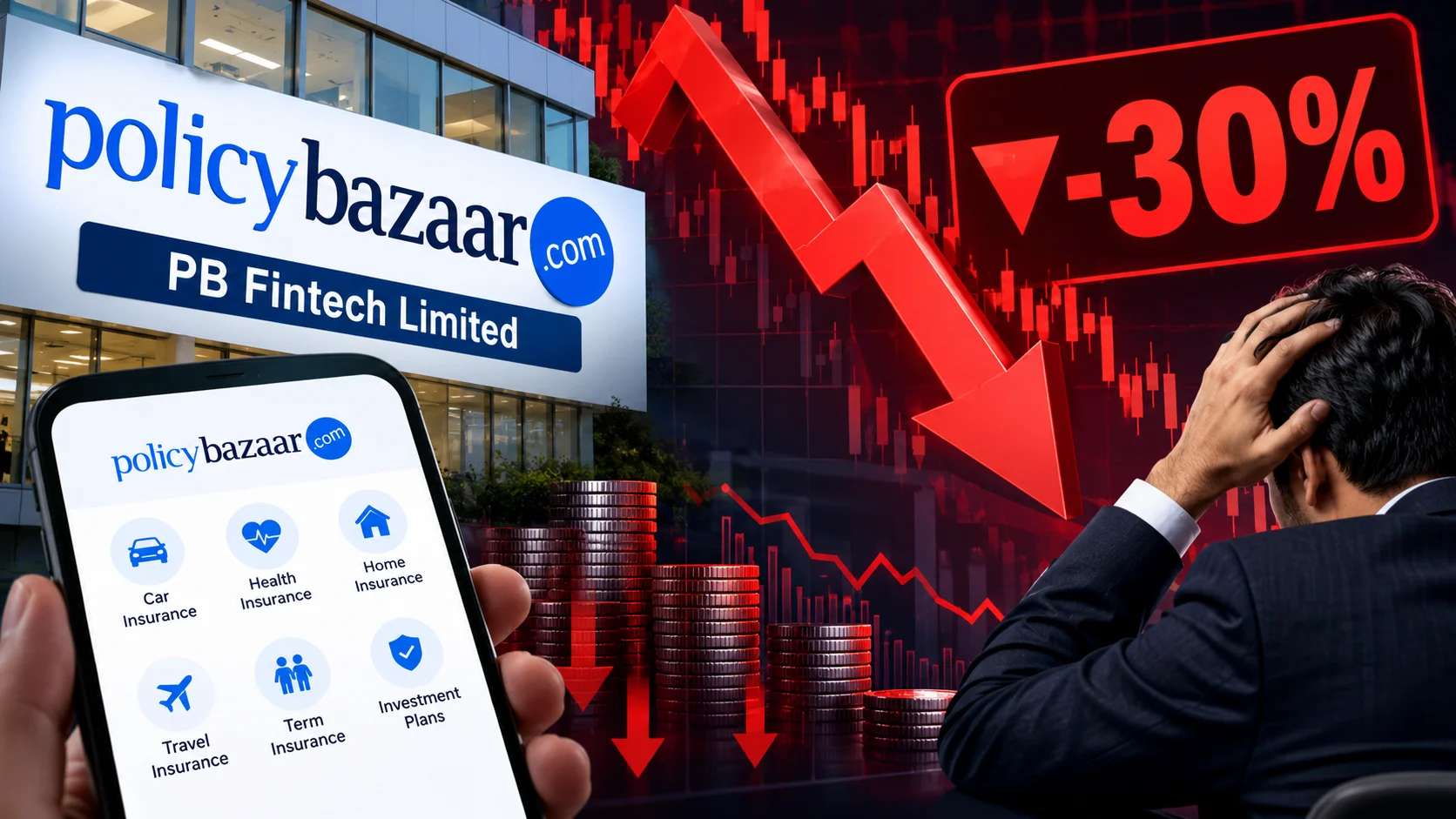
- PB Fintech, the parent company of Policybazaar, saw its stock crash by over 30% during trading hours.
- The massive sell-off followed an IRDAI draft proposal pushing for stricter limits and reforms on distributor commission payouts.
- Digital aggregators rely heavily on these distribution fees from health, motor, and life insurers to power revenue.
- For regular buyers, your active policies stay intact, but how insurance is sold online could see a noticeable shift.
What just happened?
Imagine opening your trading app on a regular Thursday morning and seeing one of India's biggest fintech names taking a 30% hit in a few hours. That is exactly what happened to PB Fintech, the parent company running Policybazaar and Paisabazaar.
The trigger was not a sudden app glitch or a quarterly earnings miss. The big shock came straight from the insurance regulator. The Insurance Regulatory and Development Authority of India (IRDAI) proposed fresh changes to insurance distribution and commission structures.
When regulatory papers land with plans to trim down or restructure how distribution money flows, the market reacts fast. For a business built on connecting buyers with insurance policies and collecting a share of that premium, any threat to payout margins triggers an instant rethink from investors.
The sell-off was sharp and heavy. PB Fintech shares tumbled from their previous trading level down by more than 30%, making it one of the toughest single-day market sessions for the platform since its listing.
How does this actually work?
To understand why the market panicked, look at how digital platforms like Policybazaar make their money. When you buy a two-wheeler cover, a health top-up, or a term insurance plan through an aggregator, you do not pay extra fees out of pocket. You pay the standard premium.
Behind the scenes, the insurance company pays the platform a commission or distribution fee for acquiring you as a customer. Whether it is motor insurance, comprehensive health coverage, or unit-linked plans, distribution commissions form the bedrock of digital brokerage revenue.
IRDAI has been working on streamlining the entire insurance ecosystem. The goal from the regulatory desk is simple: bring down total acquisition costs, improve transparency, and pass benefits back to policyholders. When the regulator proposes tightening distribution commissions or altering the commission ceiling, the fee percentages paid out to brokers and aggregators face direct downward pressure.
If distributor margins get squeezed, platforms need to sell significantly higher volumes just to maintain the same cash flow. That is why a draft rule on commission payouts can shake up an entire fintech valuation in one trading session.
What changes for people in India?
If you already bought a policy on Policybazaar last month or set up auto-pay on UPI for your yearly health insurance, take a breath. Nothing changes with your current policy coverage, your cashless hospital network, or your claim settlement process.
Your contract is with the insurance company underwriting your risk, not the aggregator app you used to compare quotes. The regulator's draft proposals do not alter your active terms and conditions or policy benefits.
What could change over time is how insurance products are packaged and priced online. If commission cuts reduce acquisition costs for insurers, some of that relief could eventually reflect in competitive premium pricing, much like how direct mutual fund plans offer lower expense ratios compared to regular plans.
At the same time, aggregators might look at diversifying their revenue streams. You might see platforms rolling out more value-added services, claim-assistance subscriptions, or advisory tools to balance out lower commission margins from standard policy sales.
What should you do now?
If you are a regular policyholder or looking to buy new cover this week, focus on your actual insurance needs rather than stock market swings. Always compare premiums on aggregator platforms, but take five extra minutes to check the insurer's official website directly as well.
Check the claim settlement ratio, room rent limits, disease-specific waiting periods, and network hospital lists near your area. The commission that goes behind the scenes does not matter as much as whether the policy will actually cover your hospital bill when you need it.
For retail investors tracking the fintech sector, regulatory drafts are part of the game in financial services. Draft proposals go through feedback rounds, industry consultations, and revisions before turning into finalized rules. Watching how aggregators adjust their operating model and cost structure will give a clearer picture of their long-term margins.
Will insurance premiums actually get cheaper for buyers?
When insurance companies spend less money on distributor commissions, their overall expense of management naturally drops. If regulatory proposals trim down payout ceilings across life and general insurance categories, insurers technically get some breathing room to pass small cost savings down to online buyers. Think of it like booking train tickets or flights directly versus third-party travel portals where distribution fees and backend markups quietly shape the final checkout price.
Do not expect an overnight drop on your next health cover renewal or car insurance premium, though. Medical inflation in India continues to rise year after year, hospital treatment costs keep climbing in private healthcare networks, and claim payout ratios dictate your base premium far more than distributor cuts. While basic term plans or two-wheeler covers might see slight promotional benefits over time, rising claim costs across tier-1 and tier-2 cities will still keep base pricing firm.
What should you watch out for next in digital insurance?
As the draft proposals move through industry consultations and stakeholder feedback sessions, watch how digital aggregators rethink their customer touchpoints. If standard distribution fees shrink, platforms will likely look at paid add-on services such as priority claim desks, dedicated hospital assistance, or wellness tracking subscriptions to protect their operational cash flows. We have seen a similar playbook across other Indian fintech categories where zero-fee consumer platforms gradually shifted toward paid value-added tools and credit partnerships.
For regular policy buyers, keep an eye on how insurance companies upgrade their direct-to-consumer portals and mobile apps. When third-party commission structures get squeezed, insurers often push harder to attract direct traffic with simplified DigiLocker KYC, instant policy issuance, and seamless UPI auto-pay setups. Comparing features on aggregator platforms will still stay useful for quick research, but doing a quick direct quote check on the insurer's official website could help you spot better direct-plan pricing before making a purchase.

Comments (0)
Be the first to comment!