


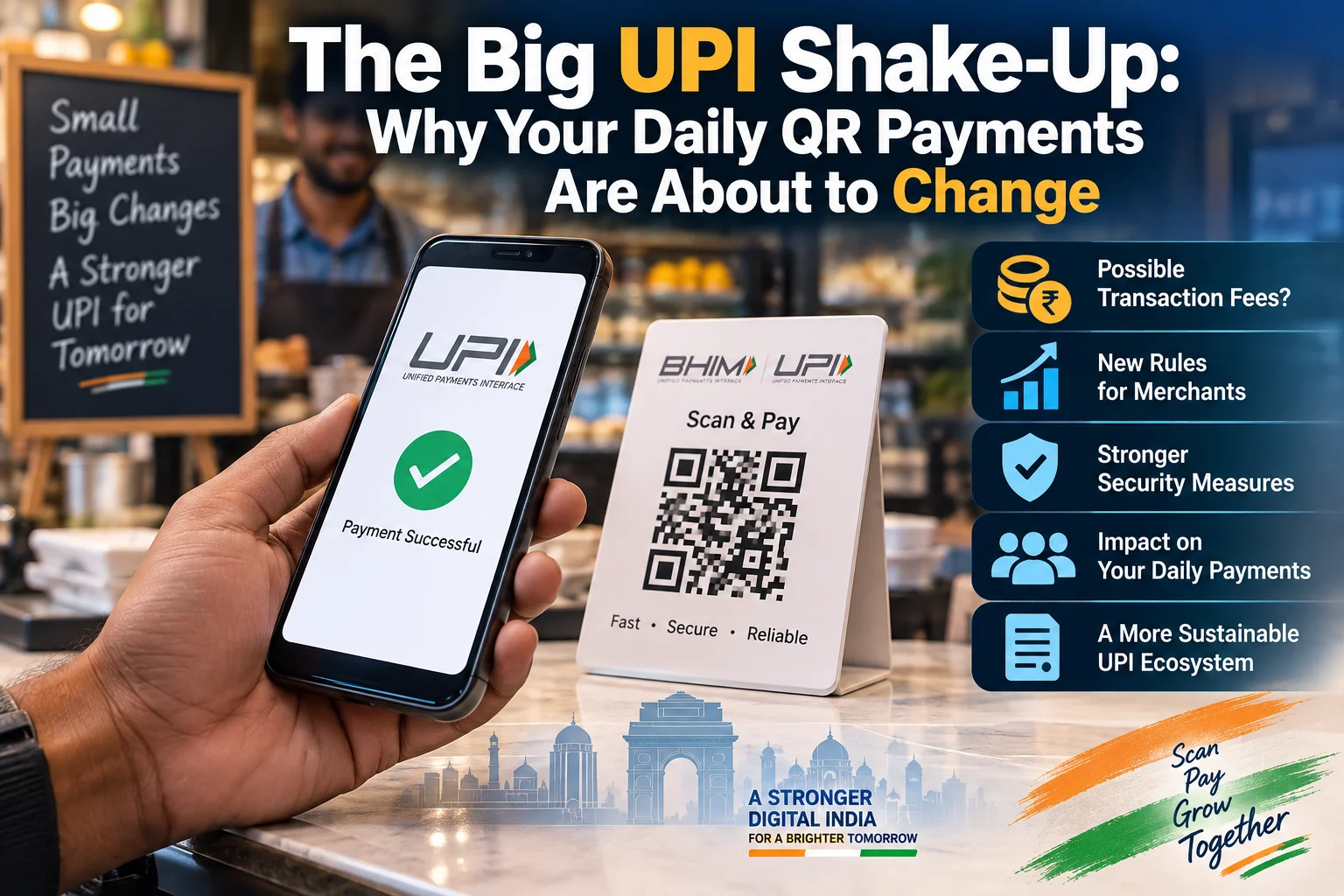
- Google Pay and PhonePe still process the biggest chunk of UPI volumes, but challengers like Super.money, Navi, CRED, and Jio are aggressively chipping away at the market.
- Credit on UPI and pre-sanctioned bank lines are replacing vanilla savings account debits as the primary money-maker for fintech platforms.
- Users are seeing better cashback offers, faster server routing, and fewer peak-hour payment failures as apps compete for default screen space.
- Smart daily payment habits—like maintaining a secondary backup UPI app and setting bank limits—are essential to protect your core savings.
Why is everyone suddenly talking about a UPI shake-up?
Walk up to any roadside tea stall, your neighbourhood bakery, or the local grocery shop. You scan a blue or purple QR code, type in your 4-digit or 6-digit PIN, wait for the audio speaker to chime, and pick up your items. The entire transaction takes less than five seconds.
Behind that effortless beep, India's payment ecosystem is quietly entering its biggest transition in years. For a long stretch, just two players—PhonePe and Google Pay—handled roughly eight out of every ten UPI payments across the country. Every other app on your phone, from traditional bank handles to WhatsApp Pay and Paytm, fought over whatever little volume was left on the table.
Regulators at NPCI have spent years debating market-share caps to prevent system-wide concentration risks. But the real shake-up happening right now isn't coming from forced government restrictions or sudden app bans. Instead, an aggressive wave of homegrown challengers is taking on the incumbents with lightning-quick interfaces, better server fallbacks, and built-in credit lines.
Newer contenders like Flipkart-backed Super.money, Sachin Bansal's Navi, CRED, and JioFinance have rolled out serious product upgrades. They are not just handing out random scratch cards that give you third-party discount coupons you will never use. They are rethinking how daily digital cash flows between your pocket, your bank, and the merchant.
How did two apps end up controlling almost everything?
To understand why this shake-up matters, look at how we got here in the first place. When UPI launched, it solved a fundamental problem: sending money directly from one bank account to another without typing 16-digit account numbers or IFSC codes.
Early winners gained traction by spending heavily on direct cashbacks and onboarding millions of small shop owners. Once you linked your primary savings account to an app and grew comfortable with its interface, switching felt pointless. Muscle memory took over. You unlocked your phone, tapped the familiar icon on your home screen, scanned the merchant sticker, and moved on.
Running millions of free peer-to-peer transfers every single hour is expensive. Apps burn real server money on bandwidth, security compliance, and customer support, while earning zero merchant discount fees on standard UPI transfers. For years, running a pure UPI payments app looked like a high-volume, zero-margin race.
The big incumbents stayed ahead by subsidizing this infrastructure with deep pockets, waiting for the day they could monetize that massive user base through loans, insurance covers, gold investments, and mutual funds. That concentration created a digital duopoly that seemed almost impossible to break.
What are challenger apps doing differently this time?
The new wave of payment apps knows that cloning old features will not get anyone to switch. Instead of building clunky super-apps stuffed with thirty different menus, challengers are stripping the payment screen down to bare essentials.
Take startup platforms like Super.money or Navi. When you open them, the camera scanner is live immediately. There are no distracting banner ads for flight bookings or credit score checks popping up before you can pay for your morning coffee. The transaction completes in fewer taps, with clean animations and zero lag.
Behind the interface, these platforms are partnering directly with multiple sponsor banks to route payments through secondary server channels. If a major public sector bank's core system slows down on a busy Saturday evening, the app quietly shifts the transaction route to prevent the dreaded "Payment Pending" spinning wheel.
On top of speed, real monetary incentives have returned. Instead of vague discount vouchers for unfamiliar brands, newer apps are offering direct micro-cashbacks credited straight back to your wallet or UPI handle on everyday spends like tea, groceries, and petrol.
How does Credit on UPI change everyday spending?
The single biggest catalyst behind this payments reshuffle is Credit on UPI. For years, every QR scan pulled cash directly from the hard-earned balance sitting in your savings account. If your balance was low or your bank server stalled, your transaction failed on the spot.
Now, things work differently. You can link RuPay credit cards or pre-approved bank overdraft credit lines directly inside your UPI app. When you buy a ₹500 shirt or pay for a family dinner at a restaurant, you are spending on credit rather than draining your liquid bank account.
This shift changes the underlying economics for payment companies. Unlike free bank-to-bank transfers, credit transactions generate a merchant fee. That gives payment apps a sustainable revenue stream to fund better tech, improve customer service, and reward regular users.
For consumers, it creates instant liquidity for emergency expenses and lets you accumulate credit reward points even on neighborhood QR scans. But it also introduces a behavioral trap. Spending borrowed digital money via a painless 3-second QR scan makes it very easy to lose track of your monthly budget.
What does this mean for your daily payments and safety?
More competition on your home screen brings clear advantages, but you need to manage your accounts smartly to keep your money safe.
First, payment reliability is improving across the board. Legacy players are speeding up their own app launch times and refining their server routing to defend their turf. Peak-hour festival crashes and failed scans at busy supermarket checkout lines are becoming far less frequent.
Second, small merchants are getting a fairer deal. Shopkeepers are no longer locked into high monthly rental charges for single-provider smart soundboxes. New hardware options offer multi-network connectivity and instant bank settlements at lower costs, giving local business owners genuine choices.
Third, having your digital identity spread across multiple payment apps requires tighter financial hygiene. Leaving multiple apps connected to your primary salary account with high default limits creates unnecessary exposure if your phone gets unlocked or compromised.
So what should your daily payment setup look like?
You do not need to delete your existing payment app or switch platforms overnight. The smartest approach is building a simple two-tier system that protects your money while keeping checkout friction low.
Keep a primary payment app connected to a secondary bank account with a modest balance of ₹3,000 to ₹5,000 for everyday street spends, auto rides, and grocery bills. Keep your main salary and long-term savings account locked away behind net banking, disconnected from daily scan-and-pay apps.
Install one of the newer challenger apps as a backup on your phone. When festival shopping rushes or core banking maintenance halts your primary app, switch over to your backup to clear the bill without standing awkwardly at the counter.
If you use Credit on UPI or pre-sanctioned bank lines, treat the linked limit like cash. Pay off your billing statement in full before the due date to avoid steep interest charges. Set a sensible daily spending cap—like ₹10,000—inside your bank app settings so an accidental tap or an unauthorized scan never causes serious damage.


Comments (0)
Be the first to comment!