


முக்கிய விஷயங்கள்
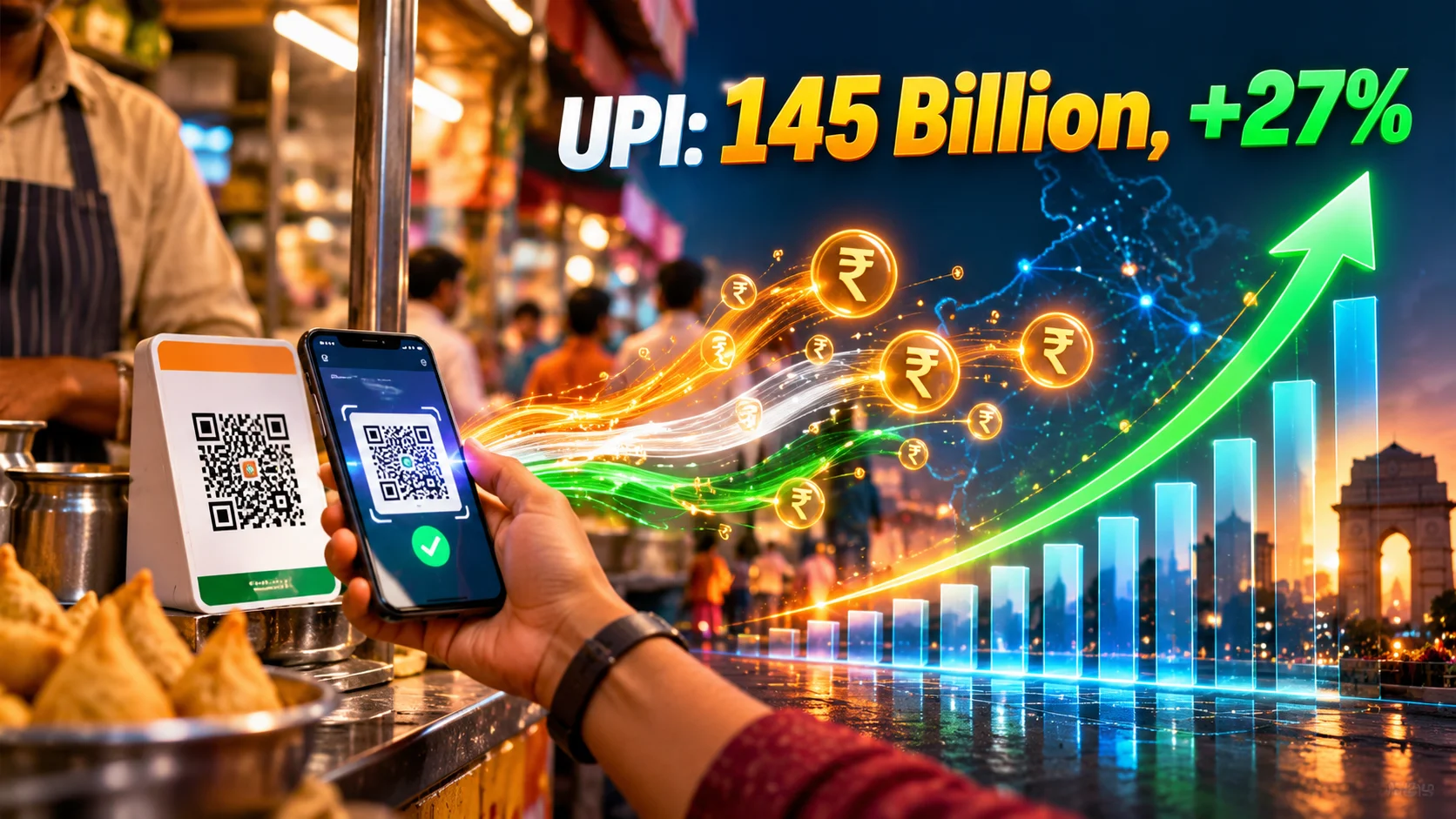
- UPI transactions hit 145 billion in April-September 2026 (H1 FY27), up 27% year-on-year.
- Same period last year (H1 FY26) saw 114 billion transactions - the jump is roughly 31 billion extra transactions.
- Data comes straight from NPCI, the body that runs UPI for every bank and app in India.
- Growth is coming from small-ticket, everyday payments - tea stalls, autos, Zomato, not big transfers.
- No fresh charges announced on UPI person-to-merchant payments as of now.
What just happened?
NPCI dropped its half-yearly numbers and the UPI counter just kept climbing. 145 billion transactions between April and September 2026. That's not a typo, that's billion with a B.
Compare that to the same six months last year - April to September 2025 - when the number stood at 114 billion. Do the math and you get a 27% jump. In an economy where everyone keeps asking if UPI has peaked, this is NPCI basically saying "not even close."
Here's the bit that makes it real: 145 billion transactions in six months works out to roughly 800 million UPI payments a day. Every single day. Your chai, your Swiggy order, your friend splitting an Ola bill - all of that is sitting inside this number.
How does this actually work?
UPI itself hasn't changed. It's still the same instant bank-to-bank rail that GPay, PhonePe, Paytm and your bank's own app all plug into. NPCI doesn't run a separate app - it runs the plumbing underneath every app.
So when volume goes up 27%, it's not one app winning big. It's the whole ecosystem - every QR code sticker on a shop counter, every "Scan & Pay" sign - getting used more often by more people.
What's actually driving the growth is less obvious than you'd think. It's not big-ticket payments. Average transaction value on UPI has been flat or even dipping slightly for years now. That tells you something important: this growth is coming from small, repeated, everyday use - the ₹20 tea, the ₹50 auto fare, the ₹150 vegetable vendor bill. People who earlier paid cash for these are now just scanning a code.
Add to that UPI's expansion into new corners - recurring payments, UPI Lite for small offline-friendly transactions, credit line on UPI, and UPI now working for some cross-border payments too. Each of these opens a new category of transactions that didn't exist on this rail a few years back.
What changes for people in India?
Honestly, for the regular user, nothing changes overnight. You'll still open GPay or PhonePe, scan, type your PIN, done. The experience doesn't shift just because the backend number crossed 145 billion.
But zoom out a bit and this number says something bigger about where Indian money is moving. Banks, fintech apps, and even RBI watch this NPCI data closely because it's the clearest real-time pulse of how India spends.
For small shopkeepers and gig workers, this growth is good news in a quiet way. More UPI usage means less cash handling, fewer disputes over change, and a digital trail that helps with loans - several fintech lenders now use UPI transaction history to decide credit limits for small merchants.
For the UPI apps themselves - GPay, PhonePe, Paytm - bigger volume is both an opportunity and a headache. More transactions mean more data and more relevance, but it also means more pressure on their servers, especially during payment-heavy windows like festival sales or IPL ticket rushes, when UPI has had hiccups in the past.
There's also a policy angle worth watching. Every time UPI volume shoots up like this, the old debate about MDR (merchant discount rate) resurfaces - should banks and apps be allowed to charge merchants for UPI payments beyond a point, given how much free infrastructure they're running at this scale. As of now, there's no confirmed new charge on regular UPI payments, so don't believe any forwarded WhatsApp message claiming otherwise without checking NPCI or your bank directly.
What should you do now?
Nothing drastic, but a few small habits help given how heavily India now runs on UPI. Keep your UPI PIN private, obviously, but also keep an eye on your bank SMS alerts - with billions of transactions happening, scam attempts via fake QR codes and "request money" links have gone up too.
If you run a small shop or do freelance work, it's worth actually using this UPI trail to your advantage. Several NBFCs and even traditional banks now offer quick loans based on your UPI transaction history - consistent usage can genuinely help you qualify faster.
And if you're someone who still insists on "cash only" for small payments - fair enough, your call - but know that you're increasingly the exception, not the norm. 145 billion transactions in six months means UPI isn't an alternative to cash anymore in most of urban and semi-urban India. It is the default.
How does India compare with other countries on this?
This is the part that doesn't always get said out loud: no other country runs real-time payments at this scale. Brazil has Pix, which is genuinely impressive and growing fast, but it's still nowhere close to 800 million transactions a day. Europe has instant payment systems too, but adoption is patchy across countries because every bank and regulator moves at its own pace. India's advantage is that UPI was built as one national rail from day one, with NPCI pushing every bank onto it instead of letting fifty different systems compete.
That single-rail design is exactly why volume can jump 27% in a year without the system breaking down. When GPay, PhonePe and Paytm are all plugging into the same backend, growth on any one app adds to the same national number instead of fragmenting into incompatible islands. Global fintech conferences keep citing UPI as the case study for how a government-backed payment rail should work, and numbers like this H1 FY27 figure are exactly why that reputation keeps growing.
What are the limits nobody talks about?
Scale this big isn't free of problems, even if NPCI's press notes make it sound smooth. Server outages during peak load - festival sales, salary days, big ticket releases - have happened before, and with 27% more transactions stacking onto the same pipes, the pressure on banks' backend systems only grows. A five-minute UPI downtime today affects a lot more people than it did two years ago, simply because more people have stopped carrying cash as backup.
There's also the question of who actually pays for all this infrastructure. Apps like GPay and PhonePe process these transactions for free to the user, and merchants pay little to nothing on most UPI payments either. That's great for adoption, but someone is absorbing the cost of running banking-grade infrastructure at 800 million transactions a day. The MDR debate keeps resurfacing precisely because this free-for-everyone model gets harder to sustain as volume keeps climbing, and at some point banks or NPCI may need a different revenue model that doesn't land on the end user's wallet directly.

Comments (0)
Be the first to comment!