


Key Takeaways
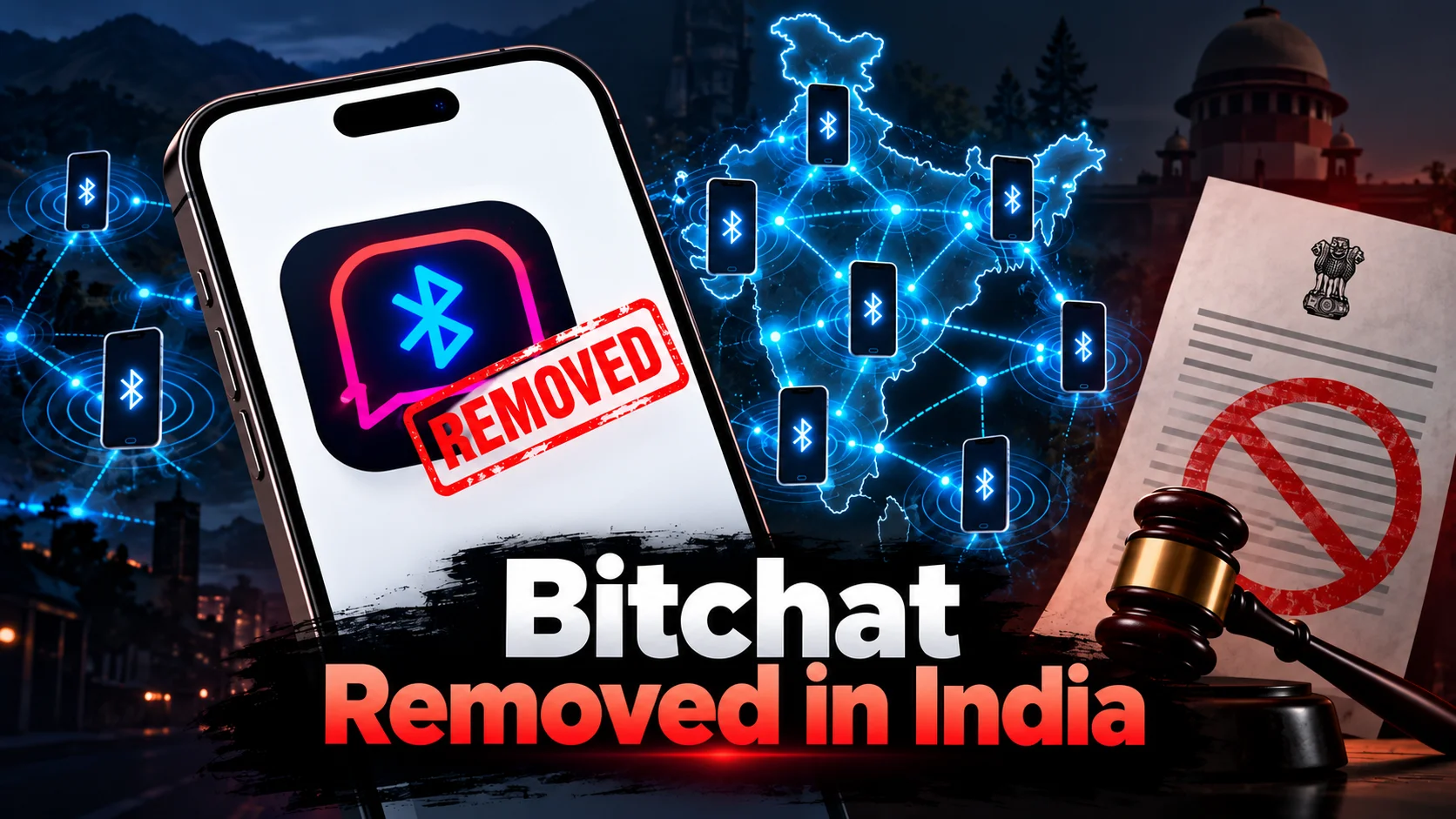
- Apple has removed Bitchat, the offline messaging app linked to Twitter cofounder Jack Dorsey, from its India App Store.
- The takedown followed a government order under Section 69A of the IT Act - the same provision used to ban TikTok and dozens of Chinese apps back in 2020.
- Bitchat works without the internet or even a SIM card - it uses Bluetooth mesh networking to hop messages device-to-device.
- That exact feature - no central server, no easy way to trace or monitor - is likely what put it on the government's radar.
- If you installed Bitchat before the ban, it may still run locally, but there won't be updates or support from the India store going forward.
What just happened?
If you open the India App Store today and search for Bitchat, you won't find it. Apple has pulled the app after an official takedown order under Section 69A of the Information Technology Act.
For context, Section 69A is the same law the government used in 2020 to block TikTok, UC Browser, and a long list of Chinese apps overnight. It's a blunt instrument - once an order lands, platforms like Apple and Google don't really get to negotiate. They comply, or they risk losing their own operating licence in the country.
Bitchat isn't some random app either. It's backed by Jack Dorsey, the man who cofounded Twitter and later ran Block (the fintech company behind Square and Cash App). After stepping away from the Twitter/X spotlight, Dorsey has spent time building smaller, experimental projects - and Bitchat is one of them.
How does this actually work?
Here's the part that makes Bitchat different from every chat app you've used. WhatsApp, Telegram, even Signal - all of them need internet. No data, no Wi-Fi, no chat. Bitchat flips that completely.
It runs on Bluetooth mesh networking. Simply put, your phone talks directly to nearby phones over Bluetooth, and those phones pass the message along to the next phone, and so on - like a bucket chain. No SIM card required. No internet required. No central server sitting somewhere logging who said what to whom.
That's exactly the kind of tech that sounds brilliant at a music festival with no network bars, or during a protest where mobile data gets throttled, or in a remote village with zero towers. It's also exactly the kind of tech that makes a government uneasy, because there's no easy wiretap point. No ISP to lean on. No server to ask for logs.
That's the likely crux of the issue here. Apps that can't be monitored or traced easily tend to attract Section 69A attention faster than apps that run through a regular server, even if the app itself was built with good intentions like helping people communicate during natural disasters or network outages.
What changes for people in India?
If you never heard of Bitchat before today, nothing changes for you - you simply can't download it from the India App Store anymore.
If you already had it installed before the ban kicked in, here's the nuance: because Bitchat doesn't depend on a central server to function, the app may continue working locally between devices that already have it. Apple pulling a listing stops new downloads and updates, it doesn't necessarily reach into your phone and delete the app.
What you will lose is the ability to update the app, get bug fixes, or expect any kind of support tied to the India storefront. And if you ever uninstall it, there's no clean way to get it back through official channels here.
Android users should also know this ban is specifically an Apple App Store action tied to the government order. Whether a similar order affects Android distribution through the Play Store or sideloaded APKs is a separate question, and this is exactly the kind of grey zone where random APK links claiming to be "Bitchat India version" start showing up. Be careful with those.
What should you do now?
Don't go hunting for sketchy APK downloads promising Bitchat access in India. Any app that promises offline, untraceable messaging is also an app that scammers love to clone, because nobody can verify what's inside an unsigned file from a random Telegram link.
If offline, no-SIM messaging is genuinely useful for you - trekking groups, college fests, disaster-response volunteers - stick to apps that are still live on official stores and have a transparent privacy policy you can actually read.
And if you're just a regular WhatsApp-and-Instagram user who stumbled on this story, there's nothing to panic about. This is a niche app most Indians had never installed in the first place. The bigger story here is the pattern: Section 69A orders are becoming a fairly routine tool for dealing with apps the government sees as hard to monitor, and that list isn't likely to stop at Bitchat.
Where did Bitchat actually come from, and what are its limits?
Bitchat isn't some corporate product with a marketing budget behind it. Jack Dorsey put it out as a side project, and the code itself is open source, meaning anyone with enough technical know-how can look at exactly how it works, fork it, or build their own version. That's part of why it got attention fast in tech circles - it felt like a throwback to the early internet spirit, built by one of its most recognisable names, rather than another ad-funded chat app chasing your data.
But Bluetooth mesh isn't magic, and it comes with real trade-offs that got lost in the hype. Range is the big one - Bluetooth typically works well only within 30 to 100 feet depending on the phone and obstacles like walls. So Bitchat doesn't give you WhatsApp-style messaging across cities. It works best when there's a decent crowd of users physically close together, each phone relaying the message a little further, bucket-chain style.
Battery drain is the other catch nobody talks about enough. Keeping Bluetooth constantly scanning and relaying other people's messages in the background chews through charge faster than your regular apps. And because there's no central server logging anything, there's also no way to recover a chat history if your phone dies or you switch devices - everything lives only on the device itself, for better or worse.
Is this part of a bigger pattern with Indian app bans?
This isn't the first time India has used Section 69A to go after an app that flew under the radar for most users. Back in 2020, the government blocked TikTok, UC Browser, and dozens of other apps in one sweep, citing data security concerns tied to Chinese ownership. Since then, similar orders have quietly removed smaller apps too, usually without much public explanation beyond a line about national security or public order.
What makes the Bitchat case a little different is the reasoning implied by the tech itself, not the company behind it. Nobody is accusing Jack Dorsey or Block of bad intent here. The concern, going by how these orders usually work, is almost certainly about the lack of a traceable server - the same worry that pops up whenever an app offers end-to-end privacy with no middleman to request logs from.
Going forward, keep an eye on two things. First, whether Bitchat or apps like it quietly reappear on Android through the Play Store or sideloaded APKs, which would reopen the same cat-and-mouse game India saw with banned Chinese apps years ago. Second, whether this becomes a template for handling other mesh-networking or fully offline apps as they gain traction globally, especially since this kind of tech tends to resurface every time there's a protest, a natural disaster, or a region with patchy mobile coverage somewhere in the world.



Comments (0)
Be the first to comment!