


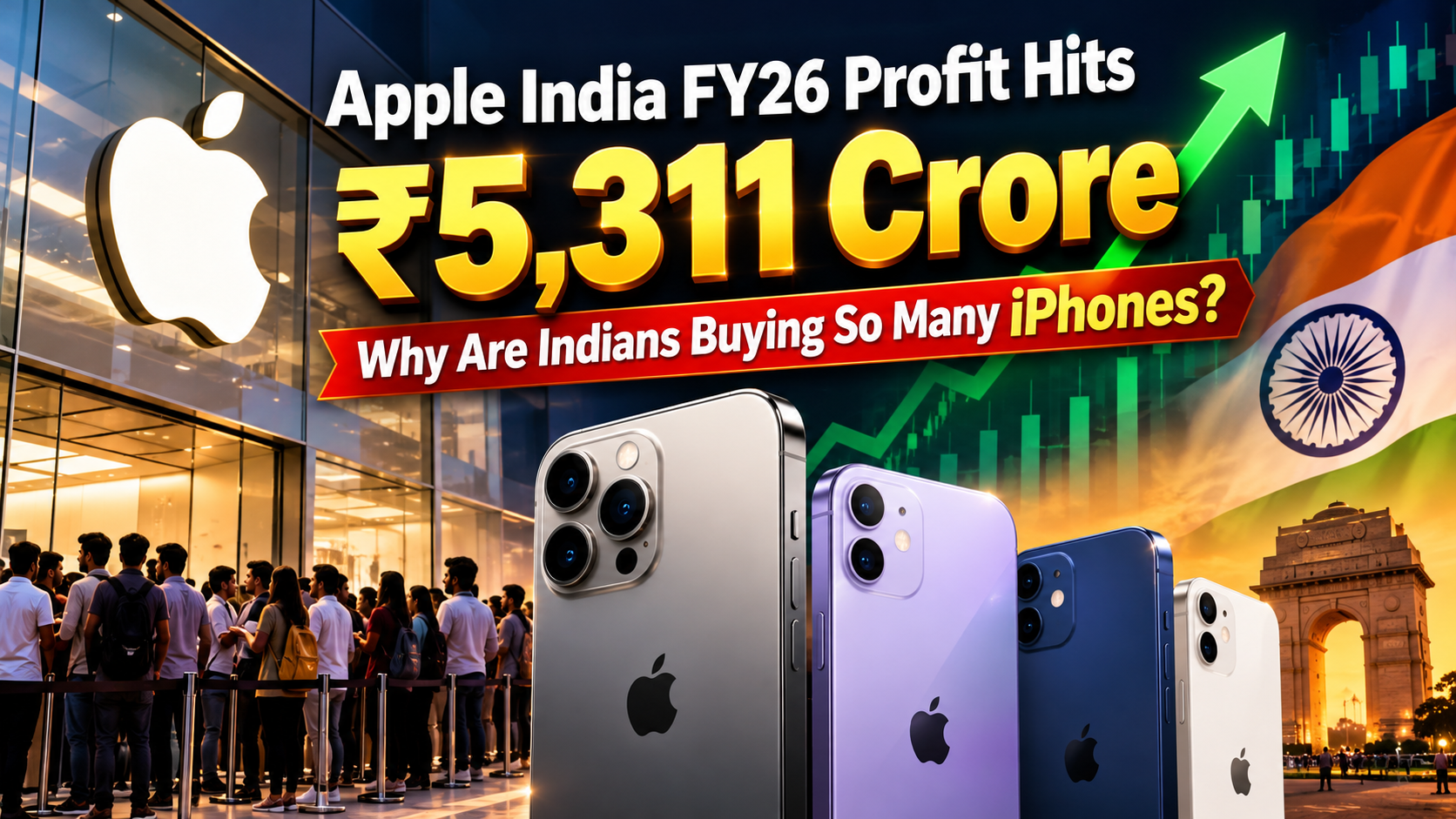
- Apple India's net profit surged 66% year-on-year to reach ₹5,311 crore for the fiscal year ended March 31, 2026.
- Total revenue climbed 31% during the same period, led by soaring iPhone demand and steady upgrades across Indian cities.
- No-cost EMI plans, trade-in exchange bonuses, and festive sales on e-commerce platforms did the heavy lifting.
- Increased local assembly in India helped keep inventory steady across retail shelves without traditional import bottlenecks.
What just happened?
Take a quick look around your local metro coach or the nearest tea stall. You will notice something that would have seemed impossible half a decade ago: the Apple logo is everywhere. College students, food delivery riders, small shop owners, and corporate executives are all carrying iPhones.
Now the official paperwork confirms what your eyes have been seeing on the street. According to regulatory filings reported by media outlet Inc42, Apple India posted a massive 66% jump in net profit for the fiscal year ended March 31, 2026, reaching an astonishing ₹5,311 crore. At the same time, the company's total revenue grew by 31% year-on-year.
These are staggering numbers for any consumer electronics brand in India, especially one that does not sell a single phone under ₹40,000. In a market historically obsessed with budget Redmi and Realme devices, Apple has cracked the code on high-margin luxury tech. India is no longer an afterthought for Cupertino; it has turned into one of its primary growth engines.
The jump in profits outpaced revenue growth by more than double. That tells us an important financial detail: Apple did not just move more boxes. It sold higher-end models, managed operational costs tightly, and earned higher margins from its Indian operations than ever before.
How does this actually work?
How does a brand whose flagship handset costs upwards of a lakh make record profits in a value-conscious country? The answer comes down to financial engineering, clever product positioning, and local factory assembly.
First, nobody in India pays full cash for an iPhone anymore. Walk into any electronics showroom in Chennai, Bengaluru, or Lucknow, and the store executive will not quote you the sticker price of ₹79,900. Instead, they will quote you ₹3,499 per month on a 24-month zero-cost EMI.
By slicing massive prices into monthly chunks that fit neatly inside an entry-level credit card limit or a consumer loan, Apple removed the psychological barrier to ownership. Pair that with exchange bonuses where your three-year-old cracked Android phone fetches ₹12,000, and an iPhone suddenly feels within arm's reach.
Second, the retail pipeline went into overdrive. Festive season bonanzas on Flipkart and Amazon India turned base-model iPhones into impulse purchases. During festive sales, previous-generation models routinely drop to price bands where mid-range Android buyers decide to make the jump.
Third, local manufacturing quietly changed the math. With manufacturing partners assembling millions of iPhones within Tamil Nadu and Karnataka, Apple shielded its supply lines from global shipping snags and heavy finished-goods import duties. That operational efficiency translates directly into better balance-sheet margins.
What changes for people in India?
Apple's surging profit is not just a corporate balance sheet victory; it reshapes the Indian smartphone ecosystem in three visible ways.
For starters, expect Apple to double down on company-owned retail stores. Following its successful company-owned outlets in Mumbai and Delhi, expanding into cities like Bengaluru, Hyderabad, and Pune becomes an urgent priority. Apple wants direct relationships with Indian shoppers rather than relying entirely on multi-brand franchise dealers.
Next, the service ecosystem will follow the hardware boom. As millions of Indians hold an iPhone, demand for authorized repairs, genuine battery replacements, and trade-in hubs will surge. Apple has been pushing its AppleCare warranty packages alongside device sales, building an enduring service revenue stream.
Then comes the software lock-in. Once you buy an iPhone, you rarely stay with just hardware. You end up subscribing to 50 GB of iCloud storage for ₹75 a month via UPI autopay, streaming music on Apple Music, or picking up an Apple Watch or AirPods during the next salary cycle. That recurring income is pure profit for Apple, and it keeps Indian users firmly inside the walled garden.
Android makers are also feeling the heat. Brands like Samsung, OnePlus, and Vivo are having to reinvent their ₹50,000-plus lineups with aggressive trade-in schemes and bespoke AI features just to prevent their existing users from defecting to iOS.
What should you do now?
Seeing everyone flaunt an Apple device can trigger serious gadget envy. But before you rush out to swipe your credit card, take a step back and calculate your real costs.
Do not fall into the trap of buying the latest flagship phone on a lengthy EMI if it stretches your monthly budget to the brink. Remember that no-cost EMI schemes often involve hidden processing fees, credit card GST charges, or missed bank interest benefits. Always check the total debit amount on your loan statement before signing.
If you genuinely want to enter the Apple ecosystem, timing is everything. Avoid buying brand-new models right around their launch window when discounts are non-existent. Instead, watch for festive discounts on e-commerce sites, where older base models offer nearly identical everyday performance for half the cash outlay.
Check battery health and trade-in valuations if you plan to upgrade from an older iPhone. Apple devices hold their resale value reasonably well in the Indian second-hand market, so selling your phone directly through verified peer platforms might net you a better deal than store exchange counters.
This is information, not investment advice.
Where does Apple go from here in India?
Looking ahead, Apple's biggest test in India is expanding beyond its core metropolitan fan base into tier-two and tier-three towns across states like Tamil Nadu, Maharashtra, and Uttar Pradesh. While premium buyers in big cities willingly upgrade every couple of years, shoppers in smaller towns still scrutinize durability, after-sales service reach, and long-term repair pricing before parting with their savings. Apple will have to expand its network of authorized service locations and partner with regional retail chains to maintain this fast pace of growth.
At the same time, maintaining sky-high profit margins will get trickier as consumer financing rules tighten and competition stiffens across the country. Indian regulatory scrutiny around consumer credit and retail lending means banks cannot hand out easy personal loans or high-limit credit cards without strict underwriting checks. If easy monthly installments slow down, premium phone sales could face a reality check. Meanwhile, Android rivals are bundling aggressive discounts, local regional language tools, and free accidental damage covers to tempt fence-sitters away from making the costly iOS switch.
We also need to keep an eye on how much of Apple's global hardware roadmap gets assembled on Indian soil. As local factories in Sriperumbudur and Hosur scale up production lines, local component sourcing is expected to rise alongside domestic assembly. If those industrial cost savings trickle down into slightly cheaper replacement parts, local accessories, or faster repair turnarounds for Indian buyers, the overall ownership experience will become substantially smoother. Watching whether these stellar corporate earnings translate into better customer support on the ground will be the real story to track.





Comments (0)
Be the first to comment!