


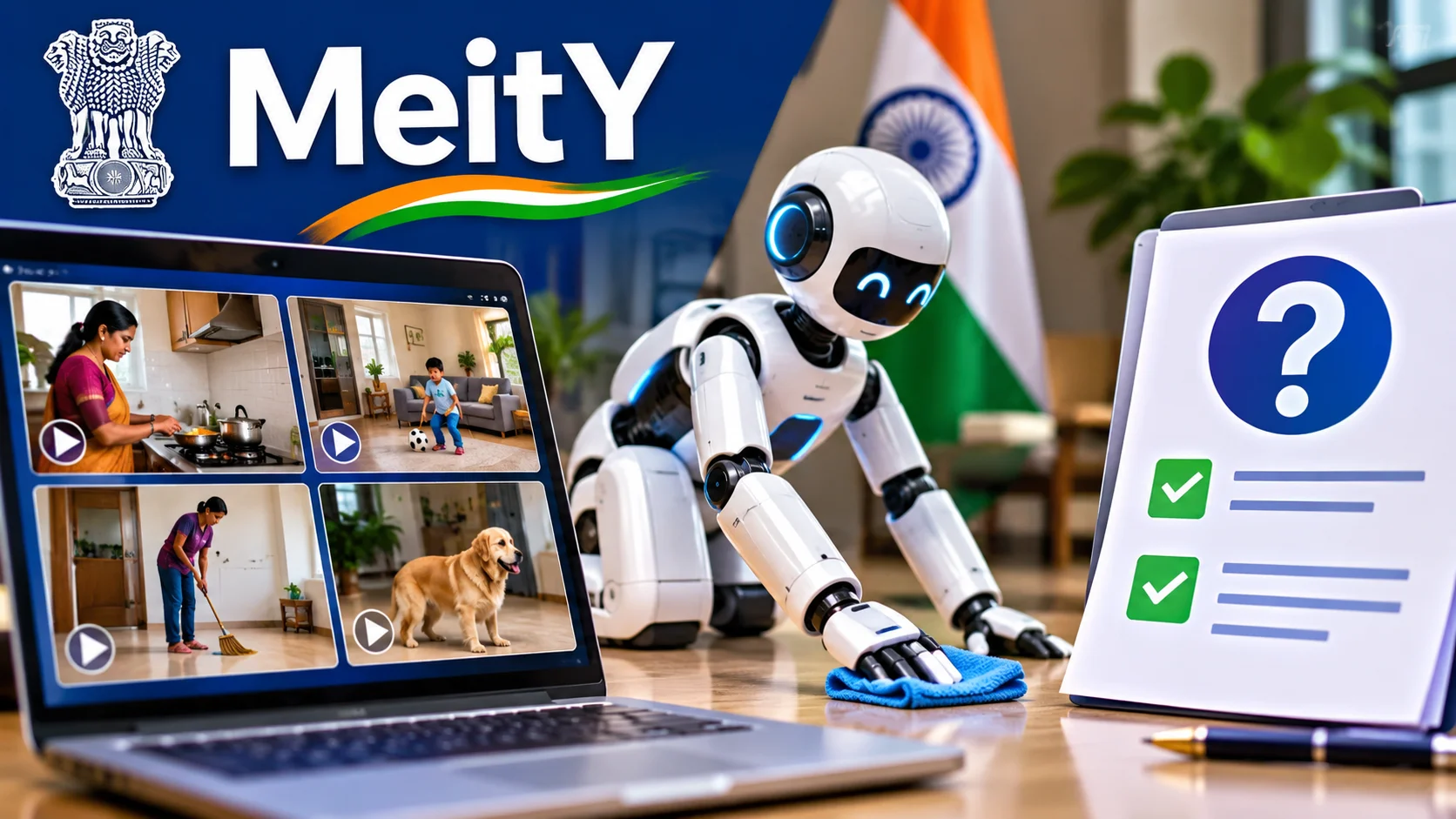
- MeitY has opened a portal so companies can apply to register as consent managers under the DPDP Act.
- A government press release says the Board will assess applications against the requirements and may register qualifying companies.
- A consent manager is meant to be one place where you give, review or withdraw consent for your personal data.
- This is not a new app on your Phone tonight. Registration comes first. Products come later.
- You do not need to apply or share OTPs. Wait for a public register before you trust any dashboard.
What just happened?
You know that pop-up. Allow contacts. Allow location. I agree to the privacy policy. You tap yes because the biryani is late. Then the app sits on your Phone for years with permissions you forgot you gave.
India wants a grown-up layer in the middle of that mess. A registered player whose job is to hold your consents in one place. That player is called a consent manager. Companies can now apply to become one.
MeitY has opened an application portal for firms that want to register as consent managers under the Digital Personal Data Protection Act.
The MeitY Secretary launched the portal, according to a government press release. Media reports, including MediaNama, have covered the same move this month.
The press release says the Board "will assess the applications against the requirements and may register the qualifying companies."
Under the DPDP Act, that Board is the Data Protection Board of India. Referee, not player. It does not run your daily consents. It decides who is allowed to.
No public list of approved names is out yet. A company that says it has applied is not a company you should trust with a dashboard. Applying is a form. Registration is a decision.
How does this actually work?
You are the data principal. The company that decides why it needs your personal data is the data fiduciary - a bank, a shopping app, a telecom brand.
Consent under DPDP is supposed to be free, specific, informed, unconditional and unambiguous. You should be able to withdraw it as easily as you gave it. Giving consent is one tap. Taking it back is usually a hunt through settings and chat support.
A consent manager sits between you and those companies. One window to see, change or pull back what you allowed.
If you have used Account Aggregators in banking, the instinct will feel familiar. That RBI system lets you share bank data with a lender through a consent artefact, not a PDF dump. Different law. Different regulator. Same idea: you keep a hand on the pipe.
The manager must be an interoperable platform. Meaning it cannot be a closed garden that only talks to one company's apps.
It acts on your behalf. It does not own your life story. It routes permissions. The fiduciary still has duties. The Board still has powers if someone breaks the rules.
The press release stays high level on the test: applications against the requirements in the Act and the rules. The word may matters. The Board can refuse.
Who actually gets to say yes?
Not every startup with a privacy page and a lock illustration.
A consent manager will see a map of where your permissions live. Even if the raw data stays with the fiduciary, that map is sensitive. The bar should be high on security, governance and conflicts.
Conflict is the quiet landmine. A manager that also sells you a loan, a SIM or a shopping cart using the same screen is not a neutral remote. It is a shop floor.
MeitY opened the door. The Board walks the application. If a pitch deck says MeitY approved us, pause. The press release points at the Board for assessment and registration.
Until a public register exists, treat landing pages as landing pages.
What changes for people in India?
Not tonight. Opening GPay, Jio or Flipkart this evening will look the same.
The change is plumbing. Once registered managers exist, a bank, a telecom or a shopping site could let you manage consents through that manager instead of a buried menu.
For a Flipkart shopper, the first useful bit is address and order data: who can use it, for what, and till when. For a Jio user, it is account and KYC data sitting with a huge fiduciary.
UPI already trained India to trust a layer that sits on top of many banks. Consent managers want a similar one-pipe job for personal data permissions. They will not replace UPI. They will not replace your Phone's permission screen.
Android and iOS still control camera, SMS and location. DPDP consent is about personal data and purpose - why a company wants your information, not only what the operating system can switch off.
Risks are not theoretical. A badly built manager is a phishing magnet. Update-your-consent texts will show up. A manager too close to one giant fiduciary is a captive portal with a government-sounding badge.
That is why registration is the story, not the portal screenshot. The Board may register. It can also say no.
What should you do now?
If you are a regular user, nothing urgent. Do not share OTPs, Aadhaar copies or consent PINs with anyone claiming they are your new manager. A portal launch is not consumer onboarding.
Do the boring Phone hygiene. Audit app permissions. Revoke what you do not use. Prefer services that let you download or delete your data without a ticket marathon.
When a dashboard eventually appears with a shiny badge, look for Board registration, not the badge design.
If you handle Indian user data as a company, a consent manager does not wash your DPDP duties. You still need a lawful purpose, a notice people can actually read, security, and a way to honour withdrawal.
If you want to be a consent manager, the portal is open. The Board will judge you against the requirements. Do not advertise a registration you do not have.
Will the Allow tap get any less annoying?
Only if two things happen. Enough data fiduciaries plug in, so you are not managing a tiny slice of your digital life in a pretty app and the rest the old way. And withdrawal is as fast as the original Allow.
If the manager is a new maze, people will ignore it the way they ignore cookie walls. Account Aggregators are the closest live drill. Some people use them for loans. Plenty still upload PDFs. Consent managers will face the same grind.
Watch who gets registered. Then decide if you want them holding the remote.




Comments (0)
Be the first to comment!