


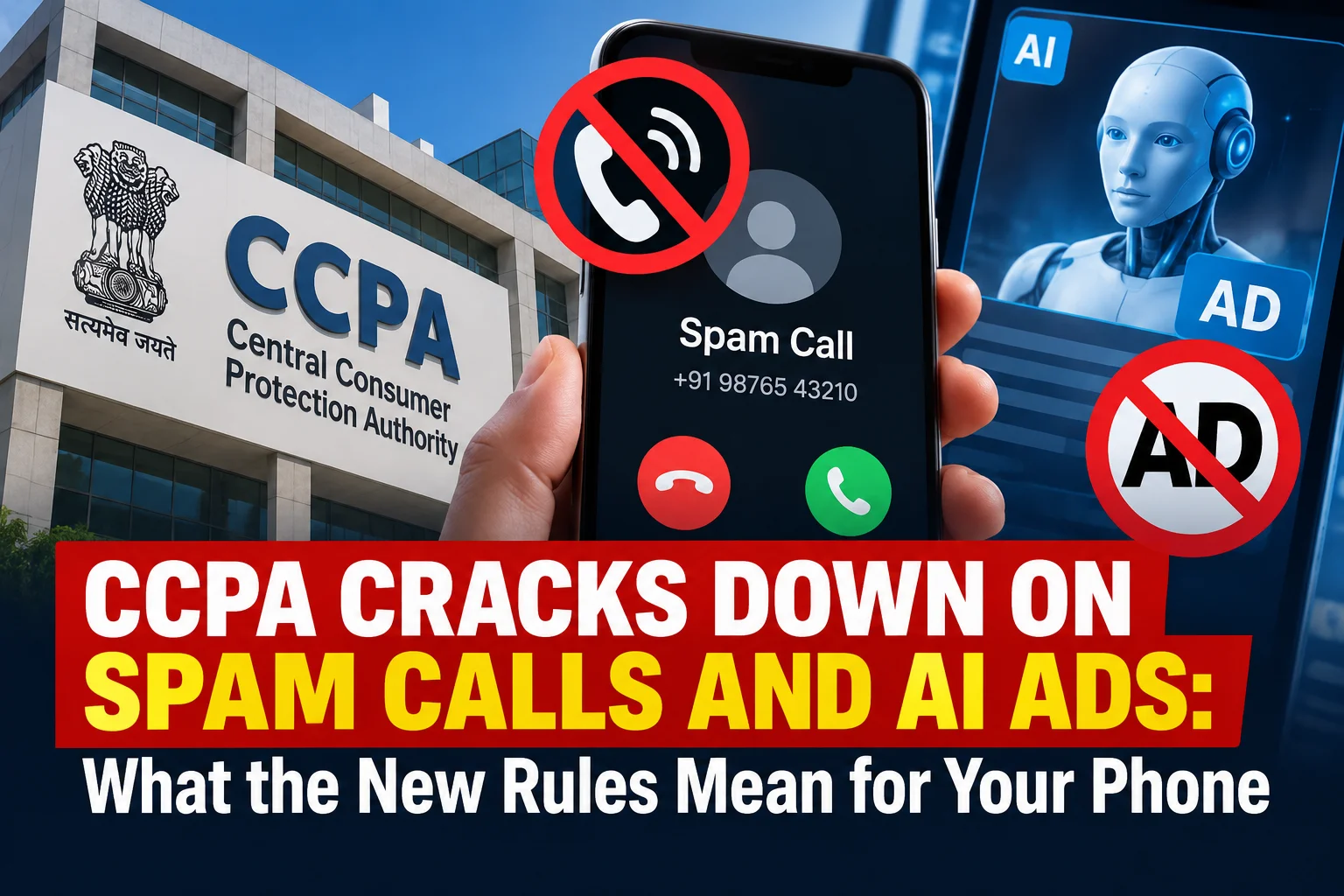
- Draft rules released: The Central Consumer Protection Authority (CCPA) has formulated draft guidelines targeting unsolicited spam calls, bulk promotional messages, and AI-generated ads.
- Legal backbone: The new framework operates under Section 18(2) of the Consumer Protection Act, 2019, classifying pushy and deceptive outreach as an unfair trade practice.
- Direct penalties: Violations will trigger enforcement actions, advertisement recalls, and financial penalties under Sections 20 and 21 of the Act.
- AI under scrutiny: Brands using synthetic voice clones, automated robocalls, and AI-generated promotional pitches face strict compliance mandates.
What just happened?
Picture this: you are standing at a local tea stall, phone in hand, trying to scan a UPI QR code to pay for your morning tea. Right as you enter your PIN, your screen lights up with an unknown number. You answer, expecting a delivery agent, only to hear a robotic voice pitching a pre-approved personal loan or an apartment in the city outskirts. It happens during meetings, inside movie halls, and right in the middle of family dinners.
The Central Consumer Protection Authority (CCPA) is now moving to pull the plug on this daily nuisance. The regulatory body has prepared draft guidelines specifically aimed at clamping down on unsolicited commercial communications, pushy SMS blasts, and the fast-growing wave of AI-generated promotional calls.
For years, phone users in India have juggled DND registries, Truecaller filters, and carrier-level spam tags with mixed results. Telemarketers simply hopped between unregistered 10-digit mobile numbers or routed calls through automated VoIP setups. Now, the consumer watchdog is treating intrusive commercial outreach not just as a telecom hiccup, but as an unfair trade practice under consumer law.
How does this actually work?
The entire framework draws its legal strength from Section 18(2) of the Consumer Protection Act, 2019. This section gives the CCPA broad executive authority to prevent unfair trade practices, protect consumer rights as a class, and ensure that no enterprise pushes misleading promotions onto buyers without their explicit consent.
When a telemarketer or an enterprise crosses the line, the draft guidelines plug directly into Sections 20 and 21 of the Act. That means the CCPA can issue binding directions, order companies to cease and desist, pull deceptive advertisements off the air, and slap direct financial penalties on businesses that fund these spam pipelines.
The guidelines also cast a wide net over modern digital marketing tricks. Beyond traditional call centers, the framework targets synthetic media, deepfake voice clones, and automated interactive voice response (IVR) setups that mimic human callers. If an AI system calls you pretending to be a bank executive or uses an unauthorized voice clone to pitch an investment plan, the company backing that campaign faces regulatory heat.
What changes for people in India?
The biggest shift is accountability. In the past, whenever an aggressive telemarketing campaign flooded millions of Jio or Airtel connections with scammy real estate offers or crypto advice, the parent brand often blamed external third-party agencies. The new rules aim to shut that escape hatch by holding the originating enterprise accountable for the messages sent in their name.
Platforms and aggregators will also need cleaner opt-in records. If a business claims you consented to promotional WhatsApp texts when you bought a train ticket or signed up for a retail discount coupon, they must prove genuine, unforced consent. Bundled check-boxes buried inside long terms-and-conditions sheets will no longer serve as a legal shield.
For anyone using a smartphone in India, this could mean fewer phantom vibrations throughout the day. It also creates a clearer grievance route. Instead of merely blocking numbers one by one on your dialer app, consumers can file formal complaints against persistent offending brands directly through national consumer grievance mechanisms.
What should you do now?
While the guidelines move through public consultation and final notification, keeping your device hygiene sharp is still your best immediate defense. Make sure your primary SIM has full Do Not Disturb (DND) activated through your network provider's official app or by sending a quick request to 1909.
Be mindful of where you share your primary phone number. Retail checkout counters, online sweepstakes, and random mall Wi-Fi login pages often trade customer contact lists to telemarketing syndicates. Using a secondary number or an alternate email for casual shopping can save your main phone from landing on bulk calling databases.
Whenever an automated bot or aggressive caller refuses to honor your request to stop, note down the caller details, the brand they represent, and the exact timestamp. When the new CCPA guidelines take full effect, having clear records will make reporting these violations to the National Consumer Helpline straightforward and actionable.
Why won't spam calls vanish overnight?
Drafting clear regulations is one thing, but tracking down shadow telemarketers operating through spoofed VoIP channels and unregistered local SIM pools is an entirely different battle. Fly-by-night loan apps and aggressive insurance brokers frequently rotate hundreds of burner connections daily, making it tricky for telecom filters and automated regulators to pinpoint the master entity behind a robotic dialer. Until network operators work hand-in-hand with consumer authorities to block traffic at the switchboard level, enforcement on rogue operators will take persistent tracking and strict audit trails.
Legitimate businesses also have a steep hill to climb when redesigning their customer onboarding flows. In India, e-commerce platforms, fin-tech wallets, and food delivery apps have long relied on pre-checked boxes or obscure privacy consent clauses tucked away inside checkout screens. Moving toward explicit, verifiable opt-in records means engineering cleaner user interfaces and overhauling marketing databases so that consumer consent is transparently tracked and easily revoked without making shoppers jump through endless customer support hoops.
Looking ahead, the real test will be how smoothly the CCPA coordinates with the telecom department and existing regulatory setups to penalize high-profile corporate violators. Once the draft passes through public consultations and reaches final notification, the focus will turn to early test cases where major brands face actual financial penalties under Section 21. Seeing a few hefty enforcement actions against big commercial offenders will be the decisive factor that pushes marketing agencies across India to clean up their calling lists for good.

Comments (0)
Be the first to comment!