


Key Takeaways
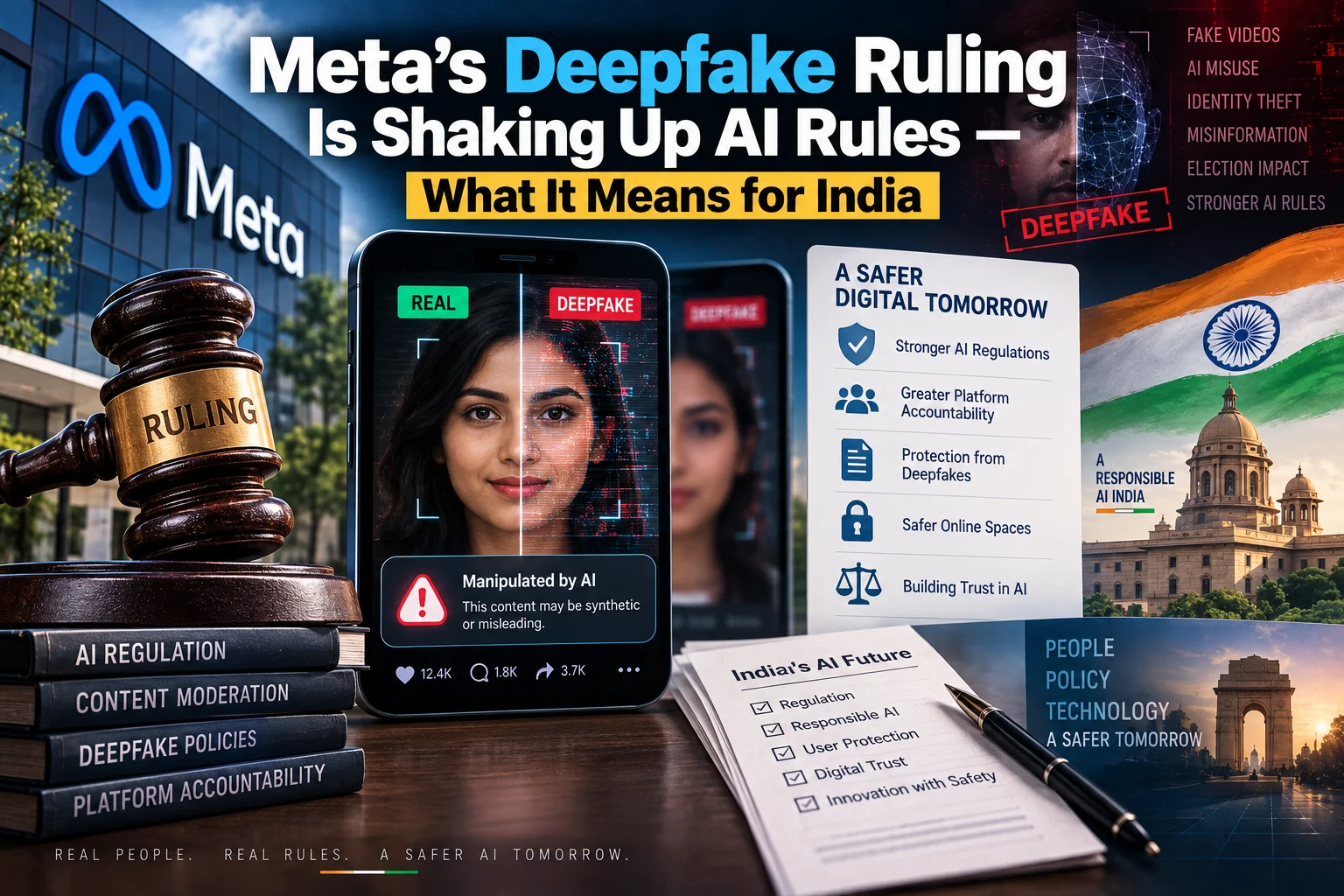
- Meta’s independent Oversight Board overturned a decision to leave up an AI deepfake of a politician, calling for far stricter rules.
- The board wants prominent warning badges, real account penalties for repeat offenders, and tighter safeguards for political content.
- For India, where viral AI clips spread rapidly across WhatsApp and Instagram Reels, this puts fresh pressure on platforms to clean up their feeds.
- Creators making parody, political satire, or AI voice clips will face stricter disclosure checks and quicker takedowns if they skip tags.
What just happened with Meta and this deepfake ruling?
You have probably run into one of those strange, uncanny clips on your Instagram feed or a family WhatsApp group. A regional political leader appears on screen, looking straight into the camera, and says something so shocking that your thumb freezes mid-scroll. You look closer at the lips, notice the slight blur around the collar, and wonder if someone generated the whole thing on a laptop in five minutes. That exact scenario just forced a major policy rethink inside Meta.
The company’s independent Oversight Board officially overturned Meta’s earlier decision to leave up a synthetic, AI-generated video targeting a Scottish local councillor. In the original instance, Meta had decided to let the clip stay online. Why? Because the video did not technically violate their older, narrow manipulated media rules that only flagged specific forms of video tampering. The board stepped in and stated clearly that this technical loophole makes zero sense in 2026.
Instead of giving deceptive synthetic media a free pass on technicalities, the Oversight Board called for sweeping changes. They pushed for much broader AI labelling, real account penalties for pages spreading deceptive synthetic media, and dedicated safeguards around political figures. While the original case involved a UK council member, the ripple effects land straight in India, where digital campaigns and synthetic audio clips move at lightning speed.
Why did the old system fail so badly?
To understand why this ruling matters, you have to look at how tech platforms have been trying to catch AI content until now. Meta largely depended on automated metadata detection and standard user reporting. When an image or video comes out of tools like Midjourney or commercial voice cloners, it often carries an invisible digital watermark or metadata signature. Meta’s filters look for that tag and slap on a tiny 'Made with AI' label.
The problem is that this safety check is incredibly easy to bypass. Anyone with a basic smartphone app can screen-record the generated clip, run it through a quick video compression tool, strip out the metadata, and upload it fresh. By the time automated systems or human moderators take notice, the video has already hopped from an Instagram Reel to thousands of private WhatsApp groups and Telegram channels.
Worse still, the old rules only applied when AI made a person look like they said words they never actually spoke, but often excused audio-only fakes, cheap face swaps, or synthetic clips framed as rough satire. Bad actors quickly learned to exploit those grey areas, creating content that looked like genuine breaking news while evading automated filters.
What does Meta's Oversight Board actually want changed?
The Oversight Board did not just ask for minor tweaks. They laid out a practical framework that forces Meta to treat synthetic political media with real urgency.
First, they called for unmissable warning labels. Instead of hiding a subtle 'AI info' tag inside a three-dot menu or at the bottom corner of a post, high-risk political fakes need clear, prominent badges that warn everyday users before they hit the forward button.
Second, the board demanded tangible penalties for repeat offenders. If a page or creator repeatedly uploads deceptive, unlabelled deepfakes targeting public figures, they should face algorithmic reach penalties, demonetisation, or temporary account suspensions. Without real consequences, political troll farms and engagement-hungry pages simply treat small labels as the cost of going viral.
Third, the recommendations push for stronger protections around public figures and elections. Political candidates and local representatives often bear the brunt of synthetic smear campaigns, and platforms cannot afford to wait weeks while review tickets sit in a queue.
Why does this matter so much for India right now?
In India, political discourse runs on ultra-cheap 5G data and massive group chats. During assembly elections and regional civic polls, deepfakes are no longer futuristic sci-fi concepts. They are active campaign tools. We have already seen cloned voices of party leaders reading out fake manifestos, altered rally speeches designed to stir communal friction, and synthetic audio drops timed right before voting days.
India's Ministry of Electronics and Information Technology (MeitY) has been tightening the screws on social platforms under the Information Technology Rules. Government advisories have repeatedly warned intermediaries that they must identify synthetic content and take down unlawful deepfakes within strict statutory deadlines. If Meta revamps its global deepfake detection and enforcement playbook to satisfy the Oversight Board, Indian users and regulators will see direct impacts on the ground.
Regional language content is where the real test lies. While AI detectors work reasonably well on polished English videos, they often struggle with local dialects, street-level Tamil, Hindi, or Telugu voice clones. When a manipulated audio clip starts making the rounds in Tier-2 and Tier-3 towns, platforms need regional moderation systems that act before the narrative spins out of control.
How does this hit Indian creators, meme pages, and daily users?
If you run a meme page, a parody channel, or a tech review account on Instagram or YouTube, this ruling signals a major shift in how you handle your workflow.
Many Indian creators use AI voice tools for comedic timing, movie parodies, or dramatic voiceovers. Up until now, many pages skipped the self-disclosure toggles because they worried it would hurt their reach. That strategy is about to become risky. Under stricter rules, uploading unlabelled AI audio or video could trigger automated shadowbans, loss of creator monetization, or sudden strikes against your page.
For everyday users scrolling on their phones during a metro ride, this means your feeds might soon look a lot more transparent. You will likely see clearer warning badges on synthetic media across Facebook, Instagram, and Threads. If a video looks suspicious, reporting it under manipulated media categories should trigger faster review queues rather than disappearing into an automated void.
How can you spot these synthetic clips before hitting share?
You do not need a degree in machine learning to catch most political deepfakes. A few simple visual and audio checks can keep you from spreading deceptive clips to your family and friends.
Start by looking at the small physical details. AI video models still struggle with natural eye movement, teeth definition, and earlobes. When a person turns their head sideways, watch if their earrings, spectacles, or collar lines distort or melt for a split second. Real human faces do not blur around the edges when moving under normal camera lights.
Next, focus on the audio cadence. Cloned voices often sound strangely flat, missing the natural breath pauses, microphone pops, and ambient background crowd noises you hear at an Indian press briefing or public ground rally. If the voice sounds sterile and perfectly studio-mixed while the politician is standing in the middle of a noisy street, treat it with extreme suspicion.
When a viral clip triggers intense anger or shock, pause for thirty seconds. Check if mainstream news outlets or verified regional journalists are reporting the same event. If the only place that sensational video exists is an anonymous Telegram handle or a forwarded WhatsApp message, do not pass it along.



Comments (0)
Be the first to comment!