


முக்கிய விஷயங்கள்
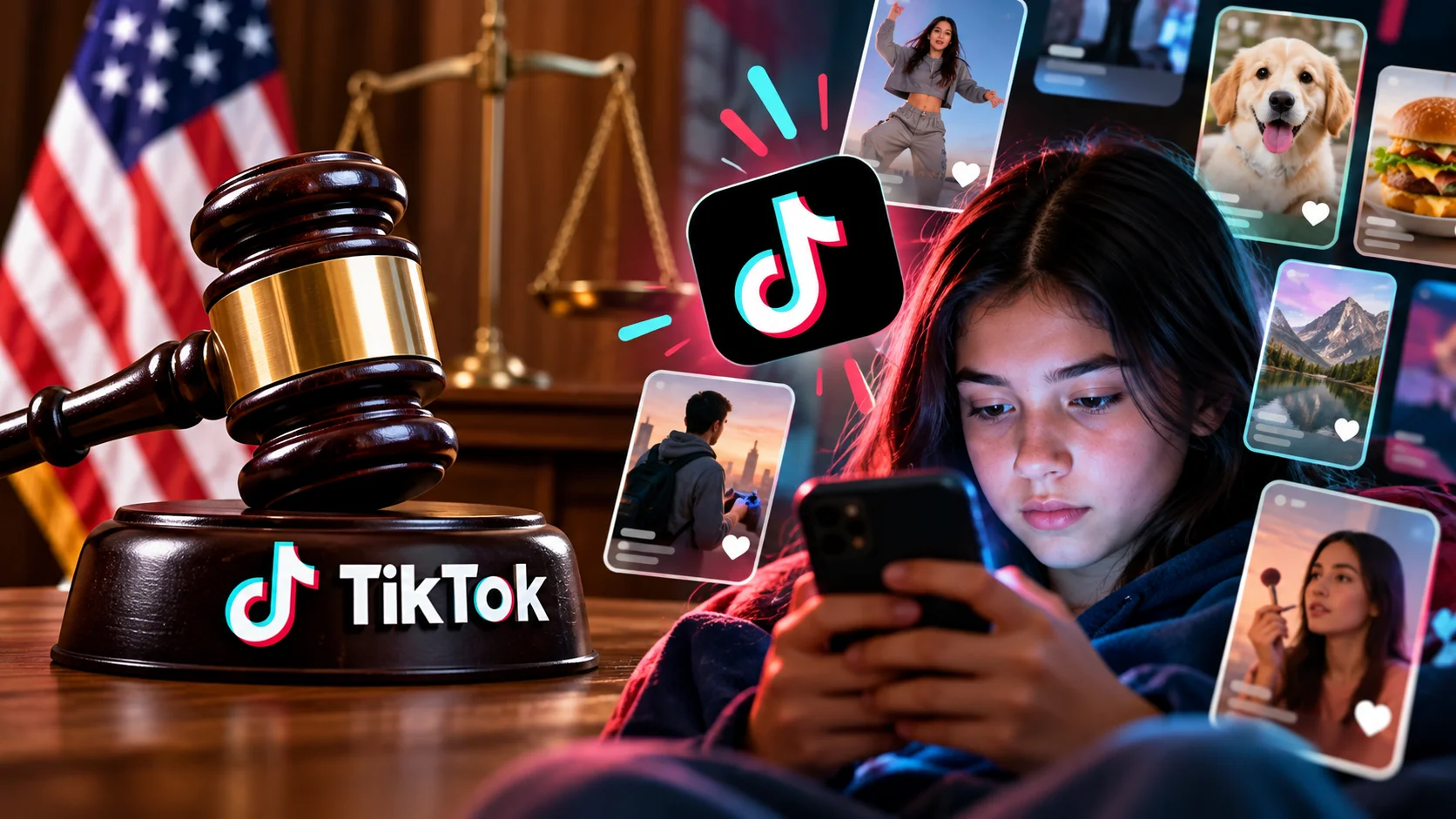
- Alabama is taking TikTok and parent ByteDance to a jury over claims the app was made addictive for young users and sold as safer than it is.
- This is the first case in the wider US teen mental-health litigation wave to actually reach trial, so the courtroom test matters beyond one state.
- The fight is less about one viral video and more about design choices: endless scroll, recommendation loops, and how risk was explained to families.
- TikTok stays banned in India, but the same anxiety sits on Instagram Reels, YouTube Shorts, and other short-video apps kids already live inside.
- Parents do not need to wait for a verdict—basic phone rules, age settings, and open talks still do more day-to-day good than any headline.
What just happened?
Picture this. Dinner is on the table. Your teen is “just finishing one video.” Twenty minutes later the plate is cold and the thumb is still moving. That small daily scene is basically what a courtroom in Alabama is now being asked to judge at full volume.
A state case against TikTok and its Chinese parent ByteDance is heading to a jury. Alabama says the platform was shaped to keep young users hooked, and that families were given a softer story on safety than the product deserved.
This is not another angry press note. It is the first case in the broad US litigation pile over teen mental health and social apps to reach an actual trial. That alone changes the temperature. Lawsuits can sit in folders for years. A jury means real people hear the story, see the evidence style, and return a public answer.
The core charge is simple to say and hard to prove: addictive design aimed at youth, plus consumer-facing claims that downplayed harm. Prosecutors and plaintiffs in this wave have long argued short-video feeds are not neutral pipes. They say the product steers attention, stretches session time, and lands hardest on kids still building self-worth and sleep habits.
TikTok and ByteDance have pushed back in the wider fight the way big platforms usually do—users choose content, parental tools exist, mental health has many causes, and correlation is not a courtroom slam dunk. A trial is where those talking points meet documents, experts, and cross-examination.
Why should you care from Chennai or Pune if the docket is in Alabama? Because the argument is about a product pattern kids recognise in any language: open app, get a hit, get another hit, forget you opened it “for a minute.”
How does this actually work?
Strip the legal theatre and you get three buckets.
First, product design. Short-video apps reward rapid feedback. Like, skip, watch again, share. The recommendation system learns fast. Stay on dance clips, get more dance clips. Linger on appearance content, get a thicker stream of the same. Critics call that a hook. Companies call it personalisation. A jury will be asked which label fits when the user is 13 or 15.
Second, age and safety messaging. Families were told, in broad public marketing and in-product language over the years, that tools and policies keep younger users safer. States in these cases say the gap between the brochure and the lived feed is the problem—especially around compulsive use, sleep loss, body image pressure, and exposure to harsh content spirals.
Third, corporate structure. Naming ByteDance matters in US politics and in discovery fights. Parent and subsidiary lines decide who knew what, which teams shipped which features, and how growth targets sat next to trust and safety work. Jurors do not need a Shanghai org chart. They need a clean story of responsibility.
Trials like this rarely turn on one smoking-gun memo alone. They turn on patterns: internal goals around time spent, experiments on ranking, how risk research was handled, what was said to the public, and what teens describe in their own words. Expect expert witnesses on adolescent psychology. Expect product demos that look boring in court and very familiar on the sofa.
Also expect limits. A courtroom is a bad place to settle the entire science of social media and depression. Mental health is messy. School stress, family conflict, genetics, pandemic years, and offline bullying all sit in the same room. The legal question is narrower: did this company design and market in a way that broke consumer-protection or public-nuisance style duties toward young users under that state’s law?
If Alabama’s case lands a clear jury finding, other states and private suits gain a template. If TikTok wins cleanly, defendants across the industry gain a shield for settlement talks. Either way, the first trial sets a reference tone.
One more practical note. “Addictive” in headlines is not the same as a medical diagnosis in every teen’s file. In product language it usually means engineered habit loops—variable rewards, infinite scroll, notifications timed to pull you back. You already know the feeling from checking one more Short before sleep.
What changes for people in India?
TikTok itself is not on Indian phone stores. The ban has been in place for years. So nobody here is waiting for an Alabama verdict to reinstall the app on Jio fibre night Wi‑Fi.
The behaviour moved. Instagram Reels, YouTube Shorts, Snapchat, and a long tail of clone apps filled the same pocket of time. The scroll muscle did not leave the country with the TikTok brand. If anything, multi-app hopping made parental control harder, because the “one app problem” became a “whole home screen problem.”
Indian families already argue about this at the dining table. Board exam year versus late-night scrolling. Cricket reels versus sleep. Appearance filters versus a 16-year-old’s confidence after tuition. Teachers talk about attention spans in ways that sound a lot like the US complaint language, even when the app logos differ.
A US jury outcome will not rewrite Indian IT rules overnight. It can still shift three things you will feel indirectly.
Platform caution. Global apps share playbooks. When one major market drags design and youth safety into open court, ranking teams and trust teams elsewhere pay attention. Feature rollouts, default settings for teen accounts, and friction around screen time sometimes tighten after legal heat, not before.
School and parent scripts. Counsellors and parent groups in Indian cities already borrow language from international research and news. A high-profile trial gives them fresher examples for workshops—without anyone needing to pretend TikTok is still mainstream here.
Policy mood. India regulates intermediaries in its own way. Public proof that youth harm claims can survive all the way to a foreign jury strengthens the political comfort zone for tighter age checks, faster takedowns, and harder questions about recommendation systems. It does not automatically create a new Act next week. It feeds the climate.
Money angle stays simple for households. Data packs are cheap. Attention is not. A 15-year-old burning three hours a night on Reels is spending the same scarce resource Alabama is arguing about—focus, sleep, mood—regardless of whether the company name on the icon is TikTok or something else.
Also be honest about class and access. In many Indian homes the teen’s phone is the family’s entertainment centre, homework tool, and social life in one cheap Android body. Blanket “just ban the phone” advice fails. Better defaults and clearer family contracts fit our reality more than US-style device abundance lectures.
What should you do now?
Do not wait for twelve jurors in Alabama to parent your living room.
If you have a younger teen, start with architecture, not speeches. Charge the phone outside the bedroom. Night mode with a real cutoff beats a motivational monologue at 1 a.m. Move the most magnetic apps off the home screen. Make opening them a tiny bit annoying. Friction works.
Use the controls you already have. Google Family Link, Apple Screen Time, YouTube supervised experiences, Instagram family centre style tools—none of them are perfect. All of them are better than zero. Set age-appropriate accounts. Turn off autoplay where you can. Lock downloads so new apps cannot appear quietly after dinner.
Talk about design out loud. Kids hate lectures. They respect being treated like someone who can spot a trick. Tell them the feed is a machine trained to guess what keeps them watching. Ask what content leaves them lighter versus smaller. That single question does more than a printed rule chart.
Watch for cluster signs, not one bad day. Sleep collapse, sudden body obsession, withdrawal from offline friends, grades falling off a cliff, secrecy about accounts. One moody week is being 14. A pattern is a prompt to act—school counsellor, paediatrician, or a trusted adult outside the argument loop.
If you are a young user reading this yourself, try a seven-day experiment. Cap short video to a fixed window. Replace one night scroll with anything embodied—walk, cricket downstairs, sketching, even boring chores. Check mood and sleep on day seven. You do not need a US verdict to run a personal trial.
Schools can help without turning into police. Phone-free stretches that are consistent beat random raids. Digital-citizenship sessions that explain recommendation loops beat fear slideshows. Parents’ WhatsApp groups should share settings guides, not only panic forwards.
For India-specific practicality: if the household shares one mid-range phone, agree slots. Sibling fights over Reels are often time-budget fights in disguise. Write the agreement on paper once. Paper still wins arguments better than memory.
Follow the Alabama case as a citizen, not as a substitute for homework at home. Verdicts can nudge companies. They rarely tuck your kid in at night.
And keep the tone human. The goal is not to raise a child who never sees a funny video. The goal is a kid who can feel the pull, name it, and still choose sleep before another round.




Comments (0)
Be the first to comment!