


Key Takeaways
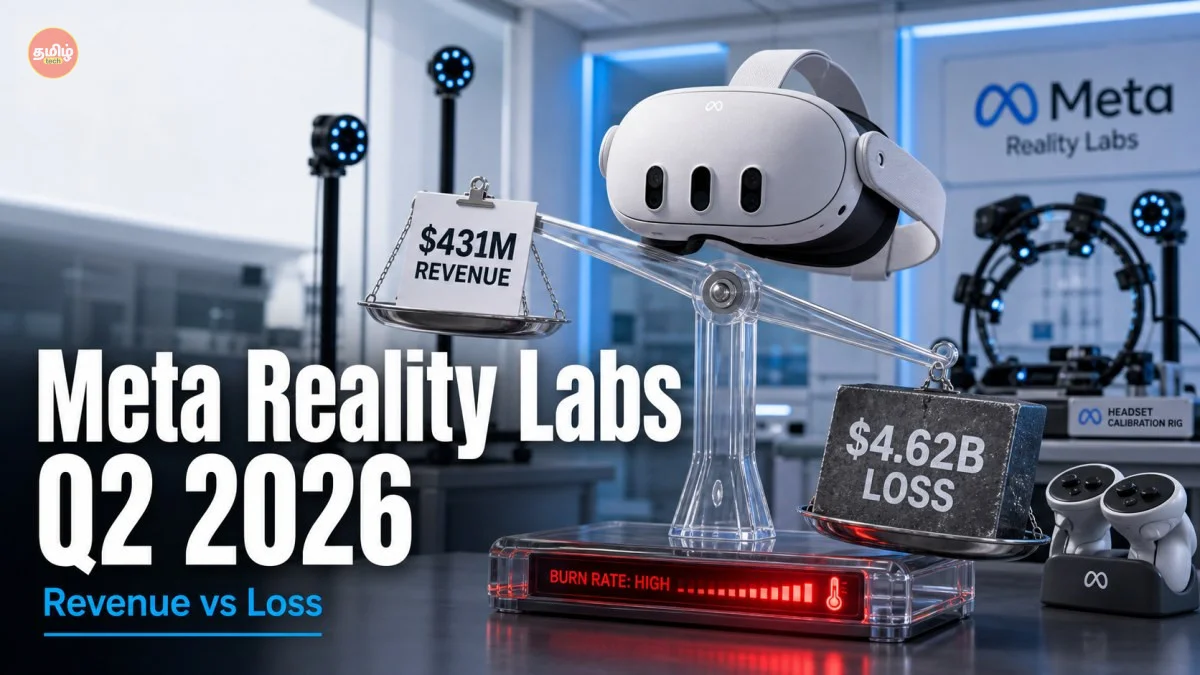
- Meta Reality Labs Q2 revenue hit $431 million, a 16% year-over-year increase, beating analyst estimates of $423.4 million.
- The division posted a staggering operating loss of $4.62 billion, which, while better than the estimated $5.07 billion, shows the immense cost of the metaverse push.
- This financial performance underscores that Meta's metaverse strategy is a long-term bet, with profits still a distant goal despite growing hardware sales.
What's the News?
Meta just dropped its Q2 2026 earnings, and the numbers from its Reality Labs division are a mixed bag. On one hand, the revenue story is surprisingly good. On the other, the loss is still absolutely gigantic. It's the classic Meta metaverse tale: growing top-line, but the bottom line is still bleeding cash.
Details
Let's break it down. Reality Labs, the division responsible for the Quest VR headsets and all things metaverse, brought in $431 million in revenue. That's a solid 16% jump from the $371.8 million it made in the same quarter last year. Analysts were predicting a more modest $423.4 million, so Meta managed to squeak out a beat. Good for them.
But then you look at the profit and loss statement. Reality Labs posted an operating loss of $4.62 billion. That's a lot of zeroes. The Wall Street crowd was pencilling in an even worse loss of $5.07 billion, so in that sense, Meta did 'beat' expectations again. But a $4.62 billion loss is still a $4.62 billion loss. It's like saying you only lost ₹400 crore instead of ₹500 crore – still a disaster, just a slightly smaller one.
The revenue is clearly coming from the Quest headset sales. More people are buying the Quest 3, and that's driving the top-line growth. The hardware is getting better and the price point is becoming more accessible, which is helping. But the software ecosystem, the apps, the experiences that will truly make the metaverse a 'place' people live in, are still a work in progress. And building all of that costs a fortune.
India Impact
For India, this news is a double-edged sword. On the one hand, the Quest 3 is a hot product here, and its falling prices (thanks to the strong dollar and local manufacturing pushes) are making it more accessible to the Indian tech enthusiast. The 16% revenue growth suggests this trend is continuing globally, which could mean better availability and pricing for Indian consumers.
On the other hand, this massive loss shows just how much money a company needs to pour in before something like the metaverse becomes mainstream. For Indian startups and entrepreneurs looking to build in the 'metaverse' space, this is a cautionary tale. It's not an overnight gold rush. It's a long, expensive slog. The big players have billions to burn, but for everyone else, the path to profitability is incredibly tough. It also means that for Indian users, the 'killer app' for VR/AR that justifies the purchase might still be a few years away.
Use Cases
Despite the losses, the use cases for Meta's hardware are slowly expanding. We're seeing more enterprise adoption for training and collaboration. Imagine a factory in Pune using Quest headsets for remote expert assistance, or a design team in Mumbai collaborating on a 3D model in a virtual space. That's happening, and it's a real revenue driver.
For consumers, the use cases are still a bit fragmented. Gaming is the big one, but it's mostly ported from PC or mobile games. Social VR platforms like Horizon Worlds are trying to build a community, but they haven't hit the mainstream yet. Productivity apps are getting better, but they still feel like a solution looking for a problem for the average person. The potential is huge, but we're not there yet.
Honest Take
Look, let's be honest. Meta is burning through cash at an alarming rate to fund its metaverse vision. The Q2 numbers don't change that fundamental fact. Beating revenue estimates is nice, but it's like getting a gold star for your homework when you're failing the entire class. The $4.62 billion loss is the real story here.
Mark Zuckerberg is all in on the metaverse, and he's willing to wait years, maybe a decade, to see it pay off. For a company the size of Meta, that's a viable strategy. But it's a massive gamble. If the metaverse doesn't take off in the way he envisions, this could go down as one of the most expensive corporate bets in history.
For now, the Quest headsets are selling, and the revenue is growing. That's the only thing that matters to Wall Street in the short term. But the long-term question remains: is the metaverse a future we all want to live in, or just a very expensive video game?





Comments (0)
Be the first to comment!