


What’s the news?
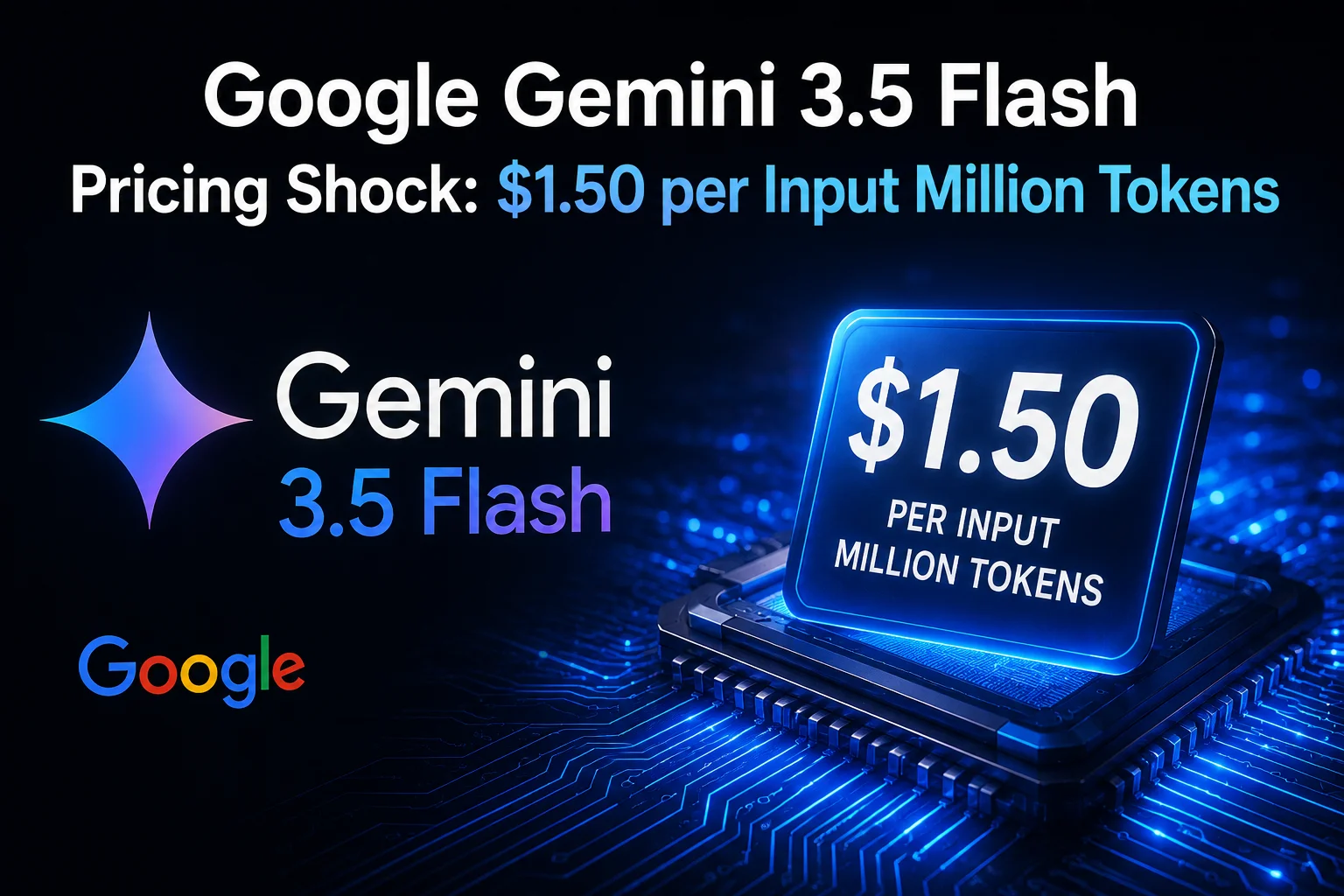
Google just lifted the price tag on its latest LLM, Gemini 3.5 Flash. The model now charges $1.50 for every million input tokens and $9 for every million output tokens. That’s roughly three times what the Gemini 3 Flash preview cost and six times the Gemini 3.1 Flash‑Lite rate.
Numbers broken down
Let’s put the math in plain terms. One million tokens is about 750 KB of text – think of a 150‑page novel. With the new rates you’ll pay:
- $1.50 for every million tokens you feed the model (input).
- $9.00 for every million tokens the model spits out (output).
Converted to Indian rupees (₹) at today’s exchange (≈₹83/USD), that’s roughly ₹125 per input million and ₹750 per output million. For a typical chatbot that sends back 200‑token replies, the cost per chat is about ₹0.15 – still cheap, but it adds up fast at scale.
Why the jump?
Google says the price reflects the extra compute horsepower behind Gemini 3.5 Flash. The model is larger, faster, and supports more context (up to 100k tokens). In short, you get better reasoning, longer memory, and lower latency – but you also pay a premium for those gains.
Impact on Indian developers
India’s startup ecosystem loves Google’s AI APIs because they’re easy to integrate and come with generous free tiers. Here’s how the new pricing reshapes the landscape:
- Early‑stage apps: If you’re still in the MVP phase, the free quota (500 k input + 200 k output tokens per month) still covers a decent amount of testing. But once you cross that line, the new rates will bite.
- Enterprise‑grade bots: Companies building large‑scale customer‑service bots (think Swiggy or IRCTC) will see a noticeable bump in monthly AI spend. A bot handling 1 M queries a month, each 100‑token reply, would cost roughly ₹75,000 – a non‑trivial budget line.
- Education & research: Universities that use Gemini for language‑model research must now factor in higher cloud costs. Many will look for cheaper alternatives like OpenAI’s gpt‑3.5‑turbo or local open‑source models.
How does it compare locally?
Let’s line up the big players in India:
| Model | Input Cost (per 1M tokens) | Output Cost (per 1M tokens) | Typical Use‑Case |
|---|---|---|---|
| Gemini 3.5 Flash | ₹125 | ₹750 | Advanced chat, code‑assist, long‑form writing |
| Gemini 3.1 Flash‑Lite | ₹20 | ₹125 | Basic Q&A, summarisation |
| OpenAI gpt‑3.5‑turbo | ₹150 | ₹600 | General purpose chat |
| Claude 3 Haiku (Anthropic) | ₹180 | ₹720 | Creative writing, brainstorming |
Gemini 3.5 Flash still wins on latency and context length, but the price gap is real.
TamilTech‑ஓட கருத்து
Honestly, the hike feels a bit aggressive for a market that’s still price‑sensitive. Indian developers love the “pay‑as‑you‑go” model, but they also watch every rupee. If you’re a bootstrapped founder, you might stick with Gemini 3.1 Flash‑Lite or even explore local LLMs like Mistral‑7B that you can host on a cheap cloud VM.
On the flip side, if your product needs that extra 100k‑token context window – think legal document analysis or multi‑turn tutoring – Gemini 3.5 Flash could be worth the extra spend. The key is to measure cost per value rather than just raw token price.
Tips to keep the bill low
- Chunk wisely: Break large inputs into smaller pieces and only send the necessary context. That reduces input tokens.
- Cache responses: For static FAQs, store the model’s answer once and reuse it instead of calling the API every time.
- Use streaming: Streaming output lets you stop generation early if you’ve got the answer, saving output tokens.
- Monitor usage: Set up alerts in Google Cloud Console when you hit 70% of your free quota.
What’s next?
Google hinted at a “Gemini 3.5 Flash Pro” tier with even lower latency but higher price. Expect more tiered options in the coming months as competition heats up. Keep an eye on the Google Cloud AI blog for any discount programs aimed at Indian startups – they’ve done that before for GCP credits.
Bottom line: Gemini 3.5 Flash is powerful, but the new pricing means you have to be smarter about when and how you call it. Measure, optimise, and decide if the extra performance justifies the cost.




Comments (0)
Be the first to comment!