


Key Takeaways
- Nvidia currently controls over 80% of the high-end AI chip market in India as of July 2026.
- The three-way cloud battle between AWS, Google Cloud, and Microsoft Azure is essentially a fight to see who can buy and rent out more Nvidia Blackwell chips.
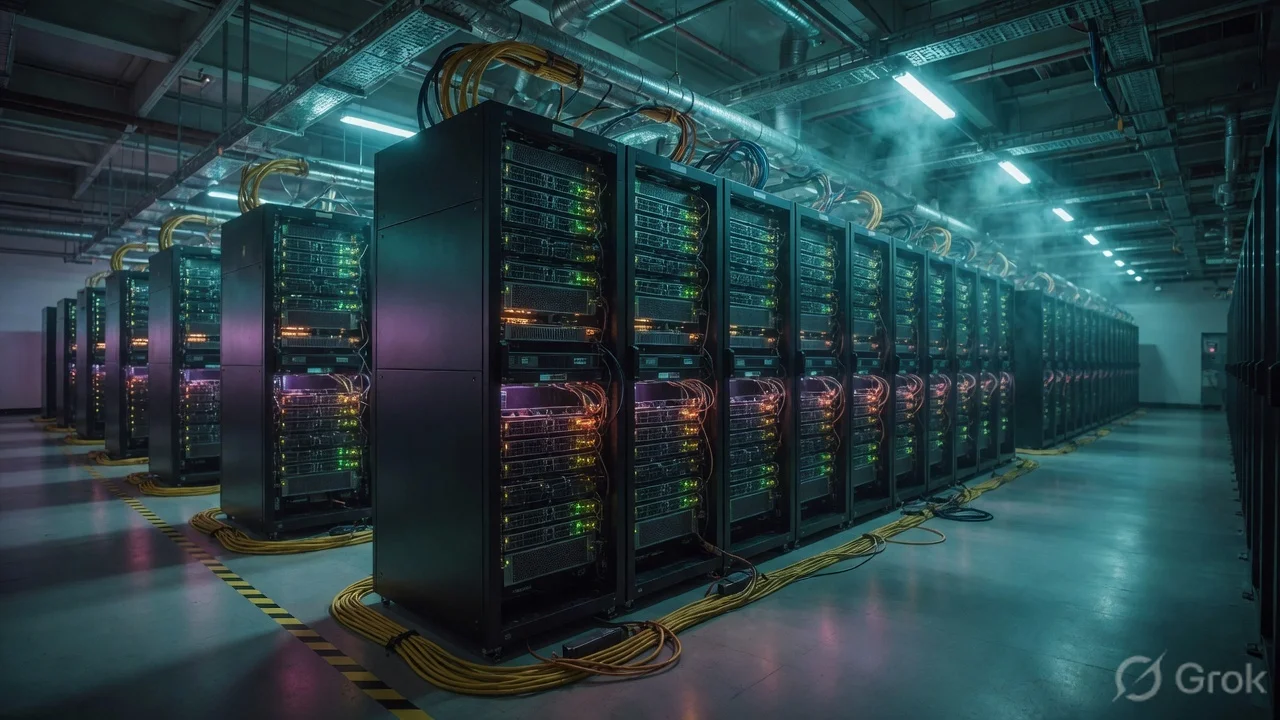
- Indian companies like Yotta and Tata are bypassing global cloud providers by building massive indigenous GPU clusters directly with Nvidia hardware.
- Renting a single high-end Nvidia B200 GPU in India now costs approximately ₹350 to ₹500 per hour depending on the contract.
The AI Infrastructure Gold Rush of 2026
If you look at the Indian tech scene today in July 2026, one thing is crystal clear: everyone is building something with AI. Whether it is a small startup in Bengaluru creating a Tamil-language LLM or a massive enterprise in Mumbai automating their entire supply chain, the hunger for computing power is insatiable. But here is the catch—you cannot just run these massive AI models on a regular laptop or even a standard server. You need specialized hardware, specifically GPUs (Graphics Processing Units). This has created a massive market for 'AI Renting' or GPU-as-a-Service.
Currently, three massive giants—Amazon Web Services (AWS), Google Cloud, and Microsoft Azure—are locked in a fierce battle to become India's primary AI landlord. They are spending billions of dollars to set up data centers in Hyderabad, Chennai, and Navi Mumbai. Their pitch is simple: "Don't buy expensive chips; just rent them from us by the hour." However, there is a funny twist to this story. No matter which of these three giants you choose, you are likely using Nvidia's hardware under the hood. Nvidia has successfully positioned itself as the sole supplier to all the warring factions, making them the ultimate winner of the 2026 AI boom.
How Nvidia Became the Undisputed King
To understand why Nvidia is winning, we have to look at the 'moat' they have built. It is not just about the chips like the Blackwell B200 or the older H100s. It is about the software layer called CUDA. For over a decade, developers have been writing AI code that is optimized specifically for Nvidia hardware. If a company wants to switch to a different chip—say from AMD or Intel—they have to rewrite a massive chunk of their software. In the fast-paced world of 2026, nobody has the time or the patience for that. Indian developers we talk to consistently say the same thing: "Nvidia just works."
Furthermore, Nvidia isn't just sitting back and selling to the big three cloud providers. They have been very smart about their India strategy. They have formed direct partnerships with Indian conglomerates like Reliance Industries and the Tata Group. By doing this, they are ensuring that even if a company doesn't want to use an American cloud provider like AWS or Google, they will still be using Nvidia chips through a local Indian provider. This multi-pronged approach has made Nvidia's position in India almost untouchable for now.
The Three-Way Fight: AWS vs. Google vs. Microsoft
Let's look at the actual fight. Microsoft Azure has a massive advantage because of its deep partnership with OpenAI. Most Indian startups using ChatGPT's API naturally gravitate towards Azure. Microsoft has doubled down on its India data centers this year, offering localized 'sovereign AI' clouds that keep data strictly within Indian borders. This is a huge selling point for government projects and banking sectors in India. They are marketing their services as the most 'enterprise-ready' solution for 2026.
On the other hand, Google Cloud is leaning heavily into its Vertex AI platform. Google's advantage in India is its massive ecosystem. Since almost every Indian business uses Google Workspace, the integration of Gemini AI into their existing workflow is seamless. Google is also trying to push its own TPUs (Tensor Processing Units) as an alternative to Nvidia, but even they have to offer Nvidia GPUs to keep their customers happy. AWS, the old veteran, still holds the largest market share in terms of raw infrastructure. They have been the most aggressive with pricing, offering 'spot instances' for AI training that are significantly cheaper for Indian budget-conscious startups.
The India Impact: Pricing and Local Heroes
For an Indian developer or startup, the cost of AI is the biggest hurdle. In 2026, renting an Nvidia B200 cluster can easily burn through a startup's funding if they aren't careful. We are seeing a shift where companies are moving away from 'general-purpose' clouds to specialized GPU providers like Yotta Data Services. Yotta’s Shakti Cloud has become a massive hit because they offer Nvidia chips at a price point that is often 20-30% cheaper than the global giants. They can do this because they focus solely on GPU compute without the overhead of a thousand other cloud services.
The availability of these chips is also a matter of national pride and security. The Indian government’s 'IndiaAI Mission' has allocated significant funds to ensure that we aren't just consumers of AI but also providers of the compute. We are seeing the rise of 'Sovereign AI' where the hardware is owned by Indian entities, ensuring that our data and our models remain under Indian jurisdiction. This is where the Tata-Nvidia and Reliance-Nvidia deals become crucial. They are building the 'AI Factories' of India's future.
TamilTech's Take: What Should You Do?
So, what do we think about this whole situation? Honestly, while the competition between the cloud giants is good for driving prices down slightly, the dependency on Nvidia is a bit concerning. It’s like having three different grocery stores in your neighborhood, but all of them get their vegetables from the same single farmer. If that farmer raises prices, everyone suffers. However, for the next 2-3 years, Nvidia is the only game in town if you want top-tier performance.
If you are a student or a small developer in India looking to get into AI, our advice is simple: don't start by renting expensive GPUs. Use free tiers provided by Google Colab or Kaggle, which often use older Nvidia T4 or P100 chips. Once you are ready to scale, look at local Indian providers like Yotta before jumping onto the big global clouds. The 'three-way fight' is mostly for the big players; for the rest of us, it is about finding the most cost-effective way to get our hands on that Nvidia power. The AI revolution in India is just getting started, and 2026 is going to be a landmark year for how we build and scale these technologies.





Comments (0)
Be the first to comment!