


Key Takeaways
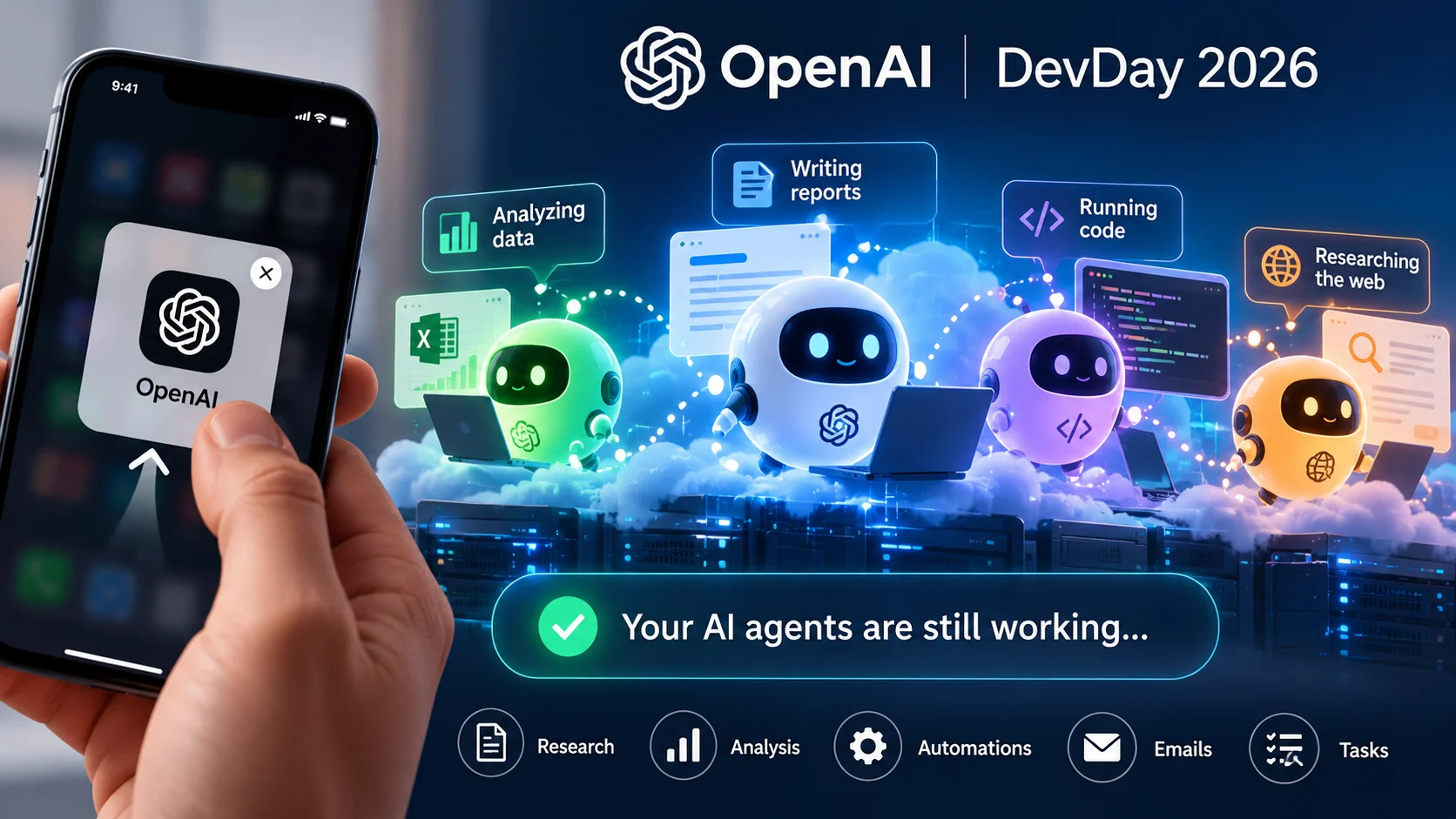
- OpenAI introduced Dots at DevDay 2026 - persistent AI agents that can keep running tasks without a fresh prompt every time.
- Unlike regular ChatGPT chats that stop the moment you stop typing, Dots are built to sit in the background and act on their own schedule or triggers.
- DevDay 2026 also brought a bunch of developer-facing updates - API tweaks, tooling for building agents, and pricing changes for businesses.
- For most everyday Indian users, this is still early-stage and developer-first. The real impact shows up when apps built on top of Dots start reaching phones here.
- Think of it as OpenAI's answer to the whole 'AI agent' race that Google, Microsoft and others are already running in.
What just happened?
OpenAI held its DevDay 2026 event and the headline act was something called Dots. In plain words, Dots are AI agents that don't need you to keep poking them with a new message to get work done.
Normal ChatGPT works like this - you ask something, it answers, then it just sits there waiting. Close the tab, and that's it, nothing happens until you come back. Dots flip that. Once you set one up for a task, it can keep working in the background, check things periodically, and act when something needs attention.
OpenAI used the DevDay stage to walk through what these agents can actually do - handling ongoing tasks, monitoring for changes, and following up without a human nudging it every single time. Alongside Dots, the event also had the usual DevDay mix of developer tools, API updates and pricing changes aimed at companies building products on top of OpenAI's models.
How does this actually work?
Here's the simplest way to think about it. A regular AI chat is like calling a friend - you ask, they reply, call ends. A Dot is more like hiring an assistant who keeps checking on something for you even when you're asleep.
Say you want to track a work project, keep tabs on an inbox, or watch for updates on a topic. Instead of opening ChatGPT every hour and typing the same question, you set up a Dot once. It stays active, does its checks, and comes back to you only when there's something worth flagging.
This is basically OpenAI's version of what the industry calls 'agentic AI' - AI that doesn't just respond, it acts. The big shift is autonomy. The AI decides when to run again, not you. OpenAI's pitch at DevDay was that this saves users from the endless cycle of prompt, wait, prompt again, wait again.
Of course, 'working without prompts' doesn't mean it's doing whatever it wants with zero rules. These agents are still boxed in by permissions and tasks you define upfront. The difference is the agent now owns the timing - it checks in on its own schedule instead of only reacting to you.
Along with Dots, DevDay 2026 reportedly covered other developer-side updates too - things like improved tools for building and testing agents, changes to how businesses get billed for API usage, and refinements aimed at making it easier for companies to plug OpenAI's models into their own apps. These are the kind of updates that don't make headlines for regular users immediately, but they shape what apps you'll be using six months from now.
What changes for people in India?
Right now, honestly, not much changes overnight for someone just using ChatGPT on their phone in Chennai or Coimbatore. Dots, like most DevDay announcements, start life as a developer feature - something companies and app-builders get access to first.
But here's where it gets interesting for India specifically. A huge chunk of digital life here already runs on things that need constant background checking - UPI payment reminders, train ticket availability on IRCTC, price drops on Flipkart, OTP-based logins, delivery tracking. These are exactly the kind of repetitive, 'keep checking until something changes' tasks that persistent agents are built for.
If Indian developers start building on top of Dots, you could eventually see apps that quietly watch for a flight price drop, track a court case update, or monitor a job portal for new listings - without you opening the app twenty times a day. That's the promise, at least. Whether it lands well in apps Indians actually use depends entirely on how fast local developers adopt this and how OpenAI prices access to it for businesses here.
There's also the inevitable question of trust. An AI that keeps working even when you're not looking sounds convenient, but it also means you're trusting it to not overstep. For something like scanning emails or tracking personal data in the background, Indian users and companies alike will want clear answers on data handling before adopting this kind of thing at scale.
What should you do now?
If you're a regular ChatGPT user, there's nothing urgent to do today. Dots is a DevDay announcement, which usually means a staged rollout - developers and select partners first, broader access later.
If you're someone who builds apps or works in a startup, this is worth watching closely. Agentic AI is clearly where OpenAI, Google and Microsoft are all racing toward, and being early to build on these tools can be a genuine edge.
For everyone else, just keep an eye on which Indian apps start advertising 'AI that works in the background' over the next few months. That's usually the tell that Dots-style tech has quietly made its way into something you already use daily.
What are the catches nobody's talking about?
Every agentic AI launch sounds magical in the demo, and Dots is no different. But a few honest limitations are worth flagging before anyone gets too excited. First, an agent that runs on its own still needs compute time in the background, which means someone pays for every check it makes, even when nothing changes. OpenAI hasn't put out a clear, India-specific pricing sheet for Dots yet, so businesses here are essentially waiting to see whether this becomes an affordable add-on or another expensive API line item that only larger companies can justify.
Second, background autonomy raises the stakes on mistakes. A chat that goes wrong stops the moment you close the tab. A Dot that goes wrong might keep acting on bad information for hours before anyone notices, especially if it's quietly monitoring something sensitive like an inbox or a financial account. OpenAI's framing at DevDay stressed permissions and defined boundaries, but the real test comes when thousands of developers start setting those boundaries themselves, some carefully and some not.
Third, there's the plain reality of rollout speed. DevDay announcements have a habit of sounding ready-to-use on stage and then taking months to actually show up in apps people touch daily. For India, the thing to watch isn't the DevDay keynote itself, it's which local startups quietly bolt Dots onto their existing apps first, and whether users even notice the switch. If a Flipkart-style price tracker or an IRCTC alert bot starts feeling smarter without anyone announcing it loudly, that's the real signal that this tech has landed, not another press release from OpenAI.






Comments (0)
Be the first to comment!