


What the numbers actually say
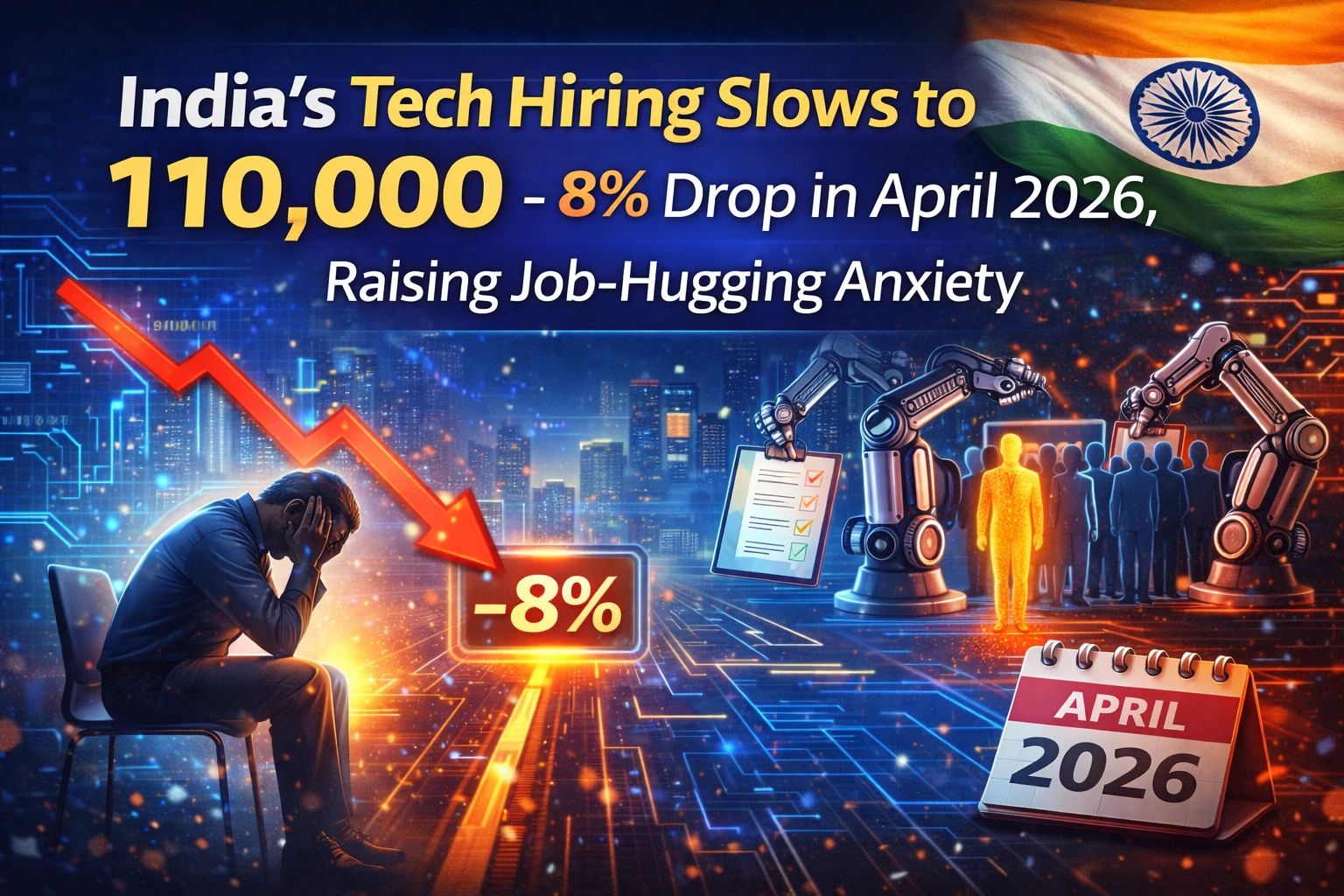
According to Xpheno’s Active Tech Jobs Outlook for April 2026, India’s tech sector opened FY 27 with just 110,000 active job openings – an 8% drop from March. That’s the second‑lowest start in the past six years, behind the 2020 COVID‑crash low of 103,000. While the headline may look like a slowdown, the underlying story is more nuanced.
Why the dip matters now
- AI‑driven restructuring. Large‑scale AI automation projects at TCS, Infosys and Wipro have cut routine coding and support roles, prompting a wave of “job hugging” – a term that’s up 2,300% in Google search trends as workers look for ways to prove they’re irreplaceable.
- Fresh‑grad pressure. Entry‑level openings (up to two years experience) stayed flat at 15,000 for a second month, down 11% YoY, representing only 14% of total demand. Freshers are feeling the squeeze harder than mid‑senior talent.
- Sector shift. IT services lead with 43,000 openings (down 7% MoM), while Global Capability Centres (GCCs) dropped 21% to 15,000. Meanwhile, AI‑focused roles are up 32% YoY, concentrating demand in Bengaluru, Hyderabad and emerging Tier‑2 cities.
What’s driving the slowdown
Three macro‑factors intersect:
- Global uncertainty. Geopolitical tensions and supply‑chain disruptions have made multinational clients more cautious about expanding contracts.
- Rising costs. Software licences and hardware prices have inflated, squeezing budgets for new hires.
- AI adoption. Companies are shifting budget from headcount to AI platforms, expecting automation to offset hiring.
Impact on the job market
Freshers are feeling the pressure the most. The average hiring cycle for entry‑level positions has stretched from 25 days in 2025 to 38 days in April 2026. Resumes now frequently list AI‑related upskilling certificates (Google AI, Microsoft Azure AI Fundamentals) as a way to stand out.
Mid‑senior professionals (5‑10 years experience) dominate the market at 54% of total demand, but they’re also the ones most likely to be offered AI‑augmented roles, which often come with higher compensation but also higher performance expectations.
What job‑huggers are Googling
Google’s search spikes show a clear pattern:
- “AI upskilling for software engineers” – +210%
- “How to demonstrate soft skills in tech interviews” – +185%
- “Job hugging strategies” – +2,300%
People are hunting for quick certifications, AI‑project portfolios, and ways to quantify impact (e.g., “saved $X by automating Y”). The trend signals a cultural shift: job security now hinges on being AI‑savvy, not just coding‑savvy.
How companies are responding
Upskilling programs. Tata Consultancy Services launched a $150 million internal AI‑learning platform, promising 200,000 employees certification by 2027. Infosys announced a “Future‑Ready Talent” initiative focusing on AI, data‑science, and cloud‑native development.
Flexible hiring. Many firms are moving to contract‑based models, hiring AI‑project specialists on a 6‑month basis rather than full‑time roles. This keeps headcount low while still delivering AI outcomes.
Retention incentives. Companies are offering performance‑based bonuses tied to AI‑adoption metrics, hoping to keep senior talent from leaving.
Praveen’s TL;DR for the crew
- Budget‑wise: Expect tighter hiring budgets, especially for freshers. Companies will invest more in AI tools and training than in new headcount.
- Career‑wise: Upskill in AI, data‑science, and cloud‑native devops. Highlight any AI project in your resume – that’s the new “must‑have”.
- Hiring‑wise: If you’re a recruiter, focus on AI‑ready talent pools and be ready to offer short‑term contracts or project‑based gigs to meet client demand.
Bottom line: The tech hiring slowdown is less a crisis and more a signal that the industry is reshaping. Those who learn to work with AI will ride the next wave of demand, while those who cling to old‑school coding alone may feel the “job‑hugging” pressure grow.





Comments (0)
Be the first to comment!