


Key takeaways
- Engineers with 0-3 years of experience make up nearly 45% of the active engineering candidate pool.
- The same group accounts for just 28% of available job opportunities.
- That gap leaves a large share of Indian freshers and early-career talent competing for fewer roles.
- Hiring in Indian tech continues to lean toward mid-level profiles over pure entry-level hires.
- Upskilling, projects, and targeted applications matter more than ever for 2026 graduates.
What just happened?
Open any fresher WhatsApp group and you already know the mood. Now the talent market has put a hard number on it.
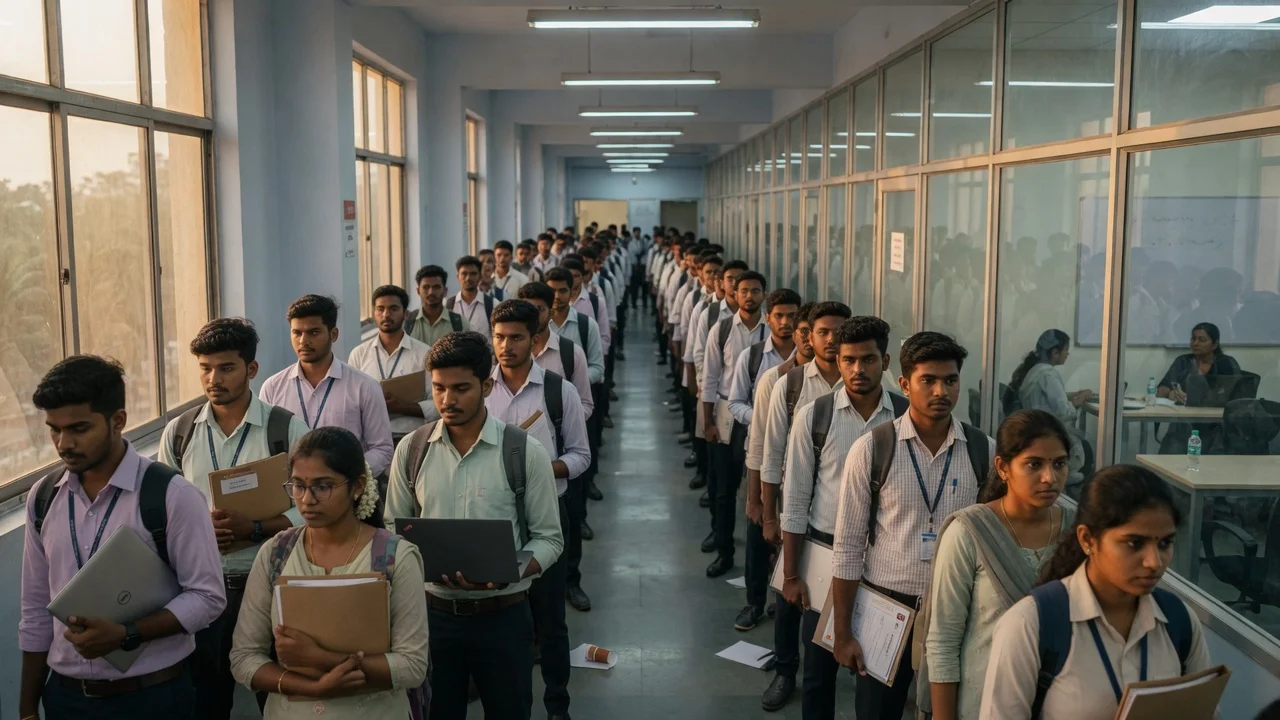
People with zero to three years of experience form nearly 45% of the active engineering candidate pool. Yet they only account for about 28% of the jobs that are actually open.
Almost half the people hunting engineering roles are early in their careers. Less than a third of the openings are built for them. The rest of the demand sits with mid-level and senior profiles.
If you just finished a B.Tech, M.Tech, or a short coding bootcamp in 2025 or 2026, this is the reality check. Indian tech hiring never fully returned to the free-for-all campus frenzy of the early 2020s. Companies still hire. They just want people who can ship with less hand-holding.
How does this actually work?
Break the numbers down and the picture gets sharper.
The active engineering candidate pool is heavy at the bottom. Freshers, junior developers, support engineers, and people who have done one or two short stints make up that 45% slice.
On the demand side, only 28% of listed roles are tagged for that same experience band. What fills the remaining openings? Roles that ask for four, five, or eight years.
Teams want someone who has already seen a production outage, owned a module, or negotiated with a product manager. Training budgets at many product and services firms have stayed tight. So the preference for ready-to-contribute talent has grown.
This is not just about software. Core engineering, electronics, mechanical, and civil roles show similar patterns in many metros. The loudest pain is still in IT and product engineering, because that is where the candidate volume is highest.
Every year India produces a massive number of engineering graduates. When junior jobs do not expand at the same pace, the percentage gap widens. Hiring platforms see the same resumes circulating for months. Candidates apply to roles that quietly prefer three-plus years even when the JD says "0-2". Ghosting after the first round is common. Offer letters that once arrived in weeks now stretch into long waits.
Salary bands for true entry-level roles have also stayed under pressure in many cities. Packages that look decent on paper in INR often come with high variable components or bond clauses. Mid-level openings clear faster and carry clearer growth paths. That further skews where companies put their hiring energy.
What changes for people in India?
For students and parents who invested lakhs in engineering degrees, the data stings.
Tier-1 campuses still place a good share of their batch. The middle and long tail of colleges face a tougher fight. Off-campus hiring has become the main route for many, and that route is crowded.
IT services giants and product companies in Bengaluru, Hyderabad, Pune, and Chennai continue to hire, yet the mix has shifted. More lateral moves. Fewer pure fresher batches.
Startups that once took chances on raw talent now lean on experienced hires who can wear multiple hats from day one. Even consumer tech names that run large engineering teams tend to open more mid-level requisitions when budgets tighten.
You feel it in everyday life too. Freshers delay buying that first scooter or moving out of a shared PG. Some take short-term gigs, freelancing on UPI-based platforms, or teaching coding to juniors while they keep applying. Others pivot into operations, sales, or content just to stay employed. A chunk also parks themselves in government exam prep or higher studies as a waiting room.
Colleges and edtech players feel the heat. Placement cells now talk less about average packages and more about how many got relevant roles. Upskilling courses in cloud, AI tooling, full-stack, and data see steady demand because students are trying to look less like pure freshers on paper.
What should you do now?
Mass applying to every "0-2 years" post will not fix this. The 45-versus-28 split is real.
Ship visible side projects. Put working code on GitHub, not just certificates. Learn the stacks local product and services teams actually use, not whatever is trending on social media that week.
Treat internships, short contracts, and freelance stints as a way to move out of the pure fresher band. Even six months of real ownership changes how your resume reads.
Target applications where your project work matches the JD. One tight application beats twenty generic ones. And if a role quietly wants three-plus years, do not take the silence personally — use that time to build proof you can contribute faster.
Hiring has not shut. It has just gotten pickier at the bottom of the ladder. The people who show work, not just degrees, still get through.






Comments (0)
Be the first to comment!