


முக்கிய விஷயங்கள்
- Jio recharge-ஐ MyJio app, Jio website, GPay, PhonePe, Paytm அல்லது ஊர்ல உள்ள recharge shop வழியா பண்ணலாம் - UPI இருந்தா 30 seconds போதும்.
- Jio plans பொதுவா ₹189 முதல் ₹999-க்கு மேல வரை இருக்கு, data, validity, OTT benefits based-ஆ வேற்றுமை இருக்கும்.
- Plan validity முடியும் date-ஐ கவனிக்காம recharge பண்ணாம இருந்தா outgoing calls, data ரெண்டும் stop ஆகிடும்.
- Family-க்கு ஒரு பெரிய plan vs தனி தனி recharge - எது cheap-ஆ இருக்கு-னு பார்த்து தேர்வு செய்யுங்க.
- Auto-pay வச்சிருந்தா recharge miss ஆகாது, ஆனா plan மாத்தணும்னா manual-ஆ off பண்ண வேண்டியிருக்கும்.
What just happened?
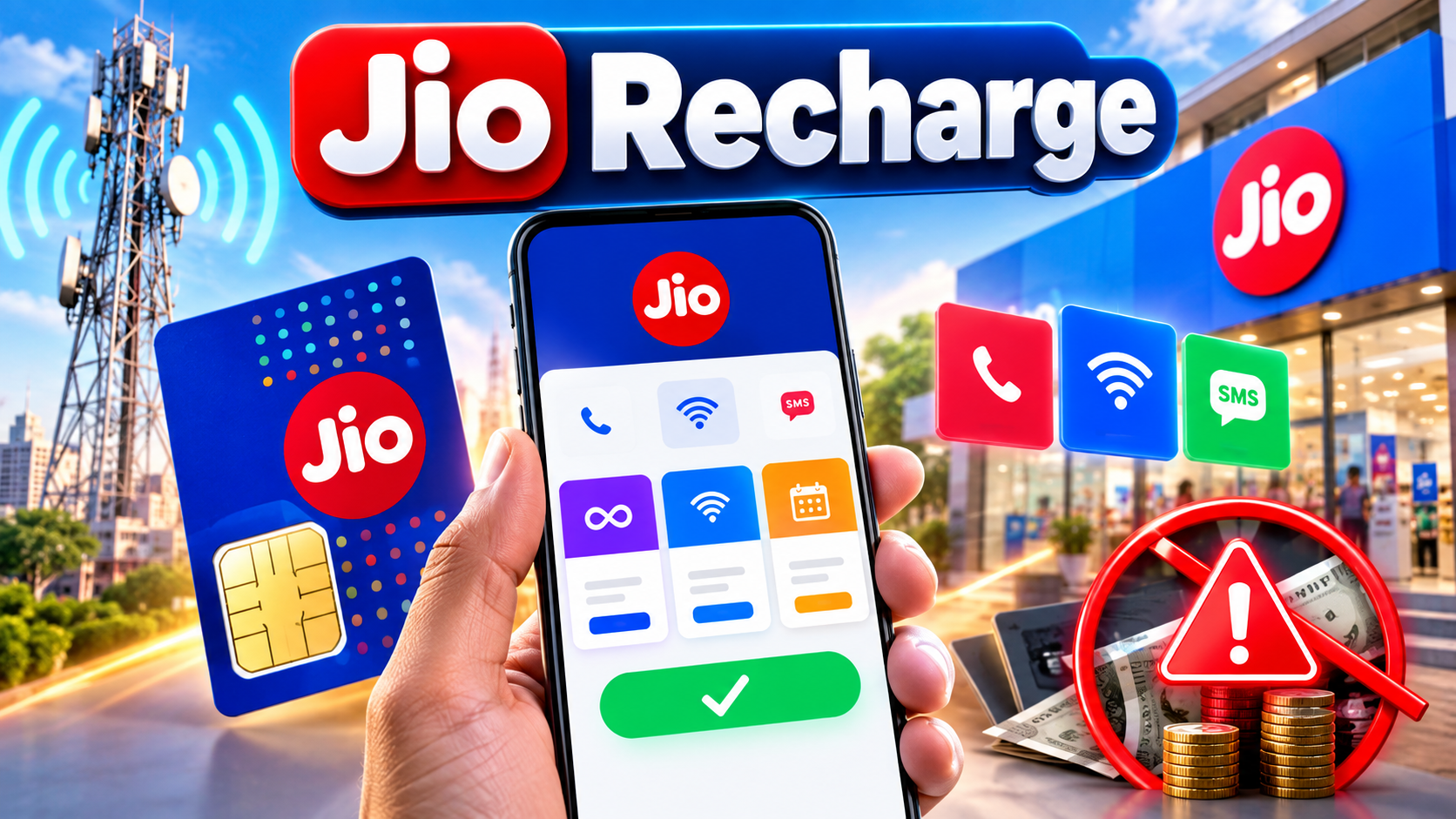
The quickest way to do a Jio recharge is through the MyJio app or any UPI app like GPay, PhonePe, or Paytm — pick a plan, pay, and it's active in under a minute. This guide walks through every recharge method available to Tamil Nadu users, breaks down current Jio plan prices in ₹ from basic top-ups to annual bundles, flags the common mistakes that leave people without data mid-task, and helps you figure out whether a short monthly plan or a long-term one actually suits your budget better.
Maybe it's a college student in Coimbatore whose data got over mid-exam-prep. Maybe it's an amma in Madurai trying to video call her son working abroad. Jio recharge is that one chore nobody enjoys but everybody needs, roughly once a month or so.
Jio, for the ones who somehow don't know, is Reliance's telecom network - the one that changed how Indians use mobile data starting around 2016. Before Jio, 1GB of data felt like a luxury. Now, most of us burn through that in a day scrolling Reels.
How does this actually work?
Recharging Jio is honestly one of the simpler things in Indian tech life. You've got four main routes, and all of them lead to the same place.
MyJio App: Open the app, it shows your current plan and balance right on the home screen. Tap "Recharge", pick a plan or enter a custom amount, pay via UPI or card, done.
Jio.com website: Same thing, just on a browser. Useful if you're recharging someone else's number from your laptop at work.
UPI apps - GPay, PhonePe, Paytm: Open the app, go to "Recharge" or "Mobile Recharge", type the number, it auto-detects Jio, shows you plans, you pay. Most people in Tamil Nadu actually do it this way because they're already in GPay for something else.
Local recharge shop: Still very real in smaller towns. You hand over cash, the shop guy does it on his machine, gives you a slip. No UPI drama, no app login needed.
One small tip - if the recharge isn't reflecting within 2-3 minutes, don't panic and redo it. Wait 10 minutes, check MyJio app, because double recharges are a real headache to get refunded.
What changes for people in India - prices and plans?
Jio recharge plans roughly fall into three buckets - short validity (for travelers or emergencies), monthly, and long-term (84 or 365 days). Prices do shift from time to time, so always double-check the exact number on MyJio before you commit, but here's the general shape of things.
| Plan Type | Approx. Price (₹) | Validity | Data |
|---|---|---|---|
| Basic / top-up | ₹189 - ₹209 | 28 days | 1GB/day |
| Popular daily | ₹239 - ₹299 | 28 days | 1.5GB - 2GB/day |
| Unlimited data | ₹349 - ₹479 | 28 days | 2GB - 3GB/day + unlimited calls |
| OTT bundle | ₹666 - ₹719 | 84 days | 1.5GB - 2GB/day + JioHotstar/apps |
| Long term / annual | ₹999 and above | 84 - 365 days | Varies, usually 2GB/day |
Notice the pattern - longer validity plans work out cheaper per day, but you're locking in more money upfront. If your budget is tight month to month, a 28-day plan is less painful even if the per-day rate is slightly higher.
What should you do now - mistakes to avoid?
The number one mistake people make is waiting till the exact last hour to recharge. Jio doesn't give grace periods for outgoing calls the way some networks used to - once validity ends, you're stuck on incoming only, or sometimes nothing at all.
Second mistake - recharging with a random amount instead of checking the actual plan list first. ₹10 extra or short, and you either waste money or don't get the plan benefits like OTT access.
Third - not checking if you already have an active plan running. Recharging on top of an existing unused plan just wastes the days, Jio doesn't stack most benefits automatically the way people assume.
Fourth - ignoring auto-pay. If you set up UPI auto-pay for the same plan every month, you basically never run into the "no network" panic again. Just remember to switch it off manually if you want to change plans.
This suits almost everyone with a Jio SIM, but it's especially handy for people managing recharges for parents or grandparents from another city - you can do the whole thing from your own phone without them touching an app.
How do you handle recharges for a whole family without losing track?
If you're the designated "tech person" in your house - and in most Tamil Nadu families, there's always one - you've probably ended up managing three or four Jio numbers from your own phone. The good news is MyJio lets you add multiple numbers under one login, so you can switch between your dad's SIM, your amma's SIM, and your own without logging out and back in every time. Just tap the profile icon, add the number with an OTP verification once, and it stays saved for future recharges.
For pricing, the real decision is whether to put everyone on one big family-style data plan or keep separate small recharges running. There isn't a single "family plan" button in Jio the way some broadband operators do it, but what people actually do is pick one person's SIM to carry a bigger OTT or long-validity plan, and recharge the others with basic ₹189-₹239 plans since they mostly just need calling and WhatsApp. Do the math roughly - four basic plans at ₹200 each works out cheaper monthly than four unlimited-OTT plans, unless everyone genuinely watches JioHotstar daily.
One practical step that saves a lot of monthly hassle - set a recurring reminder two days before each number's validity ends, not on the exact day. Phones get busy, notifications get missed, and nothing is more annoying than your father's SIM going silent right when he's trying to call you back about something urgent. A two-day buffer gives you breathing room to recharge even if you're stuck in a meeting or traveling.
What are the real limits of Jio recharge that people don't talk about?
Jio recharge is smooth most of the time, but it's not flawless, and it helps to know where it can trip you up. UPI payment failures are the most common headache - sometimes the money gets deducted from your bank account but the recharge doesn't reflect in MyJio immediately. This usually resolves itself within an hour as a refund or a successful recharge shows up, but if it doesn't, you're stuck waiting for customer care, and that process can drag on for a couple of days before you see your money back.
Another limitation - not every plan is available to every number. Jio sometimes shows different offers depending on your recharge history, location, or whether you're a prepaid or postpaid user, so the ₹666 OTT bundle your friend got in Chennai might not show up the same way on your number in Trichy. This inconsistency confuses a lot of people who screenshot a plan from someone else's app and then can't find it on their own.
There's also the network side of things to keep in mind - a recharge only gets you the data and calling minutes, it doesn't fix actual network issues. If you're in a basement office or a weak-signal village area, no amount of recharging changes the download speed you're stuck with. As Jio keeps expanding its 5G coverage across smaller towns in Tamil Nadu, this gap should shrink, but for now, always check signal strength before blaming the recharge itself when something feels slow.



Comments (0)
Be the first to comment!