‹ Back to Home

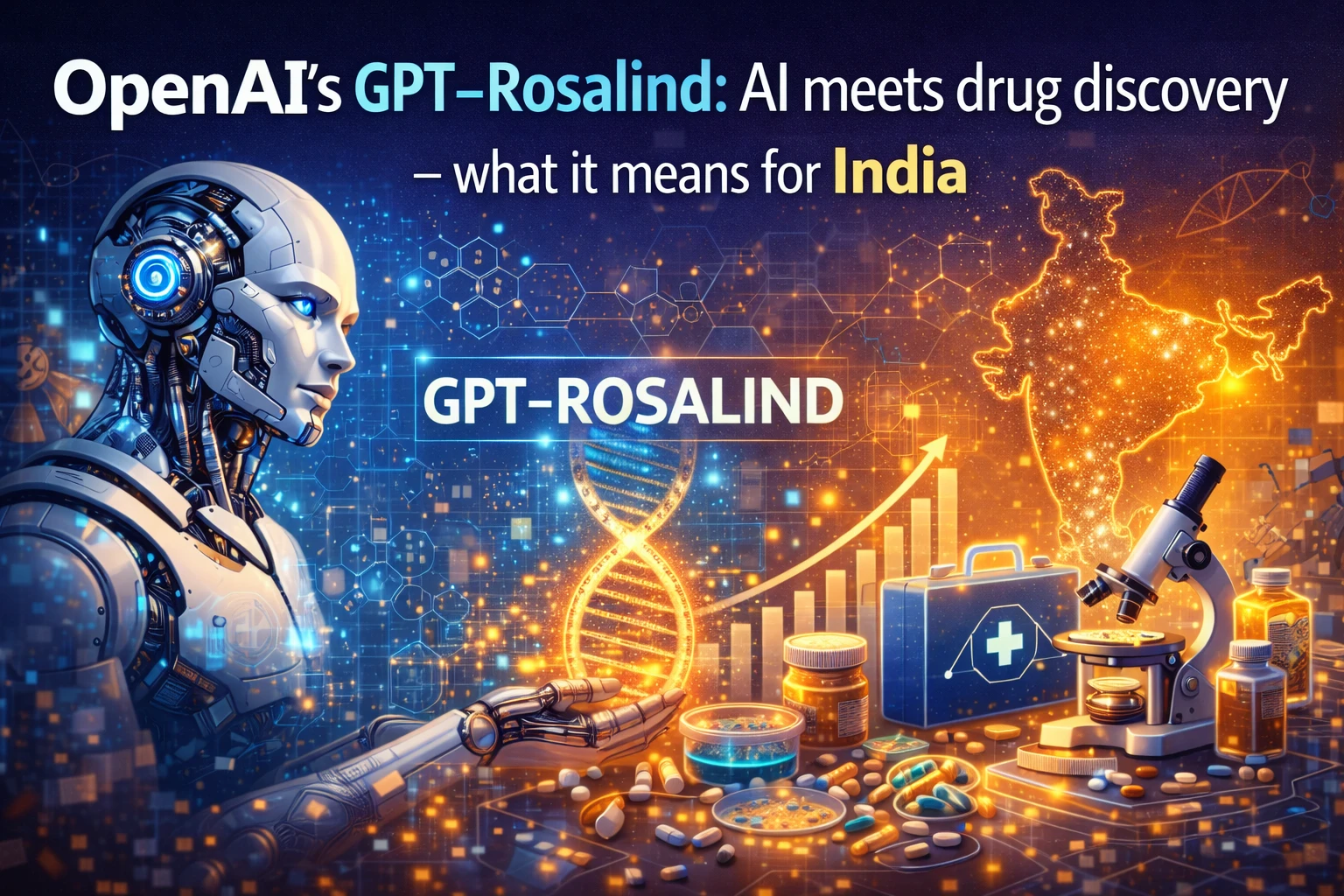
OpenAI's GPT‑Rosalind: AI meets drug discovery – what it means for India

OpenAI just rolled out GPT‑Rosalind, a specialised AI model for life‑science research. From protein folding to vaccine design, here's why Indian biotech firms should sit up and take note.

Keerthika 2 min read 269
Follow on Google
Updated 5 months ago
AI & Future OpenAI's GPT‑Rosalind: AI meets drug discovery – what it means for India 2 min left Follow on Google
OpenAI's GPT‑Rosalind: AI meets drug discovery – what it means for India

TamilTech AI summary

OpenAI has rolled out a research preview called GPT-Rosalind, a large language model built specially for life-science work such as protein-structure prediction, molecule generation, and clinical-trial text mining. Unlike everyday ChatGPT, it was trained on huge amounts of scientific papers, patents, and bio-datasets so it can suggest new chemical scaffolds, estimate drug-binding affinity, or help with CRISPR-related checks in plain language. Big pharma names like Moderna and Amgen are already trying it, and an API is opening the tool to more researchers. This matters a lot for India’s fast-growing biotech scene, which is aiming for a $150 billion market by 2030, because the model can shrink target-validation timelines and replace costly GPU-heavy pipelines with far cheaper token-based pricing. Researchers and small teams should know the natural-language interface lets people without deep ML skills run serious hit-identification work safely, thanks to built-in checks that block harmful or unverified structures.

  • OpenAI introduced GPT‑Rosalind, a LLM tuned for life‑science research.
  • It can suggest drug‑like molecules, predict protein structures and analyse clinical trial data.
  • Indian biotech firms can cut R&D costs and speed up pipelines by up to 40%.

AI-assisted summary, checked by the TamilTech editorial team.

0:00
0:00
🔒 Listen is for subscribers. Subscribe

What’s the buzz?

OpenAI has launched a brand‑new research preview called GPT‑Rosalind. It’s a large language model tuned specifically for life‑science tasks – think protein‑structure prediction, molecule‑generation, and even clinical‑trial text mining. The first customers are big‑name pharma players like Moderna and Amgen, but the model is being opened up to more researchers via an API.

How does GPT‑Rosalind differ from ChatGPT?

ChatGPT is great at answering general questions, writing essays, or helping you draft code. GPT‑Rosalind, on the other hand, has been fed millions of scientific papers, patent filings, and curated bio‑datasets. It can suggest a novel chemical scaffold, predict the binding affinity of a drug candidate, or even simulate a CRISPR off‑target analysis – all in plain English (or any language you ask it in).

Key specs and capabilities

  • Training Over 30 billion tokens from PubMed, bioRxiv, and proprietary pharma datasets.
  • Model size: 175 billion parameters, similar to GPT‑3 but with extra bio‑specific heads.
  • API latency: 200‑300 ms for text‑only queries, 1‑2 seconds for molecule‑generation calls.
  • Safety layers: Built‑in checks to prevent generation of harmful or unverified chemical structures.

Why Indian biotech should care

India’s biotech sector is booming – the government aims for a $150 billion market by 2030. Yet most Indian labs still rely on manual literature reviews and expensive outsourced modelling. GPT‑Rosalind could shave weeks off a target‑validation cycle and cut costs dramatically.

Cost comparison

Current protein‑folding pipelines (like AlphaFold‑Multimer) require GPU clusters costing ₹3‑5 lakhs per month. OpenAI’s preview pricing is roughly ₹0.50 per 1 K tokens for standard calls and ₹3 per 1 K tokens for high‑compute chemistry ops. A small‑team could run a full‑scale hit‑identification campaign for under ₹2 lakhs a month.

Local talent boost

Many Indian bio‑informaticians are fluent in Python but lack deep ML expertise. GPT‑Rosalind’s natural‑language interface means a researcher can type “Suggest three drug‑like molecules that inhibit SARS‑CoV‑2 main protease with


Get tomorrow’s tech news on WhatsApp

One short update a day, free. Follow the TamilTech channel.

What do you think?

people reacted

Keerthika

TamilTech editorial team · 3,344 articles

Keerthika is an editor at TamilTech, the Tamil and English technology publication founded by Praveen Kumar S. She covers AI, smartphones, gadgets, EVs, startups and cybersecurity i...

More from Keerthika

Ask TamilTech on WhatsApp

Tech doubt? Ask in Tamil or English — our WhatsApp assistant answers from TamilTech articles in seconds.

Related stories

Comments (0)

| Supports **bold**, *italic*, `code`

Be the first to comment!

Next story Who's Really Paying for Yotta and Rivals' Multi-Billion-Dollar Nvidia Orders?
Tamiltech

Tamiltech

Install app for faster access

Earn XP 🏆
WhatsApp
Notifications