


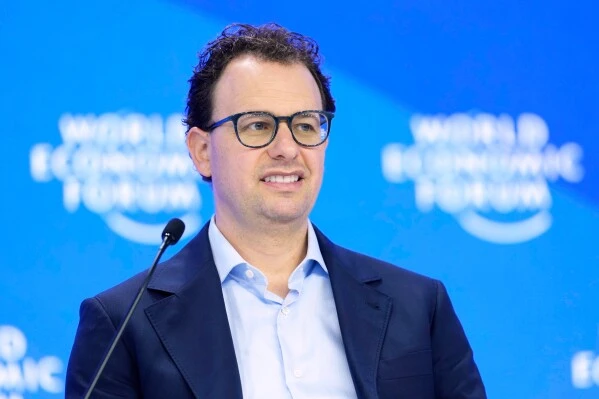
Pentagon Gives Anthropic AI Ultimatum — Allow Unrestricted Military Use of Claude or Lose Everything
In what may be the most consequential confrontation between the U.S. government and an AI company to date, Defense Secretary Pete Hegseth has given Anthropic CEO Dario Amodei a hard deadline: Friday, February 27, 2026 at 5:01 PM. The demand is stark — allow the U.S. military to use Claude AI without any restrictions, including for fully autonomous weapons systems and mass domestic surveillance, or face severe consequences.
This is not a routine contract negotiation. This is a direct confrontation over the fundamental question of our era: should AI companies have the right to set ethical boundaries on how their technology is used by governments? The answer to this question will shape AI policy globally — including in India.
What Exactly Is the Pentagon Demanding?
The Pentagon awarded AI contracts worth up to $200 million each to four companies: Anthropic, Google, OpenAI, and xAI. These contracts were designed to integrate large language models into defense operations — intelligence analysis, logistics planning, communications processing, and threat assessment.
However, Anthropic's contract came with conditions. The company's Acceptable Use Policy (AUP) explicitly prohibits using Claude for:
- Fully autonomous weapons systems — weapons that can select and engage targets without human oversight
- Mass domestic surveillance — bulk monitoring of civilian populations without individual warrants
- Offensive cyber operations that could cause disproportionate civilian harm
The Pentagon wants these restrictions removed entirely. Secretary Hegseth's letter to Amodei reportedly states that "national security cannot be constrained by the ethical preferences of private corporations" and demands "unrestricted, unconditional access to Claude AI capabilities for all Department of Defense operations."
Anthropic's Response: Drawing a Line
Dario Amodei's response has been unambiguous. In a statement released hours after the ultimatum became public, Amodei said:
"These threats do not change our position: we cannot in good conscience accede to their request. Anthropic was founded on the principle that AI safety is not optional — it is foundational. We have offered the Department of Defense extensive access to Claude for legitimate defense applications, including missile defense, threat analysis, intelligence summarization, and logistics optimization. What we cannot do is remove all guardrails and allow fully autonomous lethal decision-making or mass surveillance of American citizens."
Anthropic has proposed a compromise: allow Claude to be used for missile defense systems (which involve human oversight in the kill chain), defensive cyber operations, intelligence analysis, and military logistics — but maintain the prohibition on fully autonomous weapons and mass domestic surveillance. The Pentagon has rejected this compromise.
The Three Threats Against Anthropic
Secretary Hegseth's letter reportedly outlines three specific consequences if Anthropic does not comply:
1. Contract Termination ($200M)
The most immediate threat is the cancellation of Anthropic's $200 million defense contract. While significant, Anthropic generated over $2 billion in revenue in 2025 and has diversified its revenue streams across enterprise, consumer, and API customers. The financial impact, while painful, is survivable.
2. Supply Chain Risk Designation
This is the more dangerous threat. A supply chain risk designation would effectively blacklist Anthropic from all federal contracts — not just defense. It would signal to other government agencies and potentially allied governments that Anthropic is an "unreliable" partner. This could cascade: major enterprises that do business with the U.S. government might hesitate to use Claude if Anthropic is on a risk list.
3. Invoking the Defense Production Act
The most extreme threat. The Defense Production Act (DPA) gives the U.S. President authority to compel private companies to prioritize government orders and can be used to direct the production and allocation of critical resources. If invoked against Anthropic, it could theoretically force the company to provide Claude access on the Pentagon's terms — raising unprecedented legal and constitutional questions about whether the government can compel a company to remove safety features from its products.
Why This Matters for AI Safety Globally
This standoff is not just a U.S. domestic issue. It sets a precedent that every country with an AI industry will reference. The core questions at stake:
- Can governments compel AI companies to remove safety guardrails? If the U.S. succeeds, every government will attempt the same.
- Are AI companies responsible for how their technology is used? If Anthropic is forced to comply, the message is clear: companies have no right to set ethical limits.
- Does "national security" override AI safety? Every nation defines national security differently — this precedent would be invoked by authoritarian and democratic governments alike.
What Other AI Companies Are Doing
The contrast between the four companies holding defense contracts is striking:
| Company | Contract Value | Stance on Military Use | Restrictions |
|---|---|---|---|
| Anthropic | Up to $200M | Conditional access with ethical limits | Prohibits autonomous weapons, mass surveillance |
| Up to $200M | Cooperating with some internal debate | Dropped "Don't Be Evil"; revised AI principles post-Project Maven | |
| OpenAI | Up to $200M | Shifted to allow military use in 2024 | Minimal; removed blanket military prohibition |
| xAI | Up to $200M | Full cooperation; no ethical restrictions reported | None publicly stated |
OpenAI notably reversed its position in early 2024, removing the blanket prohibition on military use from its usage policies. Google has been quietly cooperating since reformulating its AI principles after the Project Maven controversy. xAI has not publicly stated any ethical restrictions on military use. Anthropic stands alone among the four in maintaining hard ethical limits.
The Legal Landscape
Legal experts are divided on whether the Pentagon can legally compel Anthropic to comply:
- Defense Production Act scope: The DPA was designed for physical manufacturing (steel, ammunition, medical supplies). Its application to software and AI models is legally untested and would almost certainly face court challenges.
- First Amendment implications: Some legal scholars argue that forcing an AI company to modify the behavior of its language model could touch on speech-related protections.
- Precedent risk: The government knows that a court loss would establish a precedent protecting AI companies' right to set usage restrictions — which is why the threats may be more about pressure than actual enforcement.
India Angle: Implications for India's AI Strategy
India is watching this standoff with particular interest. India's own AI defense programs are growing rapidly:
- DRDO's AI initiatives: India's Defence Research and Development Organisation is developing AI systems for border surveillance, threat detection, and military logistics
- Indian AI companies: Companies like Krutrim and Sarvam AI could face similar pressures from the Indian government as defense AI spending increases
- Policy framework: India's NITI Aayog has published AI ethics guidelines, but these are non-binding — a U.S. precedent of overriding company ethics would weaken India's ability to establish meaningful AI safety norms
- Global arms race dynamic: If the U.S. deploys AI without ethical guardrails, it puts pressure on India, China, and other nations to do the same — a classic race-to-the-bottom scenario
For Indian tech professionals working in AI, this is a career-defining moment. The norms being established now will determine whether AI safety engineering is valued or sidelined in future defense contracts.
Timeline of Events
| Date | Event |
|---|---|
| 2024 Q1 | Pentagon announces AI integration contracts; OpenAI removes military use prohibition |
| 2024-2025 | Contracts awarded to Anthropic, Google, OpenAI, xAI (up to $200M each) |
| 2025 Q4 | Pentagon pushes for expanded access; Anthropic maintains ethical restrictions |
| Feb 24, 2026 | Secretary Hegseth issues formal ultimatum to Anthropic |
| Feb 25, 2026 | Amodei's public statement: "These threats do not change our position" |
| Feb 27, 2026 | Deadline: 5:01 PM — Anthropic must respond or face consequences |
What Happens Next?
Three scenarios are most likely:
- Anthropic holds firm, contract terminated: Anthropic loses the $200M contract but becomes a symbol of responsible AI. Long-term brand value may increase among enterprise customers who value safety.
- Negotiated compromise: A middle ground is reached — perhaps expanding Claude's defense use cases while maintaining the autonomous weapons prohibition. Most likely outcome based on historical government-industry negotiations.
- DPA invocation and legal battle: The government invokes the Defense Production Act. Anthropic challenges in court. The case goes to federal courts and potentially the Supreme Court, creating a landmark precedent on AI companies' rights.
Conclusion
The Pentagon-Anthropic standoff is the most significant confrontation between AI safety principles and government power we have seen. Regardless of the outcome, it will establish precedents that shape AI governance worldwide for decades. For India, which is building its own AI defense capabilities and AI safety frameworks simultaneously, the outcome will directly influence policy direction. The deadline is today — February 27, 2026 at 5:01 PM. The world is watching.

Comments (0)
Be the first to comment!