


Key Takeaways
- Valve’s Steam generated $5.2 billion in revenue and $1.5 billion net income in 2025.
- U.S. and EU regulators have opened antitrust investigations after developers accused Steam of monopolistic practices.
- Indian indie studios could lose 30‑40% of their Steam sales if new rules force lower commission rates.
- Gamers may see more platform choices and lower prices, but short‑term chaos is likely.
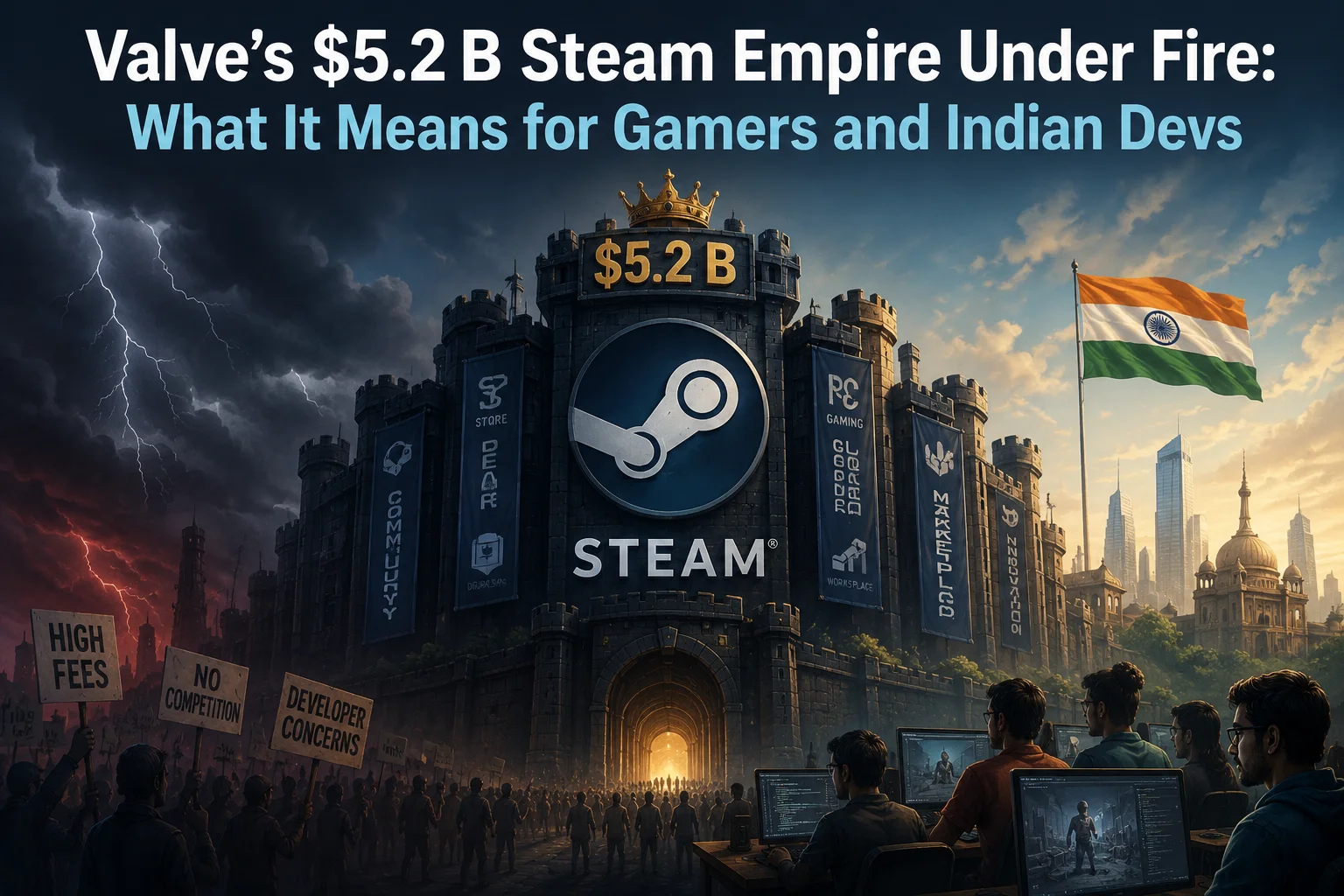
Alright, let’s cut to the chase. Valve, the private‑company behind Steam, just posted a jaw‑dropping $5.2 billion revenue figure for 2025. That’s a $1.5 billion net profit, which puts the company in the same league as the world’s biggest gaming publishers. But that success has a dark side – a wave of lawsuits from developers who say Steam is squeezing them with high fees, forced exclusivity, and opaque algorithmic recommendations.
What’s the news?
In early 2026, a coalition of indie studios filed a class‑action suit in the U.S. District Court, alleging that Valve’s 30% commission on sales, its “Discovery Queue” algorithm, and the mandatory use of Steamworks SDK constitute an illegal monopoly. The European Commission followed suit, opening a formal antitrust probe. Valve has responded by saying the fees fund the massive infrastructure that keeps Steam running 24/7 for millions of players.
The numbers behind the drama
Here’s the hard data you need:
- Revenue: $5.2 billion in 2025, up 14% YoY.
- Net Income: $1.5 billion, a 22% margin.
- Active Users: 120 million monthly active users worldwide.
- Games Hosted: Over 50,000 titles, with indie games accounting for roughly 40% of total sales.
- Commission Structure: 30% on the first $10 million per title, dropping to 25% thereafter – unchanged since 2018.
Valve’s cash flow is strong enough to keep buying hardware, run massive sales events, and even fund experimental VR projects. Yet the same financial muscle is what regulators are eyeing – the argument is simple: a single platform controlling the majority of PC game distribution can dictate terms to developers.
Why Indian developers should sit up and listen
India’s indie scene exploded after the 2021 launch of the Game Development Initiative (GDI) by the Ministry of Electronics & IT. Over 300 studios now ship games on Steam, many relying on the platform as their primary revenue source. If the antitrust actions force Valve to lower its commission or open its API to competitors, the impact could be two‑fold:
- Revenue Share Shift: A forced reduction to, say, 20% would instantly boost margins for Indian studios, translating to an extra ₹2‑3 crore for a mid‑tier title earning $200,000.
- New Competition: Companies like Epic Games Store and the upcoming Indian‑backed “PlayMela” could gain traction, diversifying distribution channels.
On the flip side, any disruption to Steam’s ecosystem – delayed updates, temporary bans, or a fragmented marketplace – could cause a short‑term dip in sales. Indian devs should therefore start preparing alternative storefront strategies now.
What does this mean for gamers?
For the average player, the biggest visible change could be more frequent sales and possibly lower prices if competition drives down Steam’s 30% cut. However, the transition period may bring glitches: game keys could become invalid, or community features (like Workshops) might be temporarily inaccessible.
TamilTech’s take – the pros and cons
Pros:
- Potentially lower commission rates could empower indie creators, leading to more diverse games.
- Increased competition may force Steam to improve customer service, reduce DRM annoyances, and speed up refunds.
- Indian gamers could finally see more localized titles, as developers reinvest savings into regional content.
Cons:
- Regulatory battles could cause instability – think sudden delistings or broken update pipelines.
- Steam’s massive library and community features are hard to replicate; new entrants may lack the polish.
- Short‑term price hikes are possible if Valve tries to offset lower commissions by raising game prices.
Overall, TamilTech thinks the net effect leans positive for Indian developers, but gamers should brace for a few hiccups while the market re‑balances.
What’s next?
We expect a hearing in the U.S. District Court by Q4 2026, and the European Commission to release a preliminary report by early 2027. In the meantime, keep an eye on Valve’s quarterly earnings – any sudden dip could hint at settlement talks. Indian studios should start diversifying: list on Epic, itch.io, or the upcoming PlayMela platform, and keep a solid backup of game builds outside Steam.
Bottom line: Valve’s empire is massive, but it’s not untouchable. The coming legal battles could reshape the PC gaming landscape, and Indian developers stand to gain the most if they act now.





Comments (0)
Be the first to comment!