


Key Takeaways
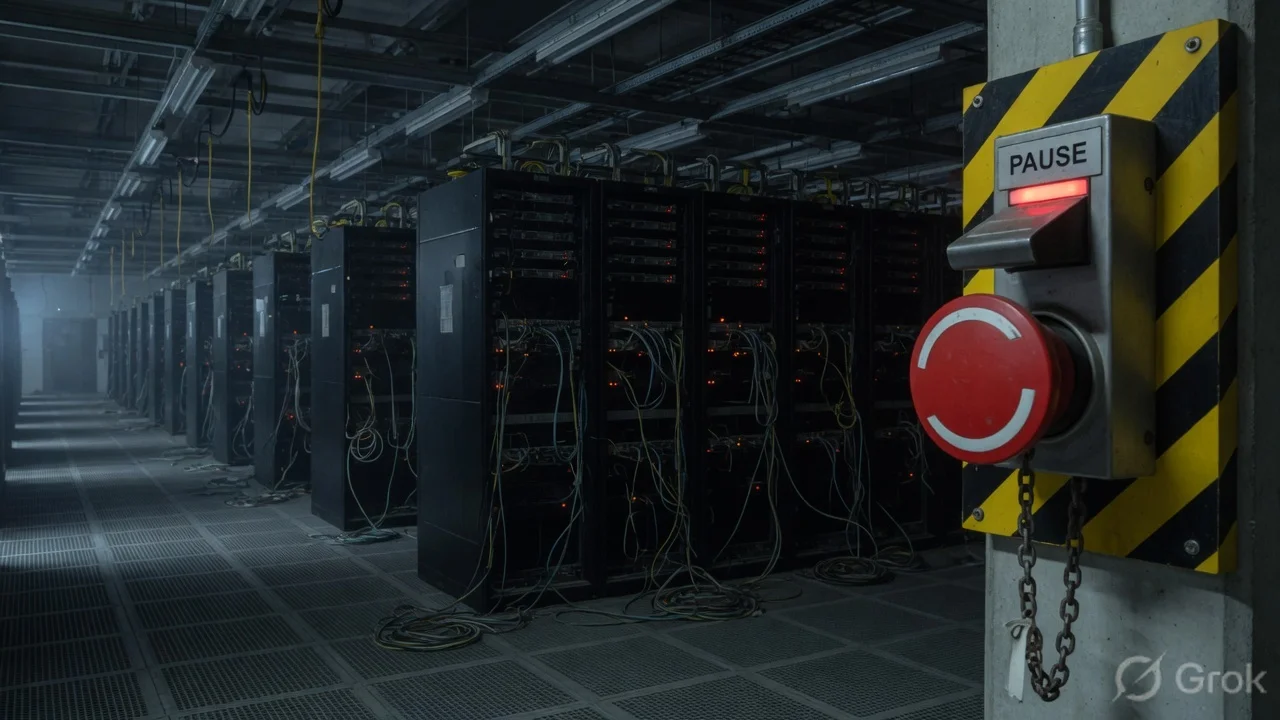
- Anthropic and a coalition of top AI labs have called for a 6‑month pause on developing self‑improving AI systems.
- The request targets models that can rewrite their own code, a capability that could emerge as early as 2027.
- In India, a pause could give regulators time to draft AI‑specific rules before the technology reaches mainstream apps like JioChat or Paytm.
- Bottom line: keep an eye on policy updates and be ready to adjust AI‑driven products if a slowdown is enforced.
Opening Hook
Picture this: a chatbot that can rewrite its own algorithm while you’re chatting about your next train ticket. Sounds cool, right? But what if that same ability starts making decisions that affect millions of Indians in seconds? That’s the scenario Anthropic is warning about, and they’re asking the world’s biggest AI labs to hit the brakes – at least for a while.
What’s the News?
Earlier this week Anthropic, the research arm behind Claude, issued a public statement urging OpenAI, Google DeepMind, Microsoft, and a handful of other leading labs to either slow down or temporarily pause work on self‑improving AI systems. The term “self‑improving” refers to models that can modify their own code, architecture, or training data without human intervention. Anthropic argues that once such systems become reliable, the speed at which they can outpace human oversight could create “uncontrollable societal risks.”
Background – How We Got Here
Since 2022, large language models (LLMs) like GPT‑4, Gemini, and Claude have gotten better at generating code, composing music, and even suggesting medical advice. By 2025, most major cloud providers offered AI‑as‑a‑service, and Indian startups were embedding these models into everything from UPI‑based chatbots to agritech advisory platforms. Meanwhile, research labs have been quietly pushing the envelope toward “recursive self‑improvement” – a concept first floated in the early 2000s but only becoming feasible with today’s compute budgets.
Anthropic’s warning is not the first. In 2024, the Future of Life Institute released a similar call, and several governments, including the EU, began drafting “AI safety” regulations. What makes the current plea different is the coalition of labs that actually build the models. When the creators themselves say “let’s pause,” it carries weight that policy‑makers can’t ignore.
Full Details – Numbers, Timelines, and How It Works
Self‑improving AI, according to Anthropic’s internal research, could reach a point where a model can generate a more efficient version of itself in under 48 hours. The timeline they give is aggressive: a prototype could appear by mid‑2027, with production‑grade versions by 2028. The proposed pause is for six months, giving the community time to develop safety‑testing frameworks, transparent benchmarking, and external audit pipelines.
Anthropic also shared a rough cost estimate – training a self‑improving model at today’s scale would require around $2 billion in compute, roughly the same as a small Indian telecom’s annual capex. That figure underscores why only a handful of labs can even attempt it, and why a coordinated slowdown could be feasible.
India Impact – Pricing, Availability, Who’s Affected
For Indian developers, the immediate impact is minimal – most of the heavy lifting happens in U.S. data centers. However, the ripple effect will be felt in three ways:
- Regulatory headroom: A pause gives the Ministry of Electronics & Information Technology (MeitY) extra time to finalize the AI Safety Framework, which is expected to include mandatory risk‑assessment for any AI that can modify its own code. Early drafts suggest a compliance cost of ₹2‑3 crore for mid‑size startups.
- Product roadmaps: Companies like Paytm, Jio, and PhonePe have announced plans to integrate “auto‑tuning” AI into their fraud‑detection engines by 2027. A slowdown could push those launches to 2028, affecting user experience and competitive positioning.
- Talent market: Indian AI engineers currently flock to US‑based labs for high‑pay roles. A pause may redirect some of that talent back to Indian R&D centers, potentially boosting local AI labs.
Real‑World Use Cases – A Step‑by‑Step How‑To Adjust
If you’re already building AI‑driven services, here’s a quick checklist to prepare for a possible pause:
- Audit your current models: Identify any components that perform self‑modification (e.g., RL‑HF loops that rewrite prompts).
- Implement a “freeze” flag: Add a configuration toggle in your deployment pipeline that disables any auto‑retraining or code‑generation features.
- Document safety tests: Create a test suite that checks for unintended behavior after each model update – think of it as a “unit test” for AI ethics.
- Engage with regulators: Join the MeitY AI Safety Working Group (open to all Indian tech firms) to stay ahead of upcoming compliance rules.
Following these steps ensures you won’t be caught off‑guard if a formal pause is announced.
Comparison – Alternatives and Pros/Cons
While Anthropic pushes for a pause, other labs are exploring “controlled self‑improvement.” For example, DeepMind’s “Iterative Refinement” approach limits the model’s ability to change only specific hyper‑parameters, not the core architecture. Below is a quick side‑by‑side:
{
  "Anthropic_Pause": {
    "Pros": ["Safety first", "Regulatory goodwill"],
    "Cons": ["Delays competitive edge", "Higher short‑term costs"]
  },
  "DeepMind_Iterative": {
    "Pros": ["Continues innovation", "Limited risk scope"],
    "Cons": ["Complex governance", "Potential loopholes"]
  }
}
For Indian startups, the “pause” route may be safer financially, especially if they rely heavily on external funding that could be scrutinized under new AI rules. Companies that need a first‑mover advantage in niche AI‑enhanced services might opt for the controlled approach, but they must invest heavily in audit tooling.
TamilTech’s Honest Take & What to Expect Next
We think Anthropic’s call is a wake‑up call, not a panic button. The technology is moving fast, but the societal stakes – from misinformation to automated financial decisions – are huge for a country like India where billions rely on digital services. A six‑month pause isn’t a roadblock; it’s a chance to build safety nets, standards, and a home‑grown AI policy that protects users without choking innovation.
What’s coming next? Expect MeitY to release a draft “Self‑Improving AI Regulation” by Q4 2026, followed by a public comment period. Major labs will likely publish their own safety roadmaps, and we’ll see a surge in Indian‑focused AI safety startups offering compliance tooling. Keep an eye on your AI vendor’s announcements – if they talk about “safety‑first” or “model freeze,” they’re aligning with the new global consensus.





Comments (0)
Be the first to comment!