


Key Takeaways
Key Takeaways
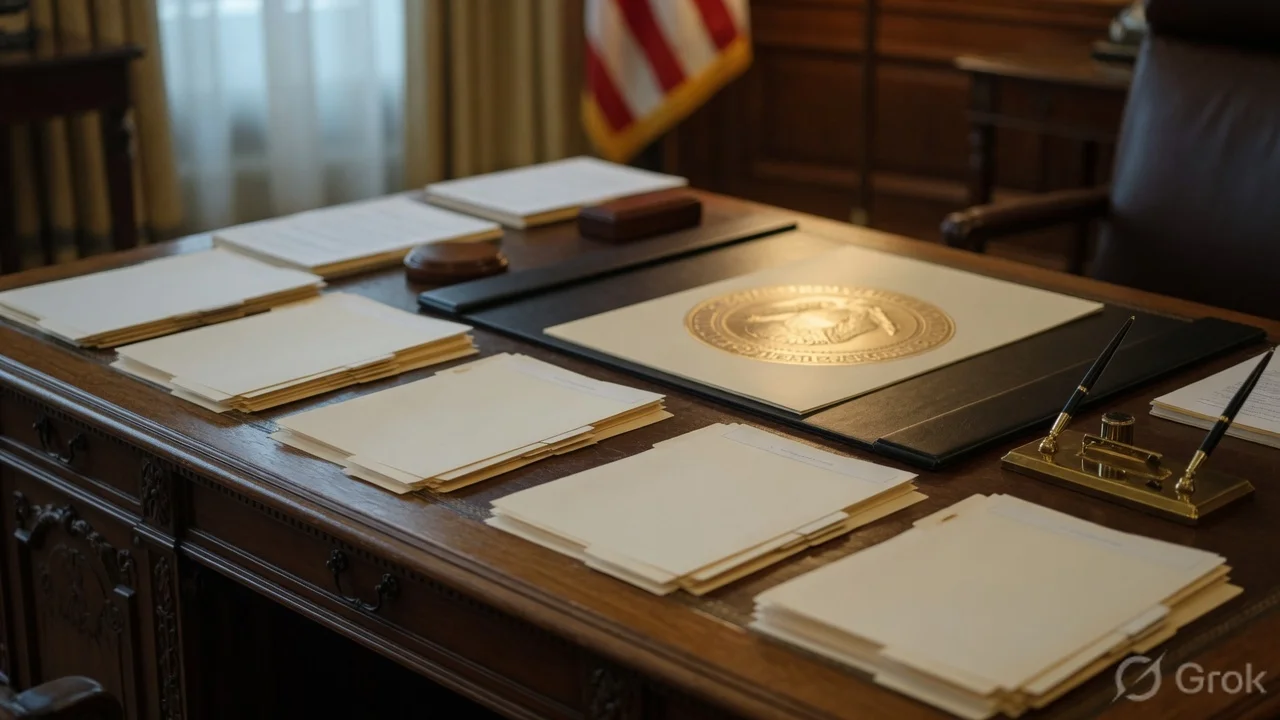
- The White House is preparing an executive order to create a federal AI working group that will review and vet AI models before public release.
- The group will draft new oversight procedures, including risk‑assessment frameworks and mandatory transparency reports for AI developers.
- Indian AI startups may need to align with any future US‑led standards if they export services or collaborate with US firms, affecting compliance costs.
- For Indian users, the move could mean tighter safety nets around generative AI tools, but also potential delays in feature roll‑outs.
Opening Hook – Why This Is Hot
Picture this: you’re scrolling through a new AI chatbot that can write poems, code, and even suggest stock picks. Suddenly, the US government steps in and says, “Hold up, we need to check this before anyone can use it.” That’s exactly what the Trump administration is cooking up – an executive order (EO) to set up a federal AI working group. It sounds like bureaucracy, but the ripple effects could reach every coder, startup, and end‑user in India.
What’s the News?
In late May 2026, senior officials in the Trump White House disclosed that they are drafting an EO aimed at creating an inter‑agency AI working group. The group’s mandate: develop a national framework for AI oversight, vet AI models before they’re released, and require companies to file detailed risk‑assessment reports. The move follows a series of high‑profile mishaps – from deep‑fake political ads to biased hiring algorithms – that have sparked worldwide calls for tighter regulation.
Background – How We Got Here
AI regulation isn’t new. The EU rolled out the AI Act in 2024, and the US Federal Trade Commission has been probing deceptive AI practices since 2023. However, the US has lacked a unified, government‑led vetting process. The last administration hinted at AI oversight but stopped short of a concrete framework. Now, with the 2026 mid‑term elections looming, the Trump team sees an opportunity to claim they’re protecting American jobs and national security by tightening AI governance.
Historically, the US has relied on sector‑specific regulators – the FDA for medical devices, the FCC for communications – but AI cuts across all sectors. That’s why a dedicated AI working group is being proposed: to bring together the Department of Commerce, the National Institute of Standards and Technology (NIST), the Office of Science and Technology Policy (OSTP), and the FTC under one roof.
Full Details – How the Proposed EO Works
The draft EO outlines four core responsibilities for the AI working group:
- Model Vetting: Before any generative AI model (e.g., large language models, image generators) can be commercially released in the US, the developer must submit the model’s architecture, training data summary, and a risk‑assessment report to the group.
- Risk‑Assessment Framework: The group will publish a standardized checklist covering bias, privacy, security, and misinformation potential. Companies scoring above a certain threshold will need to implement mitigation measures.
- Transparency Reporting: Quarterly public reports will detail which models were vetted, any identified risks, and corrective actions taken.
- International Coordination: The group will liaise with foreign regulators, including India’s Ministry of Electronics and Information Technology (MeitY), to harmonize standards where possible.
If a model fails the vetting, the developer can appeal, but the working group can issue a “deployment hold” that prevents the model from being offered to US consumers until issues are resolved. The EO also earmarks $250 million over the next two years for the group’s staffing, research, and an AI safety grant program.
India Impact – What It Means for Indian Users and Startups
India’s AI ecosystem is booming – over 150 AI‑focused startups raised $2.3 billion in 2025 alone. Many of these firms export services to the US or embed US‑based models into their products. If the US adopts a mandatory vetting regime, Indian companies will face two practical challenges:
- Compliance Costs: Developers will need to allocate resources to prepare detailed risk reports, potentially adding ₹5‑10 lakhs per model in legal and engineering overhead.
- Time‑to‑Market Delays: The vetting process could add weeks or months before a new AI feature can be rolled out to US customers, indirectly slowing global releases.
On the flip side, the EO could raise the global bar for AI safety, which benefits Indian users. Stricter vetting means fewer chances of encountering harmful deep‑fakes, biased recommendations, or privacy‑leaking bots. For Indian consumers, that translates to a safer digital experience, especially on platforms like JioChat, Swiggy’s AI ordering assistant, or government e‑services.
Real‑World Use Cases – A Step‑by‑Step Example
Let’s walk through how an Indian startup, “NilaAI”, would navigate the new US rules when launching a multilingual chatbot for e‑commerce:
- Prepare Documentation: NilaAI compiles a model card that lists the training data sources (e.g., public domain Indian language corpora), architecture details (Transformer‑XL, 7 billion parameters), and known limitations.
- Risk Assessment: Using the US working group’s checklist, they evaluate bias (e.g., gender pronoun usage), privacy (user query storage), and misinformation risk (product claim generation).
- Submit to Working Group: The compiled package is uploaded to the designated portal, and NilaAI receives a tracking ID.
- Review Cycle: Within 30 days, the group returns feedback – “Potential gender bias in product recommendations – implement counter‑factual training.”
- Mitigation & Resubmission: NilaAI retrains the model with balanced data and resubmits. After another review, the model gets a “clear for US deployment” stamp.
During this process, NilaAI also updates its internal compliance dashboard, ensuring that any future model updates undergo the same vetting. The extra steps add overhead, but the resulting product is more robust and trustworthy for both US and Indian users.
Comparison – Alternatives & Competing Approaches
While the US is moving toward a centralized vetting system, other regions have taken different routes:
- EU AI Act: Enforces a risk‑based classification (unacceptable, high, limited, minimal) with mandatory conformity assessments for high‑risk AI. Companies must work with notified bodies – a process similar to medical device approvals.
- China’s AI Governance Guidelines: Relies heavily on self‑regulation combined with state‑run “ethical review committees”. Compliance is mandatory for domestic firms but less transparent for foreign entities.
- India’s Draft AI Policy (2025): Focuses on encouraging innovation while setting up a “National AI Council” for advisory roles. No mandatory vetting yet, but the policy encourages voluntary transparency reporting.
Pros of the US EO:
- Clear, federal‑level authority reduces fragmented state regulations.
- Standardized risk framework simplifies compliance for multinational firms.
Cons:
- Potential bottleneck for fast‑moving startups.
- Risk of US‑centric standards that may not align with Indian language and cultural nuances.
TamilTech’s Honest Take & What to Expect Next
We think the Trump administration’s push for an AI working group is a double‑edged sword. On one hand, a unified oversight body could finally bring consistency to a chaotic regulatory landscape, making it easier for Indian firms to understand what’s expected when they sell to the US. On the other hand, the added compliance layer could strain early‑stage startups that are already cash‑strapped.
Our advice for Indian AI players:
- Start building compliance documentation now – model cards, data provenance logs, and bias audits.
- Engage with MeitY’s National AI Council to align Indian guidelines with emerging US standards.
- Consider partnering with US‑based legal tech firms that specialize in AI regulation to speed up the vetting process.
Looking ahead, the EO is expected to be signed by the end of Q3 2026, with the working group becoming operational in early 2027. Keep an eye on the FTC’s upcoming “AI Transparency Rule” – it will likely dovetail with the EO and affect any AI service that collects Indian user data. In short, the AI regulatory wave is coming, and those who ride it early will gain a competitive edge, while laggards may find themselves stuck in compliance limbo.




Comments (0)
Be the first to comment!