


Key Takeaways
- Flipkart Minutes has grown 4X in two years since its August 2024 launch.
- The service now covers more than 150 cities with nearly 1,200 micro-fulfillment centres.
- Around 60% of Flipkart Minutes customers return for repeat orders.
- Flipkart is pushing deeper into India’s quick-commerce battle against Blinkit, Zepto and Instamart.
- Expansion is tilting toward more cities beyond the usual metro dark-store clusters.
What's the news
Flipkart Minutes just marked two years of operations, and the numbers look loud for a platform that still feels new to a lot of shoppers. The quick-commerce arm has grown 4X over that stretch and now sits in more than 150 cities. Behind the map pins: nearly 1,200 micro-fulfillment centres — those small dark stores that make 10- to 15-minute grocery runs possible.
Launched in August 2024, Minutes was Flipkart’s answer to the Blinkit-Zepto-Instamart sprint. Two years on, the company is saying the bet is working. Repeat use is a big part of the story: about 60% of customers come back to shop again on Flipkart Minutes. That retention figure matters more than raw city count in a category where every player burns cash on discounts and delivery speed.
This is not a soft soft-launch update. It is Flipkart signalling that Minutes is no longer an experiment bolted onto the main marketplace. It is a full vertical with its own store network, assortment logic, and city-by-city rollout plan.
Details
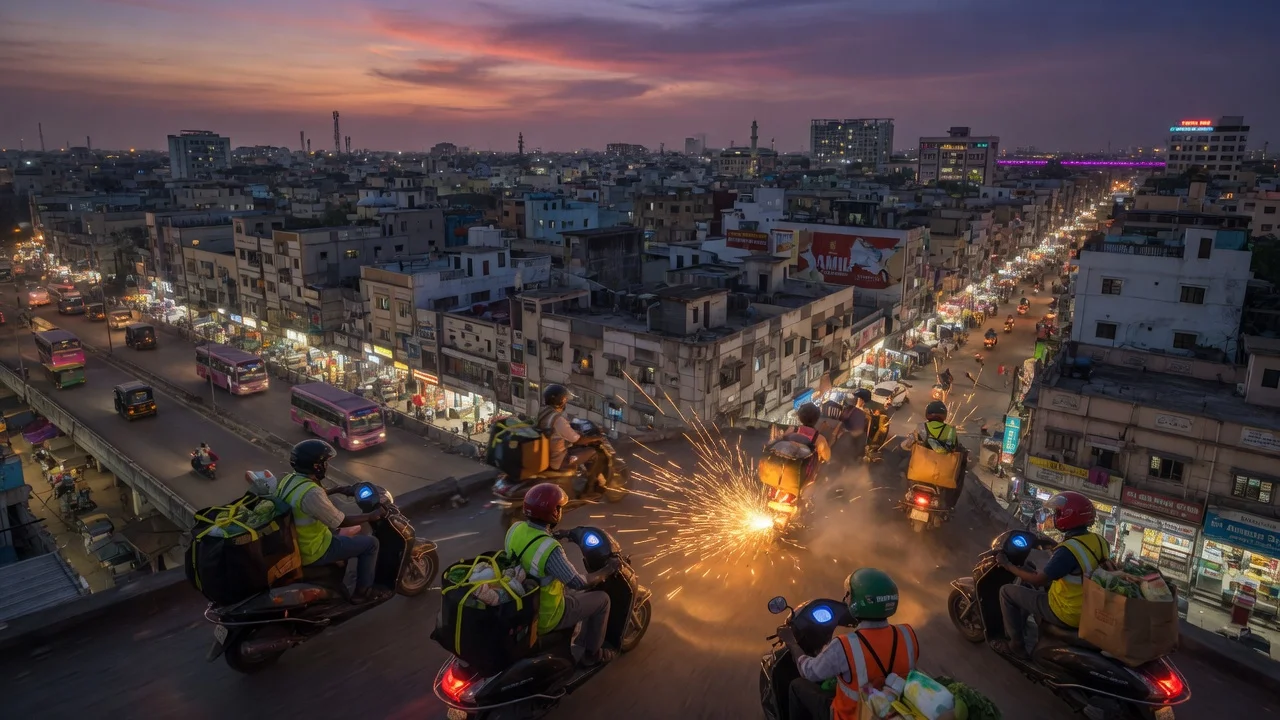
Start with the footprint. Nearly 1,200 micro-fulfillment centres across 150-plus cities is a serious dark-store build for an Indian quick-commerce player. These centres are not giant warehouses. They are compact, hyperlocal inventory nodes stocked for speed — milk, snacks, personal care, phone chargers, medicines, and the usual “I need it now” list. The idea is simple: keep stock close to the customer so a delivery partner can dash across a few kilometres and still hit the promise window.
The 4X growth claim covers the two-year period since launch. Flipkart has not dropped a full P&L for Minutes in this update, and we are not inventing revenue figures. What we do know is the operational scale-up: more cities, more centres, and a customer base sticky enough that six in ten buyers return. In quick commerce, that repeat rate is the difference between a discount magnet and a habit.
City expansion past the classic metro cluster is the other signal. Early quick-commerce wars were almost entirely a Delhi-NCR, Mumbai, Bengaluru, Hyderabad, and Chennai game. Pushing past 150 cities means Minutes is chasing demand in smaller urban pockets where organised grocery and instant delivery used to be thin. That is harder logistics — thinner order density, trickier last-mile economics — but it is also where a lot of India’s next wave of digital shopping growth sits.
Assortment and checkout remain Flipkart-native. Users already living inside the Flipkart app or site can treat Minutes as the fast lane for urgent buys without downloading yet another delivery app. Payments lean on the usual Indian stack: UPI, cards, wallets, and Flipkart’s own checkout flow. For a lot of households that already trust Flipkart for big-ticket and everyday shopping, that single-app convenience is a quiet advantage.
The timing also matters. By mid-September 2026, the Indian quick-commerce market has moved from novelty to expectation in many neighbourhoods. Two years is long enough for Minutes to have tested denser store grids, refined SKU lists, and learned which cities actually repay the cost of a micro-fulfillment centre. The 4X growth and 1,200-centre count suggest those experiments are turning into a playbook rather than one-off pilots.
India impact
India’s quick-commerce fight is no longer just about who delivers atta and Maggi fastest in South Delhi. It is about who can build a national dark-store machine without melting the P&L. Flipkart Minutes entering 150-plus cities puts more pressure on Blinkit, Zepto, Swiggy Instamart, and any regional players still holding pockets of loyalty.
For consumers, more cities and more centres usually mean shorter wait times and fewer “out of stock” disappointments. That is especially useful in tier-2 and tier-3 towns where kirana shops still dominate but stockouts and limited evening hours are common. A micro-fulfillment centre that can push milk, bread, ORS, baby diapers, or a phone cable in under 20 minutes changes the evening routine for a lot of families.
There is also a Flipkart ecosystem angle. Shoppers who already use Flipkart for electronics, fashion, and home goods now get a reason to open the same app for urgent groceries. That keeps attention, payment instruments, and address books inside one wallet. In a market where UPI has made checkout friction almost zero, the real lock-in is habit and assortment trust.
On the merchant and kirana side, the picture is mixed. Dark stores create warehouse and delivery jobs, but they also pull high-frequency grocery trips away from neighbourhood shops. Flipkart’s broader play has often included local seller participation on the main marketplace; Minutes is more inventory-led and fulfilment-led. How that balance settles in smaller cities will shape local retail sentiment over the next couple of years.
Investors and operators watching unit economics will focus on that 60% return rate. Discounts can buy first orders. Only convenience, reliability, and decent pricing buy second and third orders. If Minutes can hold repeat behaviour while spreading into lower-density cities, it strengthens Flipkart’s case that quick commerce can sit beside — not just fight — the core e-commerce business.
Use cases
The obvious one is the 9 pm pantry panic: milk finished, no bread for tomorrow’s tiffin, kids asking for snacks, and nobody wants to step out. Minutes is built for that window.
Travel and work-from-home days create another cluster. You land late, hotel mini-bar prices look silly, and you need water, chargers, or basic toiletries. Or you are mid-Zoom and realise the house is out of coffee pods and sugar. Hyperlocal delivery turns those into 15-minute problems instead of hour-long errands.
Health and care runs sit in the same bucket. ORS, basic medicines (where allowed), sanitary products, baby care, and elderly care items often cannot wait for next-day marketplace delivery. A nearby micro-fulfillment centre stocked for these SKUs is genuinely useful, not just convenient.
Small office and PG use cases are rising too. Shared flats and co-working spaces lean on quick commerce for cleaning supplies, packaged food, and last-minute meeting snacks. In cities where Minutes has denser centre coverage, those orders become routine rather than emergency.
Finally, festival and match-day spikes. When a cricket final or a festival evening empties the local kirana shelves, dark-store networks with pre-positioned inventory can still move. That is one reason players keep adding centres even after the first metro wave — peak days punish thin networks.
Honest take
Flipkart Minutes hitting 4X growth and 150-plus cities in two years is a strong operational scorecard. The nearly 1,200 micro-fulfillment centres show real CapEx and ops commitment, not just marketing slides. The 60% return customer number is the part that should make rivals sit up — retention is the scarce resource in this category.
Still, quick commerce in India remains a brutal unit-economics sport. More cities sound great until order density thins out and delivery partners spend more time riding than delivering. Dark stores need tight SKU discipline; too wide an assortment and you recreate a slow warehouse with fancy branding. Too narrow and customers bounce to whoever has the missing item.
Competition will not pause. Blinkit, Zepto, and Instamart have their own city maps, promo calendars, and warehouse playbooks. Flipkart’s edge is the parent app’s traffic and trust, plus the ability to cross-sell from Minutes into the wider Flipkart catalogue. Whether that edge is enough in every new city is an open question that only the next few quarters of density and repeat data will answer.
For shoppers, the win is clear: more places where “I need it now” actually works, paid via UPI, tracked in an app you already use. For the industry, Minutes’ two-year report card raises the bar on how fast a late entrant can scale dark stores across India. The growth is real. The hard part — profitable speed at national scale — is still the main boss fight.

Comments (0)
Be the first to comment!