


Key takeaways
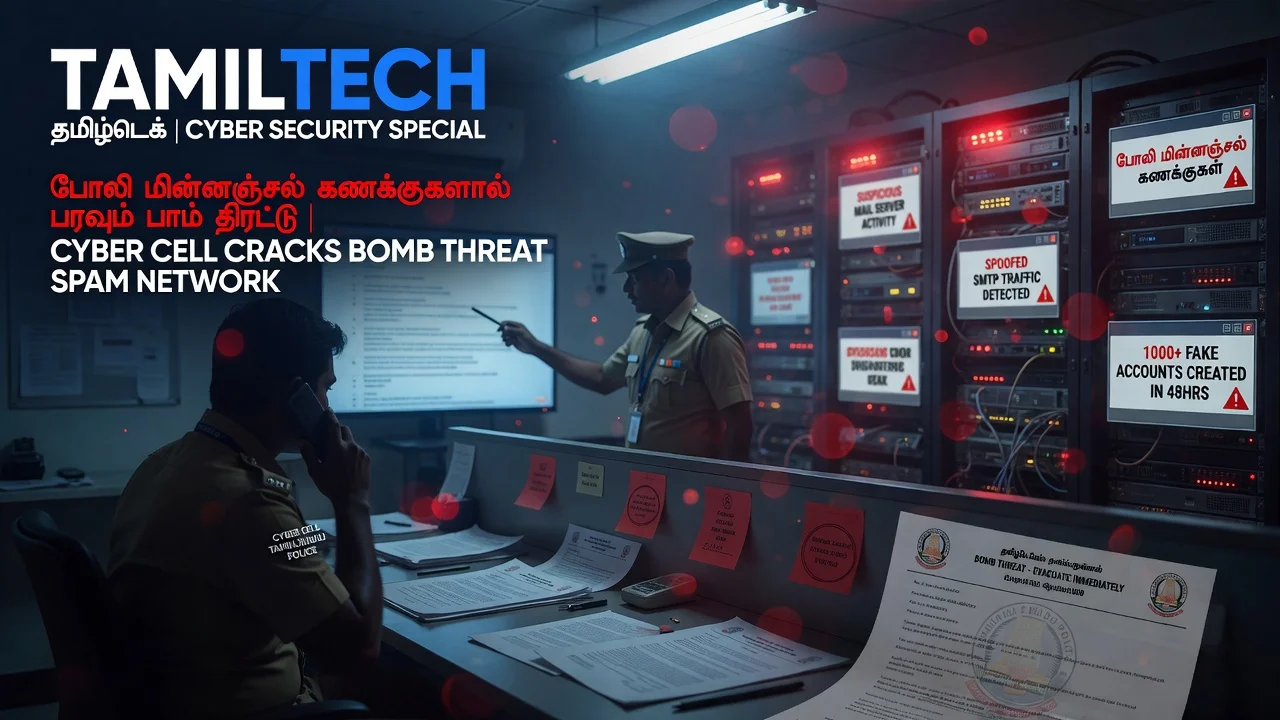
Indian police will question Google on Gmail account safeguards after busting a network of over 5 lakh fake accounts.
Those accounts blasted more than 5 lakh hoax bomb threats to government offices across India.
Two people who ran the racket since 2022 have already been arrested.
Free email platforms are under pressure for weak bulk-creation checks in the Indian context.
It shows how easily Gmail can get weaponised against public offices and Digital India systems.
What just happened?
Indian police are lining up questions for Google. Not about random spam. About half a million fake Gmail accounts.
Those IDs fired more than 5 lakh hoax bomb threats at government offices across the country. Two operators behind the network are already under arrest.
The racket started in 2022. So offices kept eating these mails for years before the bust.
Gmail is still the default free email for millions of Indians on Jio, Airtel and broadband. When the same service gets abused at this volume, it stops feeling like a tech glitch. It becomes a public safety and governance problem.
Police want plain answers: how did so many accounts slip through, and what will Google tighten next?
How does this actually work?
Picture a fake-account farm. Operators create and control a huge pile of Gmail IDs, then use them to mail bomb threats to government offices.
One threat mail is enough to push security into motion — evacuations, bomb squads, CCTV checks, follow-up probes. Multiply that by lakhs and you see the drain on police time and taxpayer money in INR.
The two arrested people managed this since 2022. That long run means organised work, not a weekend prank.
How do farms like this usually grow? Temporary phone numbers, SIM farms, VPNs, and signup scripts that sail past basic CAPTCHAs. Gmail does phone verification. It still was not enough to stop bulk creation at this level.
Once the accounts were live, sending near-identical threat mails was easy. Offices across states got hit. Same costly response cycle, again and again.
Police tracked the operators, shut the network, and now want platform-side answers from Google — mass-signup detection, abuse reporting speed, and how fast they work with Indian cyber cells.
Nobody is saying Google wanted the threats. The real question is whether free-tier checks and AI filters match the Indian threat scene, where free email is everywhere and fraudsters target it hard.
What changes for people in India?
Here's the bit that hits home. Bomb threats get zero tolerance here. One mail can empty a secretariat, freeze court work, or stall a municipal office for hours.
Every bomb-disposal run and extra police deployment burns public money. Cross 5 lakh threats and the cumulative cost is serious.
Digital India still rides on email. Official notices, DigiLocker alerts, exam results, passport updates — a huge chunk still lands in Gmail for citizens and small businesses. Trust matters.
People already juggle Flipkart logins, JioFiber bills and bank alerts on the same free Gmail. If platforms look soft on abuse, reliability starts feeling shaky.
Indian law enforcement has long pushed global tech firms for faster takedowns. This case gives them a concrete reason to demand better local processes — sharper talks on IT Rules, CERT-In timelines, and India-specific abuse desks.
Heavier verification could also add friction for genuine users in Tier-2 and Tier-3 cities who need easy Gmail signups for work and college.
And this is not only about bomb mails. Throwaway Gmails power UPI phishing, fake Flipkart seller chatter, job scams and malware. The bomb-threat farm is just the loudest example of a wider mess.
What should you do now?
If you are a regular Gmail user, do not panic. This case is about bulk fake accounts, not your personal inbox getting raided overnight.
Still, lock your own side. Turn on 2-step verification. Skip mystery links. Treat unexpected “urgent” mails with suspicion — especially ones pushing UPI or bank OTPs.
Offices and small teams should tighten how they handle threat mails: verify through known channels, report fast to cyber cells, and avoid knee-jerk public panic when the pattern looks like a known hoax wave.
Watch for any Google signup or recovery changes in the coming months. Stronger checks may slow new account creation a bit. That trade-off is exactly what the police pressure is aiming at.




Comments (0)
Be the first to comment!