


What’s the headline?
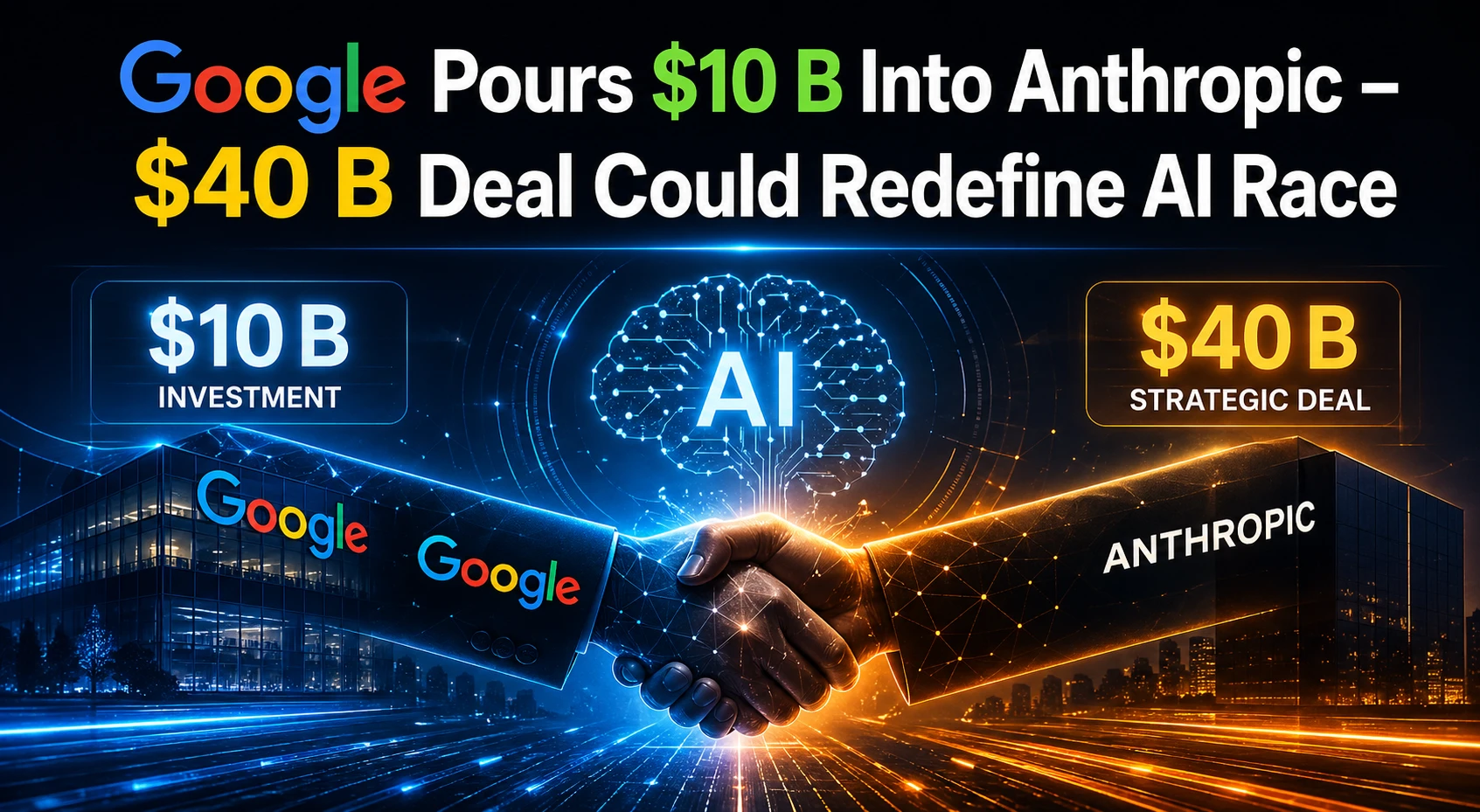
Google just announced a massive cash infusion into Anthropic – $10 billion up‑front at a $350 billion valuation, plus a conditional $30 billion if the startup meets performance milestones. In plain English: Google is ready to bankroll the next big AI competitor with a total of $40 billion.
Why does this matter?
Anthropic, the San Francisco‑based AI lab founded by former OpenAI veterans, is best known for its Claude series – conversational agents that claim to be safer and more steerable than ChatGPT. The cash injection will let Anthropic double‑down on model scaling, data‑center expansion, and talent hiring. For Google, this is a strategic move to keep its AI portfolio – Gemini, Bard, and its own cloud AI services – ahead of the curve. The $350 billion valuation also puts Anthropic in the same league as the world’s biggest AI unicorns, sending a clear signal to investors and rivals alike.
Deal mechanics in plain numbers
- Initial cash: $10 billion paid now, fully in cash.
- Conditional tranche: Up to $30 billion, released only if Anthropic hits agreed‑upon performance targets (model quality, safety metrics, revenue thresholds).
- Valuation: $350 billion post‑money – roughly 10× the size of the Indian IT‑services market.
What are the performance targets?
Google hasn’t disclosed the exact metrics, but industry insiders say they will be tied to:
- Training and releasing a next‑gen LLM that outperforms Gemini on benchmark tests.
- Achieving $1 billion in annual AI‑cloud revenue within three years.
- Meeting safety & compliance standards set by Google’s AI Principles.
Impact on the Indian AI ecosystem
India is fast becoming a talent hub for LLM research. With Google’s deep pockets now tied to Anthropic, we can expect:
- More R&D centers: Anthropic may open a dedicated research lab in Bengaluru or Hyderabad, creating high‑paying jobs for local AI engineers.
- Cloud discounts: Google Cloud could roll out special pricing for Indian startups that integrate Claude APIs, similar to the earlier Google for Startups Cloud Program.
- Data localisation: To meet Indian regulations, Anthropic will need to store user data on‑prem or in regional data‑centers – a win for the country’s data‑center market.
TamilTech’s take – the good, the risky, the realistic
From a TamilTech perspective, the deal is a double‑edged sword.
Pros:
- Massive funding means faster model iteration – Indian developers could get access to safer, more controllable LLMs sooner.
- The conditional $30 billion creates a performance‑based incentive, which usually translates to tangible product releases rather than just hype.
- Google’s involvement could open up more educational partnerships with Indian universities for AI curricula.
Cons:
- Heavy reliance on a single partner (Google) might limit Anthropic’s openness – think of possible API lock‑ins for Indian firms.
- The performance targets are aggressive; missing them could stall the second tranche, leaving Anthropic cash‑strapped.
- Regulatory scrutiny may rise, especially around data‑privacy and AI‑ethics in India.
What should Indian developers do now?
1. Start experimenting with Claude’s API – sign up for the free tier, build a simple chatbot, and benchmark it against Gemini.
2. Watch for Google Cloud credits – keep an eye on announcements for AI‑cloud discounts aimed at Indian startups.
3. Upskill in AI safety – Google’s AI Principles will likely shape Anthropic’s roadmap, so learning about prompt‑engineering, model interpretability, and bias mitigation will be valuable.
What’s next on the horizon?
We expect the first milestone – a new Claude model – to roll out by Q4 2024. If it passes Google’s benchmark, the $30 billion could start trickling in as quarterly disbursements. Keep an eye on Google I/O 2025 – the event will likely showcase joint demos between Gemini and Claude, hinting at how the two ecosystems will converge.
Bottom line
Google’s $40 billion bet on Anthropic is more than a financing round; it’s a strategic play to dominate the next wave of generative AI. For India, the ripple effects could be huge – more jobs, cheaper cloud AI, and faster access to safer LLMs. But developers need to stay agile, watch the performance targets, and be ready to leverage any new credits or partnerships that come out of this alliance.




Comments (0)
Be the first to comment!