


Key Takeaways
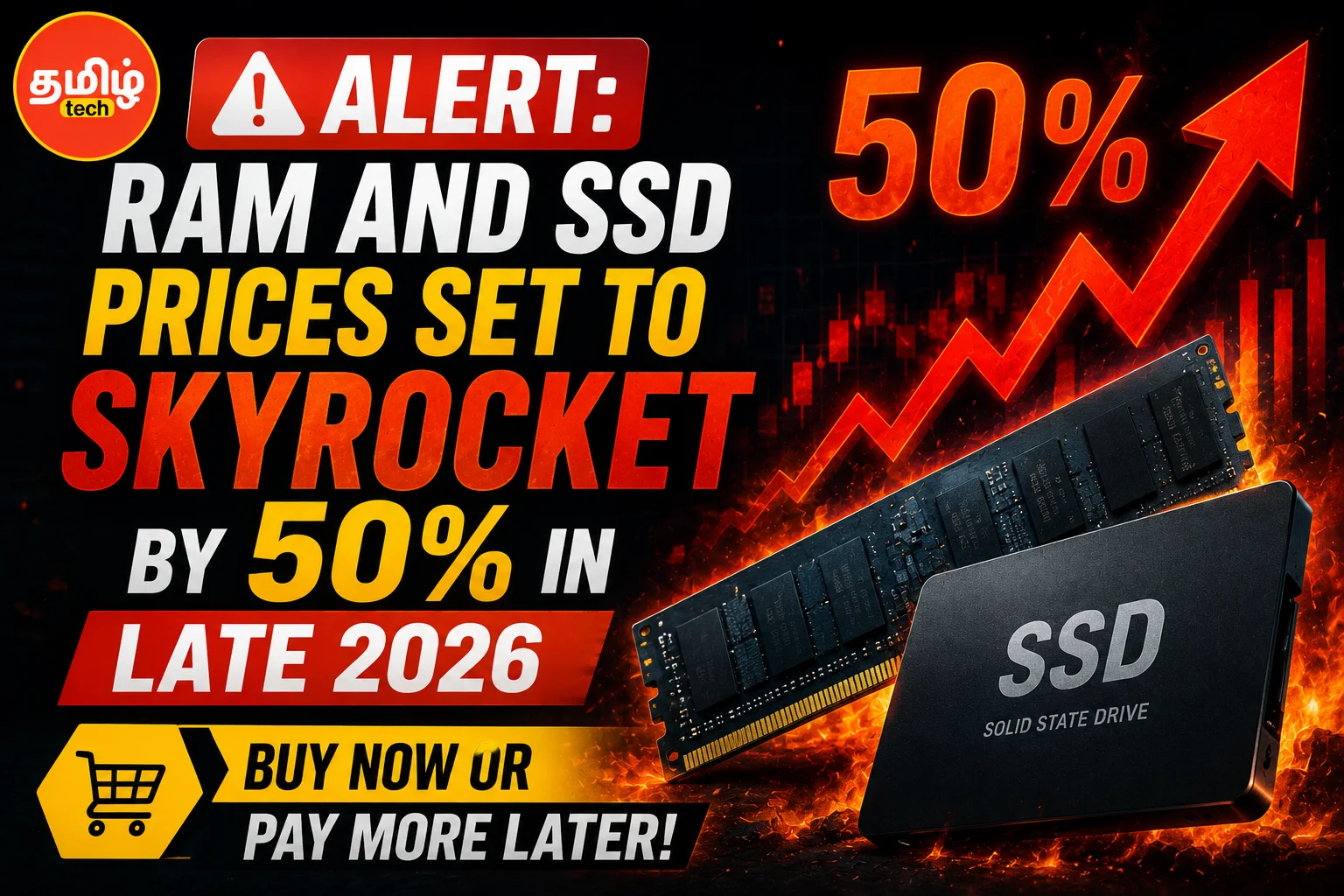
- Memory prices (DRAM and NAND) are projected to rise by 40-50% in Q3 2026 and another 30-40% in Q4 2026.
- Chinese memory manufacturers are currently unable to increase production enough to stabilize the global market supply.
- In India, this will lead to a direct price hike for laptops, smartphones, and custom PC components starting from the 2026 festive season.
- If you are planning to upgrade your RAM or buy a high-capacity SSD, doing it before August 2026 is the smartest move to save money.
The Storm is Coming: Why Your Next Tech Purchase Will Be Costly
If you’ve been planning to build a new gaming PC or upgrade that aging laptop with more RAM, I have some tough news for you. As we move into the second half of 2026, the tech industry is bracing for one of the most significant price hikes in recent memory—pun intended. We are looking at a massive surge where memory costs could jump by nearly 50% in just a few months. This isn't just a minor fluctuation; it’s a full-blown market shift that will affect everything from the phone in your pocket to the servers powering your favorite apps.
Why is this happening now? Well, the demand for high-performance memory has reached a breaking point. While 2025 saw a bit of stability, the explosion of AI-integrated devices in 2026 has sucked up all the available supply. Every company wants the fastest DRAM and the highest-density NAND for their AI servers and 'AI PCs,' leaving very little for the average consumer. When supply is low and demand is through the roof, there’s only one direction for the price to go: straight up. We at TamilTech have been tracking these supply chain movements, and the signals are clear—the era of cheap storage and affordable RAM is pausing for a while.
The Brutal Numbers: 40% to 50% Hikes Explained
Let’s look at the actual data because the numbers are quite staggering. In Q3 2026 (July to September), we are expecting memory prices to rise by 40-50%. Just as we catch our breath, Q4 2026 (October to December) is predicted to bring another 30-40% increase. To put this in perspective, if an 8GB DDR5 RAM stick costs you ₹3,500 today, it could easily cross ₹5,000 by the end of the year. For those looking at 2TB NVMe SSDs, the jump will be even more painful, potentially adding several thousand rupees to the final bill.
This double-whammy of price increases means that by the time we hit the 2027 New Year, hardware costs will look completely different. Manufacturers like Samsung, SK Hynix, and Micron are shifting their production lines to focus on High Bandwidth Memory (HBM) for data centers because that's where the big profit is. Consumer-grade DDR5 and SSDs are being pushed to the backseat. When the big players pivot, the ripples are felt by every single person buying a gadget in India. We are seeing a situation where even budget smartphones might have to cut down on RAM just to keep their launch prices competitive.
The China Factor: Why There’s No Easy Fix
Usually, when the big three (Samsung, Hynix, Micron) raise prices, we look toward Chinese manufacturers like CXMT or YMTC to provide some relief with cheaper alternatives. However, 2026 has proven to be a difficult year for that strategy. Chinese memory makers are facing their own set of challenges, including technical yield issues and international trade restrictions that prevent them from scaling up production fast enough to meet global demand. They simply don't have the capacity right now to act as a safety valve for the market.
This means we can't expect a flood of 'budget' Chinese RAM or SSDs to save us this time. They are struggling just to meet their internal domestic demand. Without that extra supply hitting the global market, the price floor is effectively removed. We’ve seen this pattern before, but the scale in 2026 is unprecedented because the 'AI tax' on hardware is real. Every chip that goes into an AI server is one less chip available for your laptop or gaming console. It's a zero-sum game, and currently, the high-end enterprise buyers are winning while the retail consumers are losing out.
The India Impact: What Happens at Flipkart and Amazon?
Now, let's talk about what this means for us in India. We have the Big Billion Days and Great Indian Festival sales coming up later this year. Usually, these are the times when we see the lowest prices on electronics. But with a 50% hike in component costs, brands will be in a tight spot. You might see 'discounts' on MRP, but the actual selling price (ASP) of laptops and smartphones will likely be higher than what we saw in early 2026. A laptop that launched at ₹55,000 might suddenly feel like a steal at ₹62,000 because the new models coming in will be priced at ₹75,000.
For the PC building community in places like Ritchie Street in Chennai or Nehru Place in Delhi, the impact will be immediate. Local distributors usually adjust prices weekly based on global spot rates. If you go to buy a PC today, you might get a quote; if you go back next week, that quote might be invalid. This volatility makes it very hard for students and professionals on a budget to plan their purchases. We expect the secondary (used) market for RAM and SSDs to become very active, as people scramble to find affordable parts from older machines.
What Should You Do? TamilTech’s Buying Strategy
So, what’s our honest take on this? If you are sitting on the fence about an upgrade, stop waiting. If you need a laptop for college, or if your work PC is lagging because of low RAM, buy the components now. As of June 2026, we are at the edge of the cliff. Prices haven't fully peaked yet, but the climb has started. Buying an extra 8GB or 16GB RAM stick today for ₹4,000 is much better than paying ₹6,500 for the same thing in November.
Another tip: look for 'New Old Stock' (NOS). These are units manufactured earlier in 2026 or late 2025 that are already in the Indian warehouses. Their prices are locked in based on older costs. Retailers like Amazon and some local shops might still have these at the old rates. Once that stock clears out and the new Q3/Q4 inventory arrives, the price hike will be fully reflected on the stickers. Also, if you’re buying a smartphone, try to get the highest RAM variant you can afford right now, because 'RAM expansion' (virtual RAM) is no substitute for the physical hardware that is becoming so expensive.
Final Thoughts: A New Normal for Tech Prices
This price hike isn't just a temporary glitch; it’s a sign of how the AI era is reshaping the economy of hardware. Memory is the new oil. As long as the world is hungry for more processing power for AI, the components that enable it will remain premium. We don't expect prices to cool down significantly until at least mid-2027, when new factories might finally come online. Until then, we have to be smarter with our tech spending.
At TamilTech, we always say that technology should be accessible, but market forces like these make it a challenge. Keep an eye on our channel and website; we will alert you the moment we see any temporary price drops or hidden deals. For now, the message is clear: the 'wait and watch' approach will likely cost you more. If you have the budget today, secure your hardware before the Q3 surge hits the Indian market in full force.





Comments (0)
Be the first to comment!