


Key Takeaways
- AI companies have spent over $650 million on 2026 US midterm campaigns, surpassing traditional sectors like oil and banking.
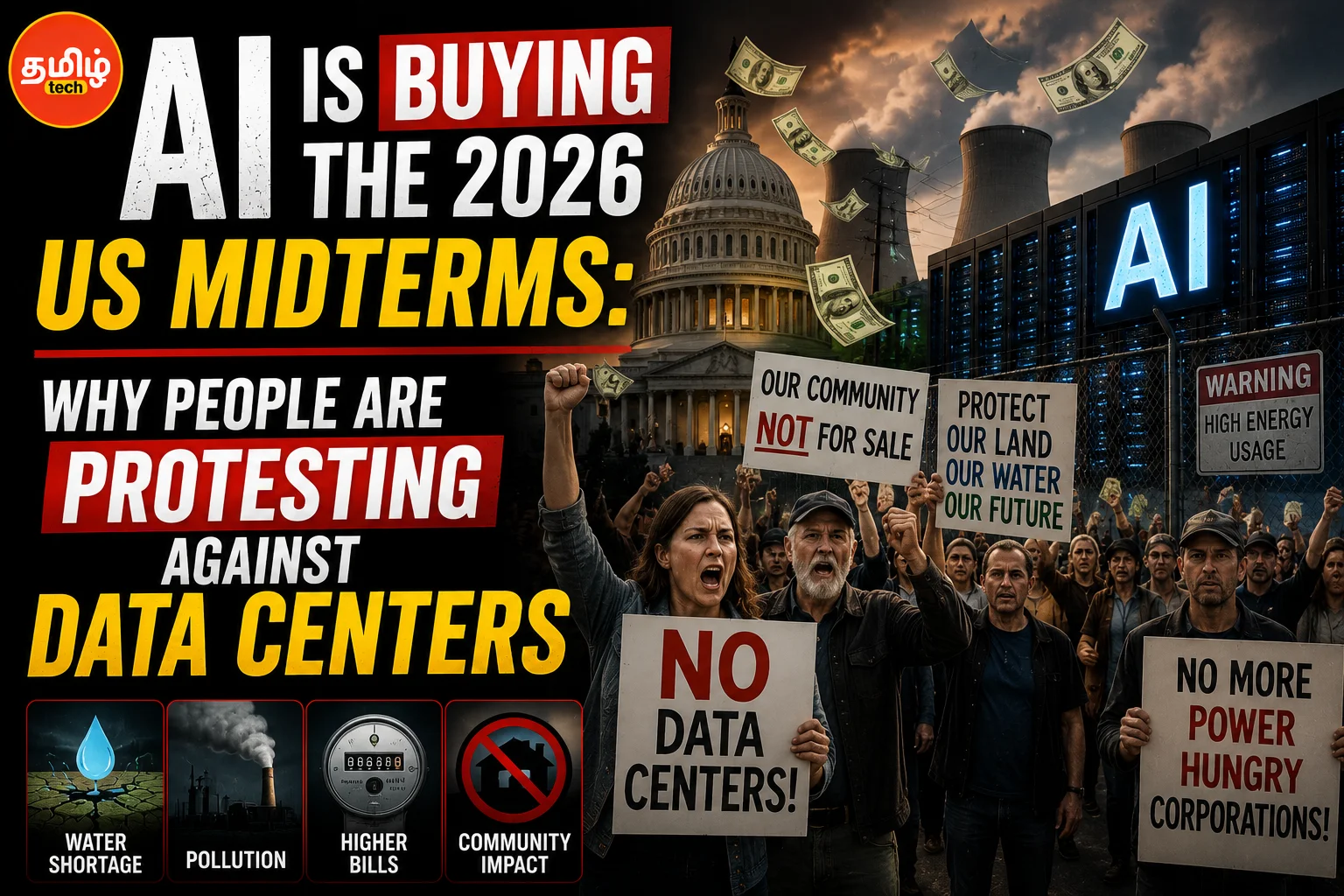
- Local communities in the US are staging massive protests against data center expansion due to noise pollution and a 15% average hike in electricity bills.
- In India, the data center market is expected to reach $10 billion by 2027, with major players like Adani and Reliance leading the charge.
- Voters are now using AI-detection tools to verify political ads as deepfakes become the primary weapon for smear campaigns.
The 2026 Power Shift: AI is the New Big Oil
Look, we all knew AI was going to change things, but 2026 has taken it to a whole new level. We are currently in the middle of the US midterm election cycle, and it's not just politicians on the ballot—it's the AI industry itself. If you think the influence of social media was bad in previous years, what we are seeing now is on a completely different scale. AI companies have officially become the largest financial backers of political candidates, pumping hundreds of millions of dollars into campaigns to ensure that regulations stay 'innovation-friendly.' But there's a massive twist: while the tech giants are writing checks, the average citizen is getting angry. And that anger isn't just about jobs; it's about the literal ground beneath their feet and the power coming out of their walls.
So here’s the thing—this isn't just a US problem. The ripples are being felt right here in India. As the US struggles with how to balance AI growth with public sanity, the decisions made there will set the template for how we handle our own tech boom. We’ve been tracking this trend since early last year, and honestly, the speed at which AI has moved from a 'cool chatbot' to a 'political kingmaker' is wild. Politicians are now using AI to micro-target voters with such precision that you might receive a campaign video that feels like it was scripted specifically for your personal anxieties. It’s brilliant, it’s terrifying, and it’s all being funded by the very companies that build the tech.
How We Got Here: From ChatGPT to Power Grids
Let's take a step back and look at how we reached this boiling point in June 2026. Back in 2023 and 2024, everyone was worried about AI taking their jobs. But by 2025, a new problem emerged: the physical cost of AI. Training a single massive language model requires as much electricity as thousands of homes use in a year. To keep up with the demand for ChatGPT-6, Gemini 3, and other advanced models, tech companies started building data centers at a record-breaking pace. These aren't just small office buildings; they are massive, sprawling campuses that consume gigawatts of power. In the US, this led to a direct conflict between 'Big AI' and 'Small Town America.'
By the start of this year, the tension snapped. Residents in states like Virginia and Ohio started seeing their electricity bills skyrocket because the local power grid couldn't handle the load from new data centers. Then there's the noise. These facilities have massive cooling fans that run 24/7, creating a constant low-frequency hum that has been driving neighbors crazy. This 'Data Center Rage' has become a central theme of the 2026 midterms. Candidates are now being forced to choose: do they take the massive donations from AI firms, or do they side with the voters who just want their quiet neighborhoods and affordable electricity back?
The Numbers Behind the Influence
Let’s talk real numbers because they are staggering. As of June 2026, AI-focused Political Action Committees (PACs) have raised more money than any other industry-specific groups. We are talking about over $650 million. To put that in context, that is more than what the pharmaceutical or fossil fuel industries used to spend. This money isn't just for TV ads; it's being used to build 'voter sentiment engines' that can predict exactly what a person wants to hear. If a candidate is pro-AI, they get access to the best tech to win their seat. It’s a self-reinforcing cycle that has many people worried about the future of democracy.
On the flip side, the environmental cost is becoming impossible to ignore. Data centers now account for nearly 6% of total US electricity consumption. In some regions, water usage for cooling these servers has led to local droughts. This has turned 'Data Center Zoning' into a major election issue. Activists are no longer just 'tree huggers'; they are tech-savvy citizens who are tracking server efficiency and demanding that AI companies build their own power plants instead of sucking the public grid dry. This pushback is the first time we’ve seen a genuine, grassroots movement successfully slow down the AI juggernaut.
The India Impact: What This Means for Us
Now, why should we in India care about US midterms? Because India is currently the fastest-growing market for data centers in the world. Companies like AdaniConneX and Reliance are building massive 'Server Farms' in Chennai, Mumbai, and Noida. While we haven't seen widespread protests yet, the issues of power consumption and water usage are universal. As our own 2026 state elections approach, we are seeing Indian politicians starting to use the same AI-driven campaign tools that were perfected in the US. If you've noticed your WhatsApp getting more 'personalized' political messages lately, that's AI at work.
In India, the cost of power is already a sensitive issue. If our data center expansion leads to higher bills for the common man, we could see the same 'Data Center Rage' here. However, there is a silver lining. Indian tech hubs are focusing more on 'Green Data Centers' that use solar and wind power. If India can solve the energy problem that the US is currently failing at, we might actually become the global hub for ethical AI infrastructure. But for now, the lesson from the US is clear: you can't build a digital future by ignoring the physical needs of the people living next door to the servers.
How to Spot AI Political Propaganda (Step-by-Step)
Since we are in the middle of this AI-driven election season, you need to know how to protect yourself from being manipulated. Here is a simple guide to spotting AI-generated political content:
- Check the Metadata: Most platforms now have an 'AI-generated' tag. Always look for a small 'i' icon or a label at the bottom of the video.
- Watch the Lighting: AI often struggles with consistent lighting on a person's face. If the shadows look 'soft' or shift unnaturally when the politician moves, it’s likely a deepfake.
- Analyze the Audio: AI voices are getting better, but they still lack the 'micro-pauses' and natural breathing patterns of a real human. Use high-quality headphones to listen for robotic flat tones.
- Reverse Image Search: If you see a shocking photo of a candidate, take a screenshot and use Google Lens. Often, you'll find the original 'real' photo that was edited by AI.
- Cross-Verify: If a politician says something truly wild in a video, check their official social media or a trusted news site. If only one random account is posting the video, it’s a red flag.
TamilTech’s Honest Take: Innovation vs. Ethics
At TamilTech, we love technology, but we have to be honest—the way AI is being used in politics right now is messy. The fact that companies are spending more on lobbying than on fixing the environmental impact of their data centers is a huge red flag. We believe that AI should be a tool for progress, not a weapon for winning elections or a burden on the local taxpayer. The 'Data Center Rage' in the US is a wake-up call for the entire world. We can't just keep building bigger and bigger models without thinking about where the power is coming from.
What we expect to see next is a massive wave of 'Right to Power' laws that limit how much energy a data center can pull from the public grid. We also expect more transparency laws for AI-generated political ads. For you, the user, the best thing you can do is stay informed and don't believe everything you see on your screen. The 2026 midterms are proving that while AI is smart, it still can't replace the common sense of a skeptical voter. Stay tuned to TamilTech, and we’ll keep you updated on how this tech-political war unfolds!





Comments (0)
Be the first to comment!