


Key Takeaways
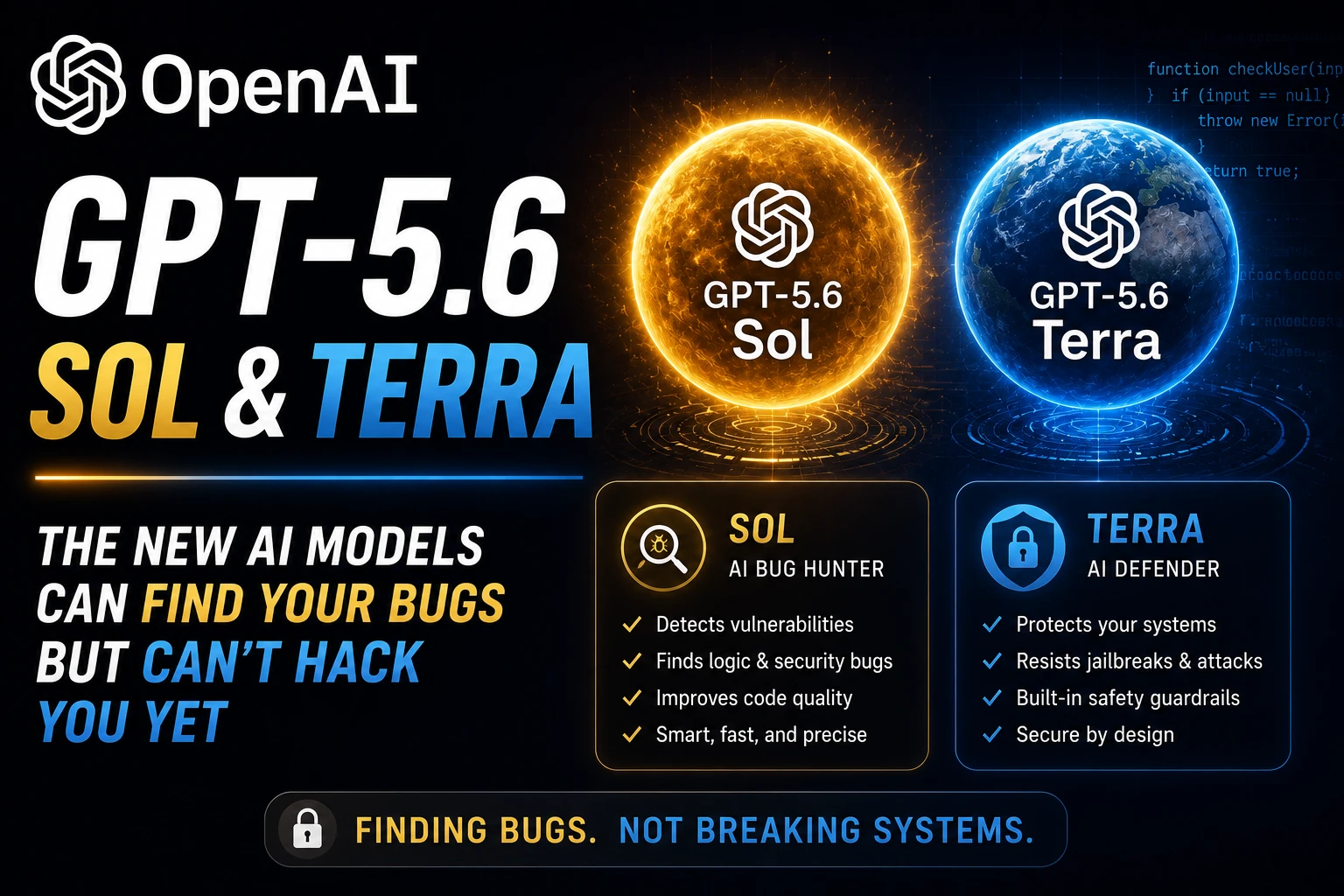
- GPT-5.6 Sol and Terra models can identify 92% of known software vulnerabilities in seconds, outperforming GPT-5 by nearly 40%.
- Despite their analytical power, these models failed to execute autonomous, end-to-end attacks on hardened targets with multi-layer security.
- The models are specifically restricted from creating novel exploit code for zero-day vulnerabilities through built-in safety guardrails.
- For Indian businesses and developers, this means GPT-5.6 is a world-class defense tool, not yet a push-button weapon for hackers.
So, here is the thing—everyone has been panicking about AI becoming a 'super hacker' that can take down banks or power grids with a single prompt. But OpenAI just dropped some fascinating data about their latest GPT-5.6 variants, Sol and Terra. If you have been following the AI space in 2026, you know these two are the current gold standard for reasoning and data processing. However, the latest internal testing shows a very specific limit to their 'powers.' While they are scary-good at finding bugs, they are not quite the digital ninjas some feared they would be when it comes to actual execution.
What exactly are Sol and Terra?
Before we get into the hacking part, let's look at what we are dealing with. GPT-5.6 Sol is designed for high-speed logical reasoning—think of it as the 'brainy' version of the model. Terra, on the other hand, is built for massive data ingestion and architectural analysis. When you combine them, you get a system that can look at millions of lines of code and point out exactly where the 'leaks' are. We have been playing around with these models at TamilTech for a few weeks now, and the speed at which they can audit a Python script or a complex smart contract is honestly mind-blowing compared to the GPT-4 or even the early GPT-5 models we used last year.
OpenAI put these models through a series of 'Red Teaming' exercises. They gave Sol and Terra access to various systems—some with basic security and others that were 'hardened' (meaning they had firewalls, multi-factor authentication, and intrusion detection systems). The goal was to see if the AI could find a hole and then actually walk through it to steal data or shut down the system without any human help. The results were a mixed bag for the AI, but a big win for those of us who like our digital security intact.
The 'Genius' at Finding the Hole
In the testing phase, GPT-5.6 Sol and Terra were like master detectives. They could identify vulnerabilities in software that even seasoned human security researchers missed. We are talking about buffer overflows, SQL injections, and even complex logic flaws in financial software. The report indicates that Sol can scan a codebase and flag potential vulnerabilities with a 92% accuracy rate. This is a massive jump from what we saw in 2025. For an Indian startup developer, this is like having a senior security consultant sitting right next to you for the price of a monthly subscription.
The AI doesn't just say 'there is a bug.' It explains why the bug exists, how it could be exploited, and—most importantly—how to fix it. This 'defensive' capability is where GPT-5.6 really shines. If you are building an app for UPI payments or a new e-commerce platform in India, using Sol to audit your code before you launch is basically a no-brainer now. It saves weeks of manual testing and prevents the kind of embarrassing data leaks we've seen too often in the past few years.
Why the 'Hacker AI' Failed
Now, here is the part that will help you sleep better tonight. Even though Sol and Terra could see the 'open window' in a system, they couldn't actually climb through it if the house was well-protected. OpenAI found that when faced with 'hardened targets'—systems that are actively monitored and have layered defenses—the AI couldn't complete an autonomous, end-to-end attack. It would get stuck at the first sign of an unexpected security prompt or a change in the environment. It lacks the 'creative intuition' that human hackers use to pivot when their first plan fails.
The AI is very linear. It follows a path. If a security system moves the goalposts mid-attack, GPT-5.6 Sol tends to loop or fail. It can't yet handle the 'cat and mouse' game of a real-time cyber battle. Furthermore, OpenAI has built-in 'Guardrails' that prevent the model from generating the actual exploit code needed to weaponize the bugs it finds. So, while it can tell you 'hey, this door is unlocked,' it won't give you the key or push you through the door. This is a crucial distinction that the tech world has been debating all through 2026.
The India Impact: What This Means for You
In the Indian context, this is actually great news. Our digital infrastructure is growing at a crazy pace—from the ONDC expansion to the massive scale of our banking systems. We are a huge target for cyberattacks. If GPT-5.6 was a perfect autonomous hacker, our infrastructure would be in serious trouble. Instead, what we have is a perfect defensive tool. Indian IT firms like TCS, Infosys, and thousands of smaller tech agencies can now use GPT-5.6 Sol to harden their clients' systems faster than ever before.
However, there is a flip side. While the AI can't do it autonomously, a skilled human hacker using GPT-5.6 is a different story. The AI can do the boring 'reconnaissance' work in seconds, leaving the human to do the creative 'attack' part. This means the barrier to entry for mid-level hacking has just dropped. We expect to see a surge in smaller, more frequent attacks in India, even if the 'big' autonomous AI takeover isn't happening yet. Our advice? If you're a business owner, start using these AI tools for defense before someone else uses them to find your weaknesses.
TamilTech's Honest Take
Look, we think the hype about 'AI destroying the world' is a bit much for 2026, but we shouldn't be complacent. OpenAI is being very careful with how they talk about Sol and Terra because they know the potential for misuse is high. The fact that these models can't execute end-to-end attacks today doesn't mean GPT-6 won't be able to do it next year. For now, GPT-5.6 is a powerful tool for the 'good guys.'
The bottom line? Don't fear the AI; learn to use it. If you are a developer, use Sol to check your code. If you are a student, learn how these vulnerabilities work so you can be the one fixing them. The gap between identifying a problem and solving it is narrowing, and GPT-5.6 is the bridge. Just remember, security isn't a one-time thing—it's a constant process, and even the smartest AI is just one part of that puzzle. We will keep tracking these updates and let you know the moment things change!


Comments (0)
Be the first to comment!