


Key takeaways
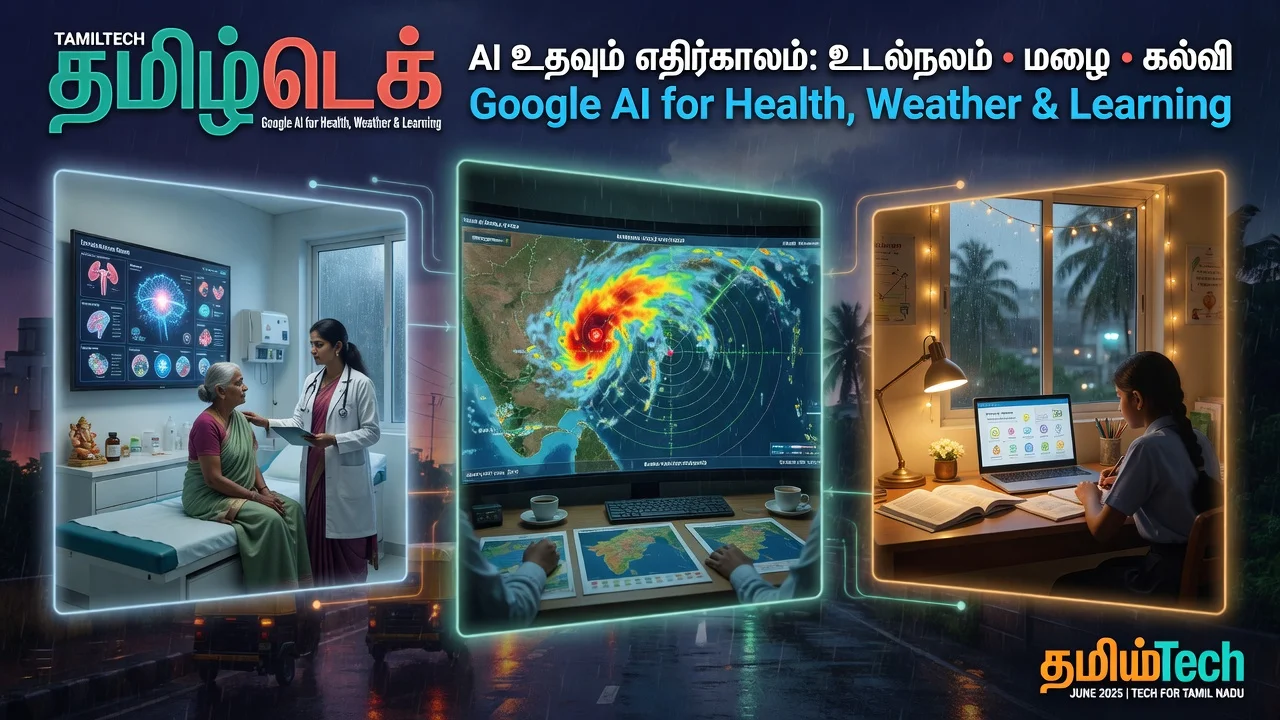
- Sundar Pichai highlighted Google's AI work in health, weather forecasting and learning while pushing back against calls to slow AI development.
- He argued that AI advances can speed up scientific research and deliver concrete everyday benefits rather than just flashy chatbots.
- Better weather models matter hugely for Indian farmers who still live and die by monsoon timing and intensity.
- AI health tools could ease pressure on overcrowded public hospitals and help with early detection in rural areas where specialists are scarce.
- Learning applications running on Android and low-cost data plans have a clear path to millions of Indian students.
What just happened?
Google CEO Sundar Pichai is not joining the slowdown chorus.
While plenty of voices want the industry to hit pause on AI, he is pointing to three places where the tech is already moving the needle: health, weather and learning.
The core message is simple. AI is not just about generating text or images. Used well, it can compress research timelines, improve forecasts that save lives and money, and personalise education at a scale old methods never managed.
Pichai framed these domains as proof that progress itself creates tangible upside, even as safety debates continue.
This lands differently in India than in Silicon Valley. We have monsoon-dependent agriculture, a stretched public health system and a massive young population still climbing the education ladder. When Google talks about weather models or medical AI, the stakes feel immediate rather than theoretical.
How does this actually work?
Start with health. Google has been investing in models that help with diagnostics, protein understanding and research acceleration.
The pitch is that these systems can surface patterns faster than traditional lab-only approaches and support clinicians who are drowning in data. Nothing here replaces doctors. It can cut the time between symptom and insight.
Protein research is the quieter lab story. AI can generate hypotheses quicker and help focus expensive lab work, so research timelines shrink from months toward weeks or days in some cases.
Weather is the bit that deserves more attention than it gets. Accurate short- and medium-range forecasts have always been hard. Newer AI approaches trained on vast historical and observational data are showing stronger skill at predicting extreme events and regional patterns.
For a country that watches every depression in the Bay of Bengal, that improvement is not academic.
Learning covers personalised practice tools, language support and content that adapts to a student's pace. Google already sits on Android, Search and YouTube. Layer smarter AI on top of those surfaces and the same student who watches a free tutorial can get follow-up questions, explanations in a preferred language, or progress tracking without a fancy private-school setup.
Pichai's broader argument: these use cases show why blanket slowdowns are blunt instruments. The same technology that raises safety questions also shortens the path to vaccines, climate insights and better teaching materials.
None of this erases real risks around bias, privacy or misuse. It reframes the chat from "should we stop" to "how do we steer the useful parts while managing the dangerous ones".
What changes for people in India?
Start with weather. Indian agriculture still employs a huge share of the workforce and remains tightly linked to monsoon behaviour.
Delayed or inaccurate forecasts cost farmers money on seeds, fertiliser and labour. Better AI-driven models that improve district-level or even block-level predictions can feed into apps already popular with growers, insurance products and government advisories.
When a cyclone track sharpens earlier, evacuation and crop protection decisions get easier. Coastal states watching Bay of Bengal systems feel this first. Inland farmers care about southwest monsoon onset and break periods for sowing dates.
Health is the next obvious win. Public hospitals in many states run at crushing patient loads. AI that flags anomalies in scans, suggests differential diagnoses or helps triage can stretch limited specialist time.
Rural primary health centres that lack radiologists or pathologists stand to gain if smartphone-linked tools become reliable enough for screening. Pair that with existing schemes that expand insurance cover and you have a practical path rather than a sci-fi demo.
Learning tools matter because India has scale and smartphone penetration most countries envy. Cheap data from players like Jio already put video and interactive content in students' hands. AI that personalises practice, explains concepts in Indian languages and helps teachers spot common gaps fits the multilingual reality of Indian classrooms.
So the India story is not abstract AI hype. It is monsoon timing, hospital queues and a student on a budget Android phone trying to clear one more concept before the exam.
What should you do now?
If you farm or follow agri advisories, watch how weather apps and government bulletins start folding in sharper short-range and regional forecasts. Better inputs mean better sowing, irrigation and insurance choices.
If you work in or around public health, treat medical AI as an assistive layer — triage support, scan flags, early screening — not a replacement for qualified staff. Ask vendors hard questions on accuracy, language support and offline or low-bandwidth behaviour.
If you teach or study, try the free Android and YouTube-linked practice tools already in the wild. Prefer ones that explain in the language you actually think in, and track weak topics instead of dumping more video.
And if you are just following the AI slowdown debate: separate the chatbot noise from the quieter work in forecasts, diagnostics and classrooms. That is the part that will show up in Indian daily life first.



Comments (0)
Be the first to comment!