


Key takeaways
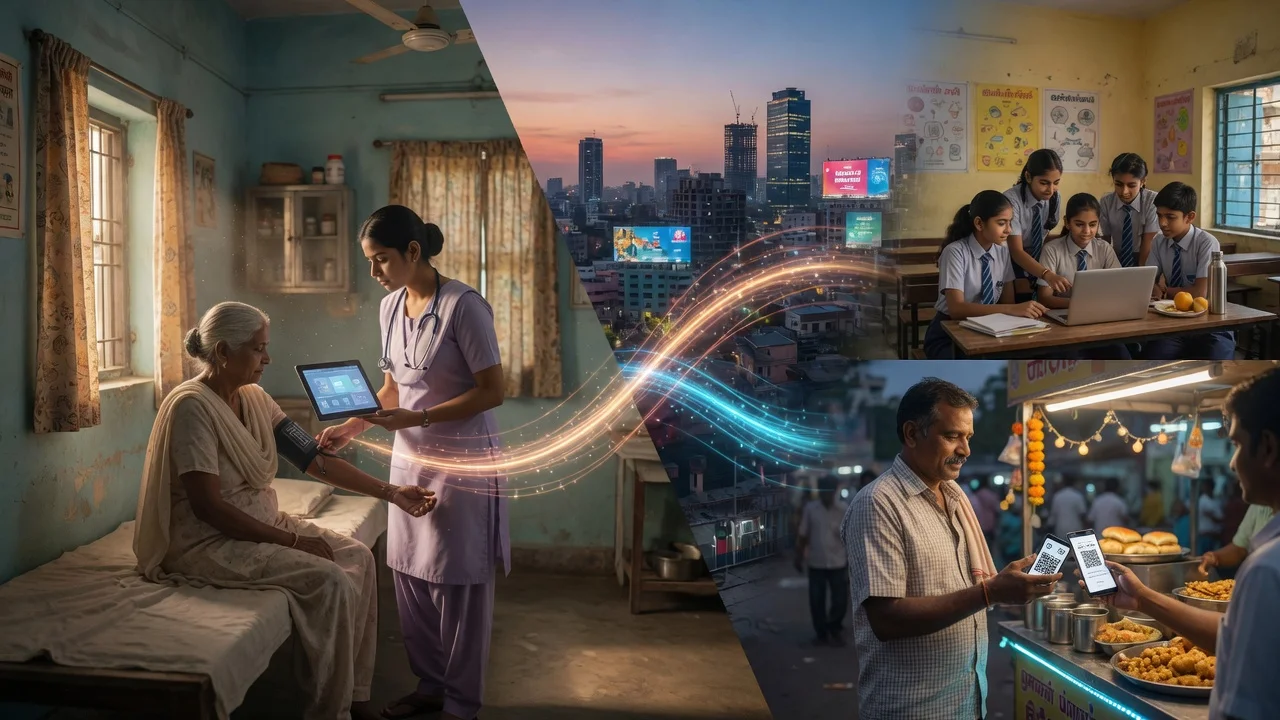
- Gates Foundation CEO Mark Suzman says AI becomes a real equaliser for India only if four foundations lock in over the next 18 to 24 months.
- That window covers outcomes for about 1.4 billion people and runs from now through late 2027 into early 2028.
- India already leads on digital public infrastructure with UPI, Aadhaar and DigiLocker, but last-mile health, skilling and vernacular access still lag.
- Priority zones: healthcare delivery, farm productivity, mass education, and inclusive design so language and income gaps do not widen.
- Jio-scale connectivity and Flipkart-style logistics help, yet power reliability, teacher capacity and clinic staffing remain make-or-break.
What just happened?
Mark Suzman, CEO of the Gates Foundation, just put a sharp clock on India's AI story.
He frames AI as a potential great equaliser for the country. One condition though. Four foundational pieces have to fall into place first.
Miss them, and the same tools that look transformative in Bengaluru boardrooms risk widening the gap between metros and the rest of Bharat.
The timing is the real punch. Suzman pointed to the next 18 to 24 months as the stretch that decides outcomes for about 1.4 billion people.
From September 2026, that window runs through late 2027 into early 2028. Not a vague decade vision. A near-term execution test.
If you live on UPI settlements, Jio fibre and Flipkart same-day promises, this lands differently. India already proved it can ship digital rails at population scale.
Open question: does AI ride those rails into primary health centres, government schools and farm advisories? Or does it stay trapped in English-first SaaS demos?
How does this actually work?
Suzman's framing is less about shiny models and more about plumbing. The four areas sit close to the Gates Foundation's long-running work in health, agriculture, education and equity.
One — digital public infrastructure has to expand beyond payments.
UPI changed how money moves. Aadhaar and DigiLocker changed how identity and documents travel. AI needs the same kind of shared rails for consent, vernacular interfaces and trusted data exchange.
That means a clinic in Bihar and a startup in Pune can plug into common services without reinventing everything.
Two — health and agriculture systems need AI that works where staff are thin.
Think triage support for nurses. Diagnostic help for tuberculosis or anaemia screening. Crop or weather advisories farmers can act on without reading a research paper.
India has the mobile reach. It still needs reliable workflows inside PHCs and Krishi Vigyan Kendras.
Three — education and skilling have to move at population speed.
An AI tutor that only speaks polished English helps a thin slice of students. The equaliser version works in Hindi, Tamil, Telugu, Bengali and more. It sits inside government school constraints. It helps teachers rather than pretending to replace them.
Same logic for skilling programmes. Not every young person will become an ML engineer.
Four — inclusive design from day one.
If AI products assume always-on 5G, high literacy and male smartphone ownership patterns, they amplify existing gaps. Gender, language, disability and income have to be design constraints, not CSR afterthoughts.
None of this needs a new moonshot every quarter. It needs boring excellence: data standards, procurement that buys outcomes, state capacity to deploy, and private builders who treat Bharat as the main market rather than a discounted tier.
What changes for people in India?
India's starting position is stronger than most large emerging markets. Cheap data via Jio and others. A payments stack the world studies. A young workforce hungry for tools.
Flipkart, Meesho and a swarm of D2C brands already proved logistics and discovery can reach smaller towns when unit economics work.
The risk is a two-speed AI economy. Coastal tech hubs ship copilots and vertical SaaS. Inland India waits for apps that understand local crops, local languages and intermittent connectivity.
That split is already visible. Plenty of AI demos still fail the vernacular test.
Policy levers sit in plain sight. IndiaAI Mission funding, state health missions, Samagra Shiksha-style education programmes, and agri digital extensions can buy fragmented pilots — or demand interoperable building blocks.
Power reliability is not a side note. If a clinic tablet cannot stay charged, the model does not matter. Teacher capacity and clinic staffing decide whether last-mile AI sticks or breaks.
Price angle matters too. Subscription-heavy English SaaS alone will not cover Bharat. Public digital rails need low-cost or free layers on top.
On jobs: some routine work will automate. At the same time, health outreach, farm extension, local-language content and AI ops roles can grow. The skilling window is open now — this 18–24 month stretch is when training pipelines have to move.
What should you do now?
If you build products, design for low bandwidth, major Indian languages and offline-first use. Treat a village 2G signal as the default test, not five-star hotel WiFi.
If you work in policy or procurement, buy outcomes and shared rails, not one-off pilots that die after the demo day.
If you are a student or early-career professional, use this window to learn how to work with AI tools in your domain — health, agri, teaching, logistics, MSME ops — not only how to prompt a chatbot in English.
And if you are just watching from your phone: the next year and a half decides whether AI feels like UPI-level public utility or another metro-only toy. Watch what actually reaches PHCs, classrooms and farms.




Comments (0)
Be the first to comment!