


Key Takeaways
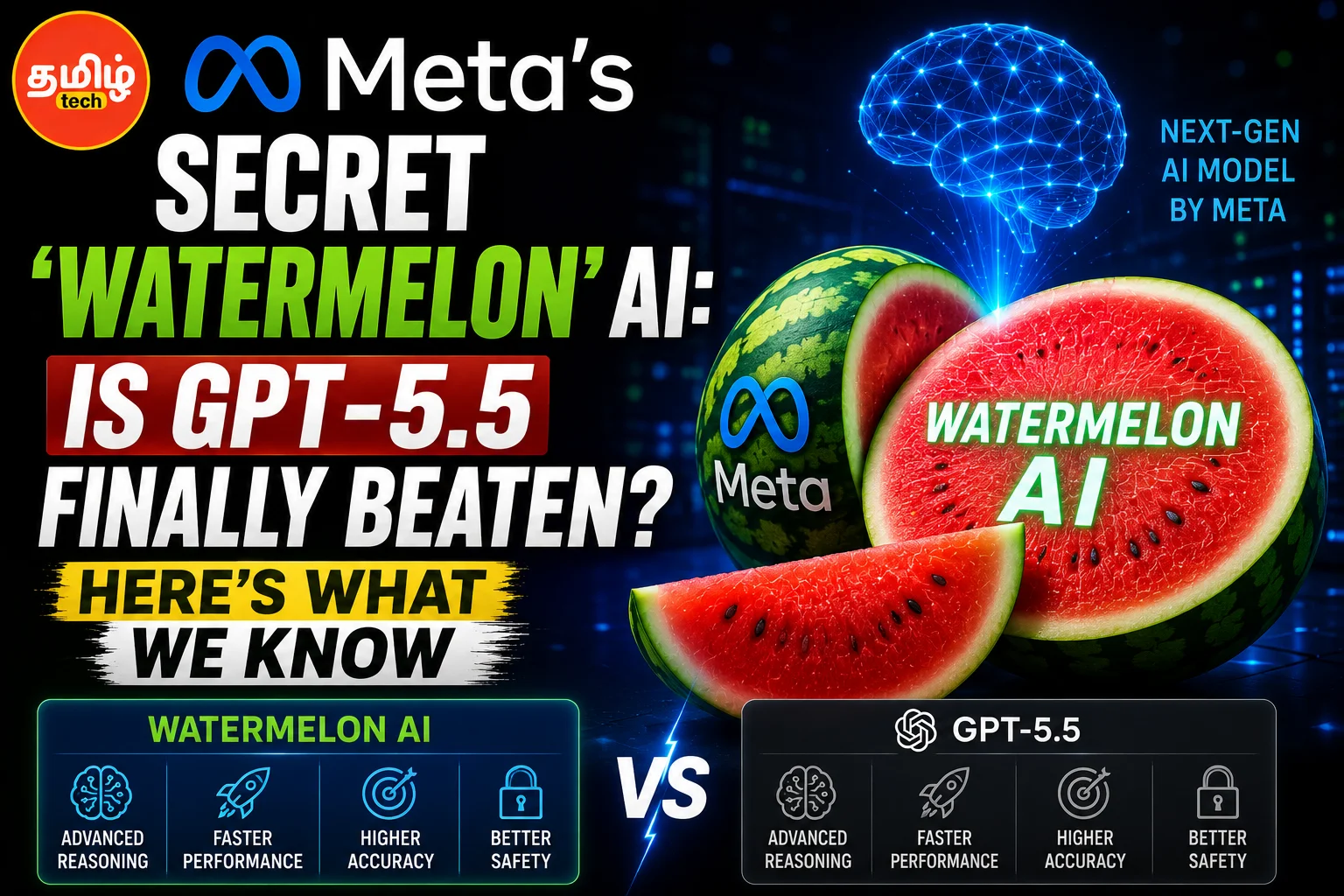
- Meta is currently training a new frontier AI model codenamed 'Watermelon' to compete with the latest from OpenAI.
- The Watermelon model reportedly matches the performance of GPT-5.5, which is currently the industry gold standard in 2026.
- This new model uses an 'order of magnitude' (10x) more compute power than Meta's previous high-end model, 'Avocado'.
- For Indian users, this means Meta AI on WhatsApp and Instagram will soon become significantly smarter at handling regional languages and complex reasoning.
The AI War of 2026: Meta’s Big Move
The AI landscape in 2026 is moving faster than anyone predicted. While we were all getting used to the capabilities of Llama 4 and GPT-5, Meta has been quietly cooking something much bigger in the background. We’ve been tracking some internal movements at Meta, and the news coming out of the silicon valley circles is massive. Mark Zuckerberg isn't just trying to stay in the race; he’s trying to end it. The new model, currently under training and codenamed 'Watermelon', is being built to be the most powerful open-weights model the world has ever seen. This isn't just a small iterative update; it’s a massive leap in how machines think and reason.
Why should you care? Because Meta is the only major player providing these high-end models for free (open weights) to developers. If Watermelon is as good as the rumors suggest, the gap between 'paid' AI like ChatGPT Plus and 'free' AI is about to vanish. We at TamilTech have been following Meta's AI journey since the first Llama launch, and the scale of 'Watermelon' is unlike anything we've seen before. It’s not just about more data; it’s about a level of compute power that only a handful of companies on Earth can afford.
Watermelon vs. Avocado: A 10x Jump in Power
To understand how powerful Watermelon is, we have to look at what came before it. Last year, Meta's internal focus was on a model codenamed 'Avocado'. While Avocado was impressive and powered most of the Meta AI features we use today, Watermelon is a different beast altogether. Reports suggest that Watermelon is using an 'order of magnitude' more compute than Avocado. In tech terms, an order of magnitude usually means ten times. Imagine taking the brainpower of ten Avocado models and fusing them into one—that is the level of scale we are talking about here.
This massive increase in compute is likely being fueled by Meta's massive investment in NVIDIA's Blackwell B200 and the newer 2026-spec AI chips. Training a model of this size requires hundreds of thousands of GPUs working in perfect sync. The energy consumption alone for a project like Watermelon could power a small city. But for Meta, this is a necessary cost to ensure they aren't dependent on OpenAI or Google. By building Watermelon, Meta is ensuring that their ecosystem—WhatsApp, Instagram, and Quest—remains the smartest in the world.
Matching GPT-5.5: The New Benchmark
The most shocking part of this development is the performance claim. Alexandr Wang, a key figure in the AI infrastructure space, has noted that Watermelon is currently matching GPT-5.5 in internal testing. For those who haven't been keeping up, GPT-5.5 is OpenAI's latest flagship that released earlier this year, known for its near-human reasoning and incredible coding abilities. If Meta can match this with an open-weights model, it changes the entire business model of the AI industry. Why would a company pay millions for an API when they can run a Meta model that is just as good?
Matching GPT-5.5 means Watermelon will be able to solve complex math problems, write professional-grade software, and understand deep cultural nuances that previous models struggled with. For us in India, this is particularly exciting. GPT-5.5 has been great, but it’s expensive for many Indian startups. A Meta model of the same caliber would mean Indian developers can build world-class AI apps without the heavy 'OpenAI tax'.
What This Means for India: WhatsApp AI is Getting Smarter
Let’s talk about the real-world impact for you and me. Most of us use Meta AI through WhatsApp or Instagram. Currently, it’s helpful for quick questions or generating images. But once Watermelon is integrated, the experience will shift from 'chatbot' to 'personal assistant'. Imagine asking WhatsApp to 'Go through my last 100 emails and summarize the travel bookings' or 'Help me plan a 5-day trip to Ooty with a budget of ₹20,000, including bus timings'. Watermelon’s reasoning capabilities will make these complex tasks possible.
Furthermore, the localized impact in India will be huge. One of the big goals for Meta in 2026 is better Indic language support. Watermelon is being trained on a more diverse dataset, which means its Tamil, Hindi, and Telugu responses will feel much more natural and less like a direct translation from English. We expect this model to be the backbone of new AI features in Jio's ecosystem as well, given the deep partnership between Meta and Reliance. This isn't just a tech update; it's an accessibility update for millions of Indians who don't speak English as their primary language.
TamilTech’s Take: The Open Source Revolution
Here’s what we think at TamilTech: The battle for AI supremacy is no longer about who has the best lab; it’s about who has the most GPUs and the most open ecosystem. Mark Zuckerberg is playing a very smart game. By releasing models like Watermelon (or its eventual public version, likely Llama 4.5 or 5), he is making sure that the entire world builds on Meta’s platform. If you are a student or a developer in India, this is the best time to get into AI. You no longer need a massive server in your room; these models are becoming more efficient even as they get more powerful.
However, there is a catch. A model that uses 10x more compute than Avocado also needs 10x more scrutiny. The safety concerns around GPT-5.5 class models are real. We need to see how Meta handles the 'guardrails' for Watermelon. But overall, this is a massive win for the tech community. We expect an official announcement or a paper release by the end of 2026. Stay tuned to TamilTech, and we will bring you the first hands-on as soon as it drops!




Comments (0)
Be the first to comment!