


Key Takeaways
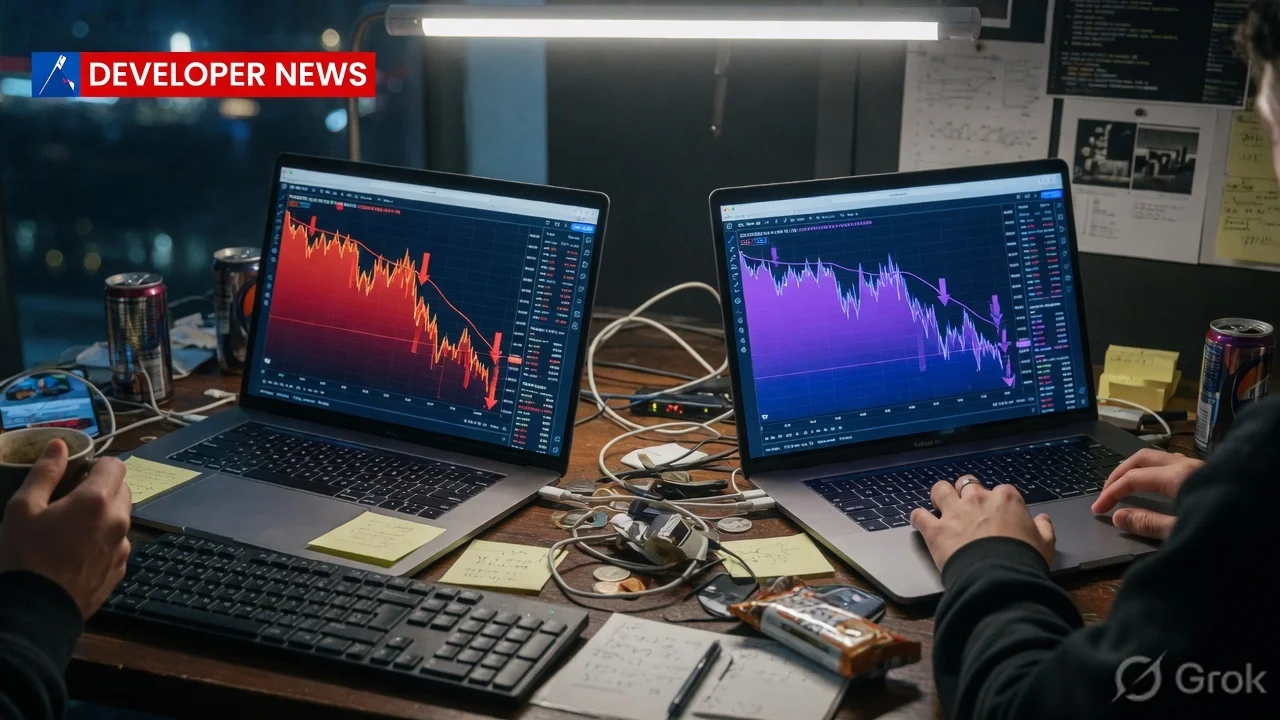
- OpenAI is preparing to slash API token prices by nearly 50% for its flagship GPT-4o and O1 models.
- The price cut is a defensive move to counter an expected massive price drop from competitor Anthropic for their Claude models.
- For Indian developers, this brings down the cost of running AI agents to as low as ₹0.04 per 1,000 tokens.
- This price war signals that AI intelligence is becoming a commodity where cost, not just performance, is the main battleground.
The AI Price War is Finally Getting Real
If you have been following the tech world lately, you know that the battle for AI dominance isn't just about who has the smartest chatbot anymore. It’s about who can make intelligence so cheap that you don’t even think twice before using it. This week, we are seeing a massive shift. OpenAI is reportedly planning to drastically lower its token prices. Why? Because they are scared of what Anthropic is about to do. In 2026, the honeymoon phase of high-priced AI models is officially over. We are entering the era of the 'Race to the Bottom,' and honestly, it’s the best news for anyone building apps or using AI tools in India.
For the uninitiated, 'tokens' are like the fuel for AI. Every word you type and every response the AI generates costs a certain number of tokens. Up until now, using the most powerful models like GPT-4o or the newer O1 series was quite expensive for small developers. But with Anthropic’s Claude gaining massive popularity for its coding abilities and natural language, OpenAI is feeling the pressure. They know that if Anthropic drops their prices first, developers will migrate their entire backend to Claude in a heartbeat. To stop this 'exodus,' OpenAI is striking first with a price cut that looks more like a demolition of their own profit margins.
How We Got Here: From Luxury to Commodity
Remember 2024? Back then, getting a decent response from an AI model felt like magic, and we were willing to pay a premium for it. But as we move through 2026, the magic has become a utility, like electricity or water. Over the last year, we saw Anthropic release models that many developers claimed were actually better than ChatGPT for complex reasoning and coding tasks. This put OpenAI in a tough spot. They couldn't just rely on being the 'first' anymore. They had to be the most affordable too. The competition has become so fierce that the tech giants are now fighting over fractions of a cent.
This isn't just about a few dollars here and there. When a company like OpenAI lowers prices, it forces every other player—Google with Gemini, Meta with Llama, and Mistral—to follow suit. We have seen this pattern before in the Indian telecom sector. Remember when data was expensive before Jio arrived? This is the 'Jio Moment' for the global AI industry. By cutting prices, OpenAI is trying to make its ecosystem so cheap that it becomes the default choice for every startup, from a small garage in Bengaluru to a massive tech firm in Hyderabad.
The Numbers: What This Means for Your Wallet
Let's talk real numbers because that’s what matters to the developers and business owners reading this. Currently, the cost of high-end reasoning models can eat up a significant portion of a startup's budget. With the anticipated cuts, we are looking at a scenario where input tokens might drop to $1.25 per million tokens, and output tokens could see an even steeper decline. In Indian Rupees, we are talking about processing massive amounts of data for just a few paise. This makes things like automated customer support, AI-driven coding assistants, and personalized education tools viable for the masses, not just for those with deep pockets.
The impact on the 'Context Window' is also huge. As prices drop, developers can feed more data into the AI—entire books, massive codebases, or hours of meeting transcripts—without worrying about a massive bill at the end of the month. This price cut is specifically aimed at the 'O1' series and the 'GPT-4o' models, which are the heavy hitters. By making these premium models cheaper, OpenAI is essentially saying, 'Why use a smaller, dumber model when you can use our best one for the same price?' It’s a classic move to kill off the competition from smaller open-source models as well.
The India Impact: A Boon for Desi Startups
In India, we are obsessed with 'Value for Money,' and the AI world is no different. Many Indian SaaS (Software as a Service) companies have been hesitant to fully integrate expensive AI features because it would force them to raise their subscription prices, which could alienate their price-sensitive users. This price drop changes the game entirely. Now, a startup building an AI tutor for UPSC aspirants or a legal tech bot for Indian courts can afford to use the best models available without going bankrupt. It levels the playing field against global giants.
Moreover, we are seeing a surge in 'AI Agents' in India—bots that don't just talk but actually do work, like booking tickets on IRCTC or managing Zomato orders for restaurants. These agents require a lot of back-and-forth tokens. A 50% price cut means these companies can now scale their operations to millions of users. If you are a student or a freelance developer in India, your API credits are going to last twice as long. This is the perfect time to experiment and build that app you’ve been thinking about. The barrier to entry has never been lower.
TamilTech's Take: Is Lower Price Always Better?
While we are excited about the lower costs, we at TamilTech have a slightly different perspective on what this means long-term. Yes, cheaper tokens are great, but it also means we might see a flood of mediocre AI apps that don't really add value. When something becomes too cheap, people tend to use it carelessly. We also expect Anthropic to respond with something even more aggressive—perhaps a 'free tier' for developers or even better performance for a lower price. The real winner here isn't OpenAI or Anthropic; it's the user who now has more choices than ever.
Our advice? Don't lock yourself into one ecosystem just yet. Use this price war to your advantage. Test your prompts on both ChatGPT and Claude. With prices falling, you can afford to run 'A/B tests' to see which model actually gives you the best results for your specific needs. The next six months are going to be wild, with constant updates and price revisions. Stay tuned to TamilTech, because we will be tracking every paisa and every feature update to make sure you get the most out of this AI revolution. The future isn't just smart; it's finally becoming affordable.



Comments (0)
Be the first to comment!