


Key Takeaways
- Popo Global raised ₹532 crore (~$56 million) from Artal Asia in a September 2026 round.
- The funds will support new outlets of The Pizza Bakery, Paris Panini and Smash Guys in metros and fast‑growing Tier‑2 cities.
- Artal Asia’s investment shows confidence in India’s organized QSR model that blends central kitchens with tech‑enabled ordering.
- Popo plans to strengthen UPI‑linked POS systems, expand cloud‑kitchen pilots and launch regional marketing pushes.
- The capital will also fund staff training academies to keep service standards uniform as the chain scales.
What's the news
On Saturday, 12 September 2026, Popo Global announced it has closed a primary infusion of ₹532 crore from Singapore‑focused Artal Asia. The round was led by Artal Asia with participation from a few existing angel backers. The company said the proceeds will be used exclusively for expansion and operational upgrades, not for any secondary share sales. Popo Global runs three distinct brands: The Pizza Bakery offering Italian‑style pies and sides, Paris Panini focusing on grilled sandwiches and salads, and Smash Guys known for smashed‑patty burgers. The announcement was shared via a press release and a LinkedIn update, highlighting that the capital will accelerate the rollout of new stores in high‑traffic malls, high‑street corridors and emerging urban centres such as Coimbatore, Indore and Jaipur.
Details
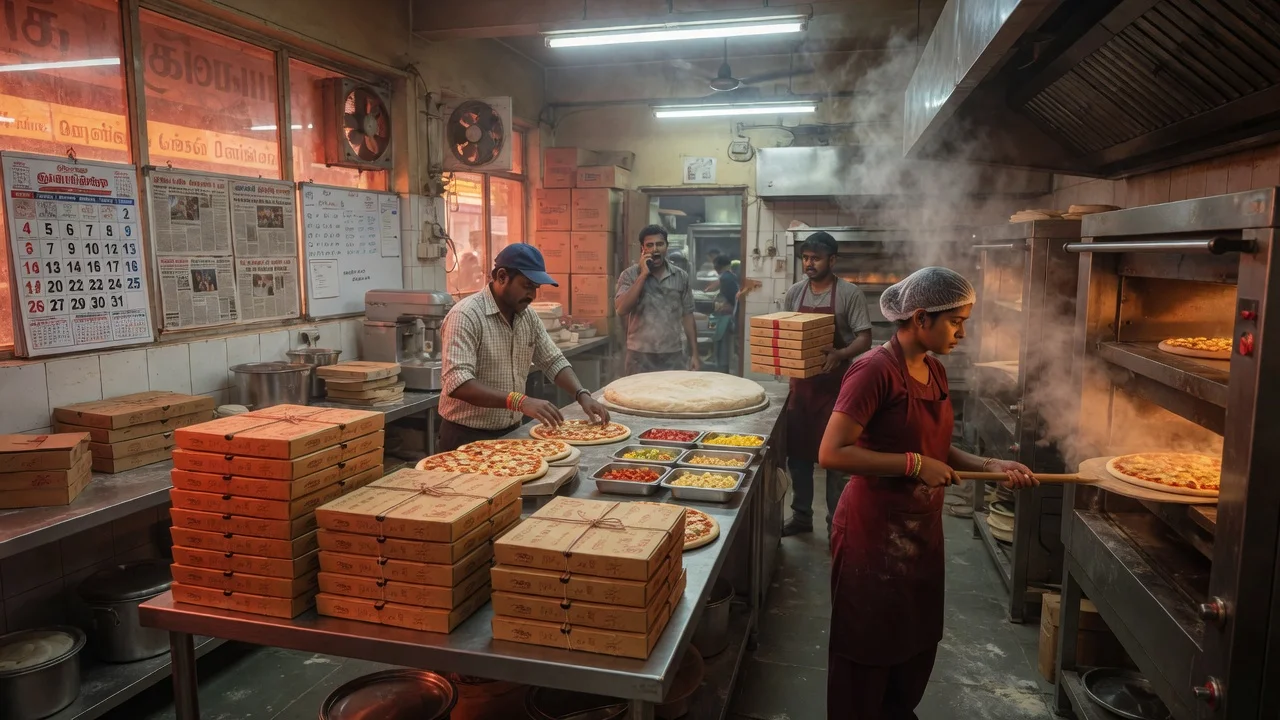
Founded in 2021 by a group of food‑tech enthusiasts, Popo Global set out to bring consistent quality to casual dining through a centralised kitchen model. Today the company operates more than 180 outlets across Karnataka, Tamil Nadu, Maharashtra and the National Capital Region. The Pizza Bakery remains the flagship brand with over 90 stores, while Paris Panini and Smash Guys together account for the rest. The central kitchen prepares dough, sauces and pre‑portioned proteins, which are then distributed to individual outlets for final assembly. This approach helps control food costs and maintain taste uniformity. With the new capital, Popo says it will add two new commissary hubs in the west and south zones, enabling faster supply to upcoming stores. The company also plans to hire around 1,200 new team members over the next 18 months, covering kitchen staff, service crew and supervisory roles.
India impact
India’s quick‑service restaurant sector has been expanding at a compound annual growth rate of roughly 12 % over the past five years, fueled by rising disposable incomes, urban migration and the convenience of app‑based ordering. Popo Global’s growth plan will add to this trend by creating direct employment opportunities and stimulating indirect work in logistics, packaging and local agriculture. The investment also signals a shift for funds like Artal Asia, which traditionally backed pure‑play tech ventures, toward consumer brands that can scale with technology‑enabled operations such as UPI‑linked payments and data‑driven menu optimisation. As more QSR chains adopt digital ordering, platforms like Swiggy and Zomato see higher order volumes, which in turn encourages restaurants to invest in better POS integrations and loyalty programmes. Popo’s move may prompt incumbent players to revisit their own expansion timelines, especially in Tier‑2 and Tier‑3 cities where branded options are still limited.
Use cases
First, a portion of the capital will finance the setup of two new kitchen commissaries in Gujarat and Telangana. These facilities will produce base ingredients for all three brands, reducing dependence on third‑party suppliers and improving gross margins on core items like cheese and meat. Second, Popo will upgrade its point‑of‑sale network to support faster UPI‑based checkout, integrate real‑time loyalty points and capture granular sales data for menu optimisation. The upgraded POS will also allow smoother integration with aggregator APIs, ensuring that orders from Swiggy and Zomato flow directly to the kitchen display system. Third, the company intends to run hyper‑local marketing campaigns timed with regional festivals such as Pongal, Onam and Ganesh Chaturthi, as well as major cricket seasons. Short‑form video content will be created in local languages and distributed via Instagram Reels and YouTube Shorts to reach younger audiences. Fourth, Popo will launch cloud‑kitchen pilots in five Tier‑2 cities, testing new menu items like specialty toppings and regional sauces without the overhead of a full‑service dine‑in space. Finally, the firm will establish training academies in Bengaluru and Hyderabad, focusing on standardised food preparation, hygiene protocols and customer service etiquette, aiming to certify over 800 staff members in the first year.
Honest take
From a diner’s perspective, more outlets mean easier access to a familiar pizza or sandwich experience, particularly in markets where branded QSR chains are still scarce. For investors, the deal demonstrates that niche restaurant concepts can attract sizable capital when they show unit‑level profitability and a clear rollout plan. However, the real challenge lies in maintaining food quality and service speed as the store count doubles. The Indian market remains price‑sensitive, and any lapse in consistency could drive customers toward local eateries or competing chains. If Popo leverages its central kitchen model, invests in tech‑enabled ordering and follows disciplined site selection, the ₹532 crore infusion could lay a strong foundation for sustainable growth. Otherwise, the risk of overextension looms, reminding everyone that funding alone does not guarantee success in a crowded QSR arena.





Comments (0)
Be the first to comment!