


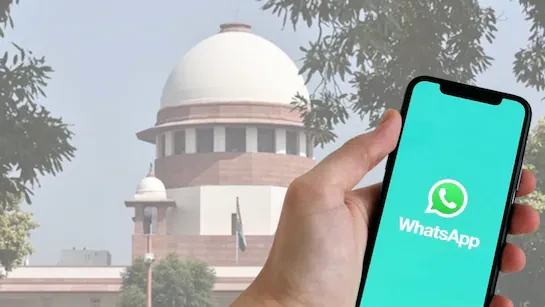
The Supreme Court Just Drew a Line in the Sand
On February 3, 2026, India's Supreme Court delivered one of the most scathing rebukes a tech company has ever received from any country's highest court. In a hearing that sent shockwaves through the global tech industry, Chief Justice Surya Kant essentially told Meta — the parent company of WhatsApp, Facebook, and Instagram — to "leave India if you cannot follow the Constitution."
Let that sink in. India's top court told the world's second-largest tech company to pack up and leave if it can't respect the privacy of 500 million Indian WhatsApp users.
This isn't just another court hearing. This could fundamentally change how tech companies operate in India — and potentially set a global precedent.
What Happened in Court?
The bench of Chief Justice Surya Kant, Justice Joymalya Bagchi, and Justice Vipul Pancholi was hearing appeals filed by Meta and WhatsApp against a decision by the National Company Law Appellate Tribunal (NCLAT). The NCLAT had upheld a ₹213.14 crore penalty imposed by the Competition Commission of India (CCI) over WhatsApp's controversial 2021 privacy policy update.
The Key Quotes That Shook Silicon Valley
CJI Surya Kant made several pointed statements that deserve to be quoted in full:
"You cannot play with the right of privacy of this country. Let a clear message go on your WhatsApp."
"What is the choice? You have complete monopoly in the market and you are saying I am giving a choice."
"A poor woman selling fruits on the streets, will she understand the terms of your policy?"
"This is a decent way of committing theft of private information! You know your commercial interest and you also know how you have made consumers addicted to the app."
Each of these statements targets a specific aspect of how WhatsApp operates in India. Let me break down what each means.
The Core Privacy Issues at Stake
Issue 1: The "Consent" Illusion
When WhatsApp updated its privacy policy in January 2021, it gave users a choice: accept the new terms or stop using WhatsApp. The Supreme Court called this out directly — when you have a monopoly (over 500 million users in India with no viable alternative for most people), "choice" is meaningless.
Think about it from an everyday perspective: Your entire family's groups are on WhatsApp. Your work communication happens on WhatsApp. Your Swiggy delivery person contacts you on WhatsApp. When WhatsApp says "accept or leave," it's not really a choice — it's coercion.
Issue 2: Metadata Exploitation
WhatsApp proudly claims end-to-end encryption — your messages can't be read by anyone. But the court's scrutiny went beyond message content to metadata:
- Who you message — Contact patterns reveal your social network
- When you message — Activity patterns reveal your routine
- How often you message — Frequency reveals relationship strength
- Your location data — Where you are when you message
- Device information — What phone you use, battery level, signal strength
- Business interactions — Every WhatsApp Business message you send/receive
The court noted that "modern data markets attributed significant economic value to behavioural datasets" — meaning your metadata is worth money, even without reading your messages.
Issue 3: Data "Renting" and Cross-Platform Sharing
The most concerning revelation: WhatsApp shares user data with its parent company Meta, which also owns Facebook and Instagram. This creates what the court described as "data renting" — your WhatsApp behaviour data is used to target you with ads on Facebook and Instagram.
You might have noticed this yourself — chat about wanting a new phone on WhatsApp, and suddenly see phone ads on Instagram. This isn't coincidence; it's the direct result of cross-platform data sharing.
The ₹213 Crore CCI Penalty — Background
The Competition Commission of India (CCI) investigated WhatsApp's 2021 privacy policy and found that WhatsApp was:
- Abusing its dominant market position by forcing users to accept data sharing
- Anti-competitive behaviour — using WhatsApp data to strengthen Facebook and Instagram
- Unfair contract terms — "take it or leave it" privacy policy for a monopoly service
CCI imposed a penalty of ₹213.14 crore (approximately $25 million). WhatsApp appealed to NCLAT, which upheld the penalty. Now Meta has appealed to the Supreme Court — where things have gotten much worse for them.
What Meta/WhatsApp Argued
Senior Advocates Mukul Rohatgi (for Meta) and Akhil Sibal (for WhatsApp) argued that:
- The penalty amounts have already been deposited
- Users have "opt-out" options under existing policy frameworks
- End-to-end encryption protects message content
- Data collection is necessary for service improvement and security
The court was unimpressed by these arguments, particularly the "opt-out" claim — noting that when a service has monopoly status, asking users to "opt out" by stopping use isn't a genuine option.
What Happens Next?
The bench indicated it will not permit data sharing unless Meta and WhatsApp provide management undertakings protecting user information during the proceedings. The case has been adjourned until February 9, 2026, when Meta must explain its data practices in greater detail.
Possible outcomes:
- Best case (for users): Court orders WhatsApp to provide genuine opt-out without losing service, restricting cross-platform data sharing in India
- Moderate outcome: Additional penalties and mandatory changes to the privacy policy for Indian users
- Nuclear option: Order WhatsApp to stop data sharing with Meta entirely for Indian users (similar to what the EU has done)
How This Affects You — The 500 Million Question
What WhatsApp Knows About You Right Now
| Data Type | What It Reveals |
|---|---|
| Contact list | Your entire social network |
| Message timestamps | Your daily routine and sleep patterns |
| Online status | When you're awake and active |
| Group memberships | Your interests, communities, workplace |
| Business messages | What products/services you're interested in |
| Location data | Where you live, work, and travel |
| Device info | Your phone model, OS, network provider |
Steps to Protect Your Privacy Right Now
- Review WhatsApp Privacy Settings: Go to Settings → Privacy → Turn off "Last Seen," "Profile Photo," and "About" for non-contacts
- Disable Live Location sharing unless actively needed
- Review Connected Apps: Settings → Linked Devices — remove any devices you don't recognize
- Consider alternatives for sensitive communication: Signal (fully open-source, minimal data collection) or Telegram (cloud-based, encrypted secret chats)
- Limit WhatsApp Business interactions — every business chat adds to your behavioural profile
The Bigger Picture: India vs Big Tech
This case is part of a global pattern of governments pushing back against Big Tech's data practices:
- EU: Fined Meta €1.2 billion for data transfers, forced WhatsApp to change policies
- India: Digital Personal Data Protection Act 2023 + this Supreme Court case
- US: DOJ antitrust cases against Google and Meta
India has 500+ million WhatsApp users — the largest single-country user base. If the Supreme Court forces meaningful changes here, it will send a message to every tech company operating in India: user privacy is not optional.




Comments (0)
Be the first to comment!