


Key Takeaways
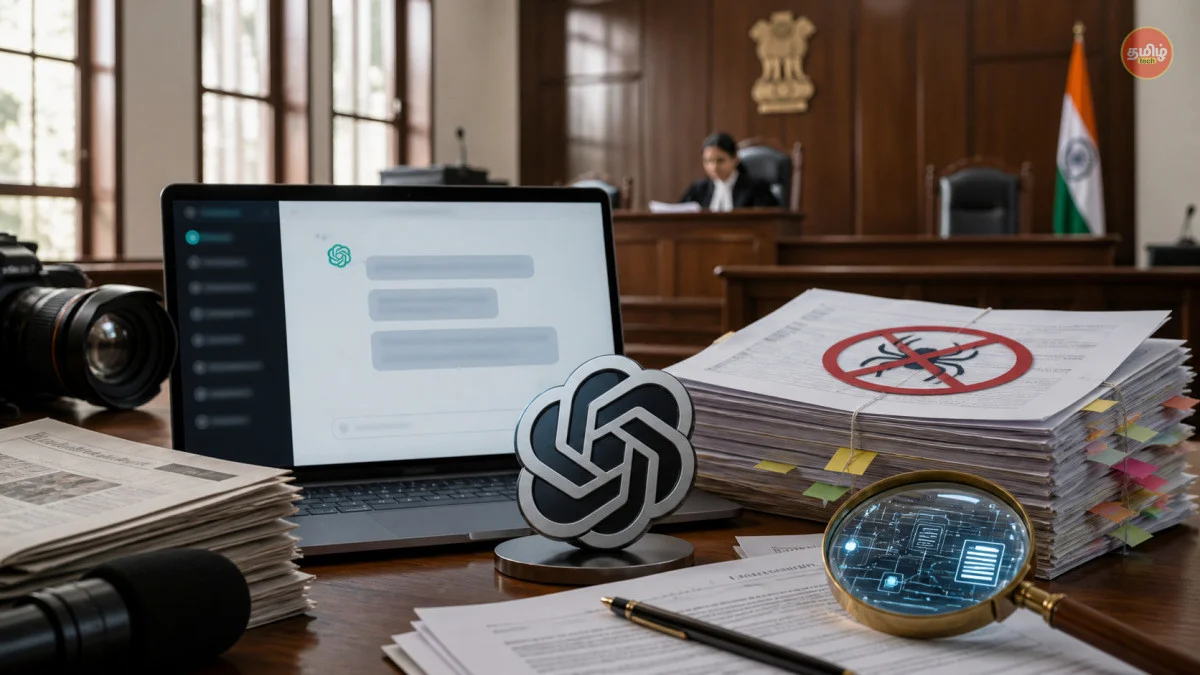
- The Delhi High Court has officially declined to grant interim relief to ANI in its copyright infringement lawsuit against OpenAI.
- OpenAI confirmed in court that they have already placed ANI’s website on their internal 'block list' to stop further data crawling.
- A neutral expert (Amicus Curiae) will be appointed by the court to examine the complex intersection of AI training and Indian copyright laws.
- The case highlights a major 'hallucination' issue where ChatGPT allegedly attributed fake news and non-existent interviews to ANI.
The Big Clash: News vs. Artificial Intelligence
So, here is the thing—the world of news and the world of AI are currently at war, and the battlefield has shifted to India. You might have seen the headlines about ANI (Asian News International) taking OpenAI to court. This isn't just another legal tiff; it is a fundamental fight over who owns the information we read online. ANI claims that OpenAI has been 'stealing' their news content to train ChatGPT, while OpenAI argues that they are simply using publicly available data in a way that is transformative. It is the classic 'Old Media vs. New Tech' saga, but with a 2026 twist where the stakes involve billions of data points and the very survival of traditional journalism.
The Delhi High Court recently heard this matter, and honestly, the outcome was a bit of a reality check for everyone expecting a quick ban. The court basically said, 'Wait a minute, this is too complicated for a snap judgment.' By refusing to grant an interim injunction—which would have forced OpenAI to stop using ANI's data or even shut down parts of ChatGPT in India—the court has signaled that it wants to dive deep into the technicalities. This is a massive win for OpenAI in the short term, but it opens a Pandora's box of questions about how AI models will operate in India going forward. If you are a creator or a news junkie, you need to pay attention to this because it will decide if the content you read in the future is human-verified or AI-generated junk.
How Did We Get Here? The History of the Dispute
To understand why ANI is so upset, we have to look back at how these AI models are built. Companies like OpenAI use 'web crawlers'—think of them as digital vacuum cleaners—that suck up almost everything on the internet to teach their Large Language Models (LLMs) how to speak, write, and reason. ANI’s argument is straightforward: 'We spend money, send reporters to the field, and verify facts. OpenAI just takes that finished product for free to build a paid service like ChatGPT Plus.' It is a hard argument to ignore. ANI claims that over decades of reporting, they have built a massive repository of proprietary content that is now being used to train a competitor that doesn't even credit them properly.
But there is a second, more dangerous layer to this lawsuit: Hallucinations. ANI pointed out instances where ChatGPT was asked for news updates and it produced fake news, then attributed it to ANI. In one specific example mentioned in the filings, ChatGPT allegedly claimed that ANI had conducted an interview with a prominent political figure that never actually happened. For a news agency, reputation is everything. If an AI starts putting words in their mouth, it’s not just copyright infringement; it’s a full-blown identity crisis. This is why ANI isn't just asking for money; they are asking for accountability in how these machines 'hallucinate' facts and attach them to reputable brands.
The Technical Details: Block Lists and Training Data
During the court proceedings, OpenAI’s legal team dropped a few interesting technical nuggets. They admitted that while they do use public data, they have now put ANI on a 'block list.' This means their crawlers (like GPTBot) are no longer allowed to scan ANI's website for new articles. This is a standard practice in the industry now—many websites use a file called robots.txt to tell AI bots to stay away. However, ANI’s lawyers argued that the damage is already done. The 'old' data, which contains years of archives, is already inside the 'brain' of the AI. You can't just 'un-learn' specific facts from a neural network easily. It’s like trying to take the sugar out of a baked cake; it just doesn’t work that way.
OpenAI’s defense rests on the concept of 'Fair Use' or 'Fair Dealing' under the Indian Copyright Act of 1957. They argue that using data to train a model isn't the same as republishing an article. They claim they are creating something entirely new—a tool that can answer questions, write code, and summarize info. They also pointed out that they don't provide a direct substitute for ANI's news feed. If you want breaking news, you go to ANI; if you want a poem about the news, you go to ChatGPT. But as we’ve seen with the integration of SearchGPT, that line is getting very, very blurry. The court has realized that traditional copyright laws didn't anticipate a machine that could read the entire internet in a weekend.
India Impact: Why This Matters for You
Why should the average Indian user care about a fight between two massive corporations? Because it affects the quality of the internet you use every day. If Indian news publishers like ANI, PTI, or even regional giants like Vikatan don't get paid for their content, they might eventually stop putting it online or hide it behind very expensive paywalls. This would leave the Indian internet filled with low-quality, AI-generated 'slop' that hasn't been fact-checked. We are already seeing a rise in deepfakes and misinformation in 2026, and this court case is the first real attempt to put some guardrails around the AI industry in India.
Furthermore, the pricing of AI services in India could be affected. If OpenAI is forced to pay licensing fees to every news agency, the cost of ChatGPT Plus (which is currently around ₹1,650/month) might go up. On the flip side, if the court rules in favor of OpenAI, it might open the floodgates for more AI companies to use Indian data without permission, potentially hurting the local digital ecosystem. The Delhi High Court’s decision to appoint an 'Amicus Curiae'—an impartial expert—shows that they recognize the gravity of this. They want someone who understands both the law and the code to explain how this impact will ripple through the Indian economy.
TamilTech’s Honest Take: What’s Next?
At TamilTech, we’ve been following the AI revolution since the early days of GPT-3. Here’s what we think: OpenAI is right that AI needs data to grow, but ANI is right that 'free' shouldn't mean 'exploitative.' You can't build a billion-dollar empire on the backs of journalists without giving something back. The fact that the court didn't give an interim stay is actually a good thing for the legal process. It means we will get a well-reasoned, detailed judgment later this year instead of a rushed decision that might have broken the internet in India. We expect more publishers to join this fight, and eventually, OpenAI will likely have to sign licensing deals in India, just like they did with News Corp and Axel Springer in the US and Europe.
What should you do? For now, keep using ChatGPT, but be extremely careful with 'facts' it gives you about current events. As this case proves, AI can still lie and pin it on a reputable source. We are entering an era where 'Verify, then Trust' is the only way to survive online. We expect the next hearing to happen in a few months, and by then, the court-appointed expert will have a better framework for how India will handle AI copyright. It’s a landmark moment, and India might just lead the way for the rest of the world in deciding how AI and humans can coexist without stealing from each other.



Comments (0)
Be the first to comment!