


Key Takeaways
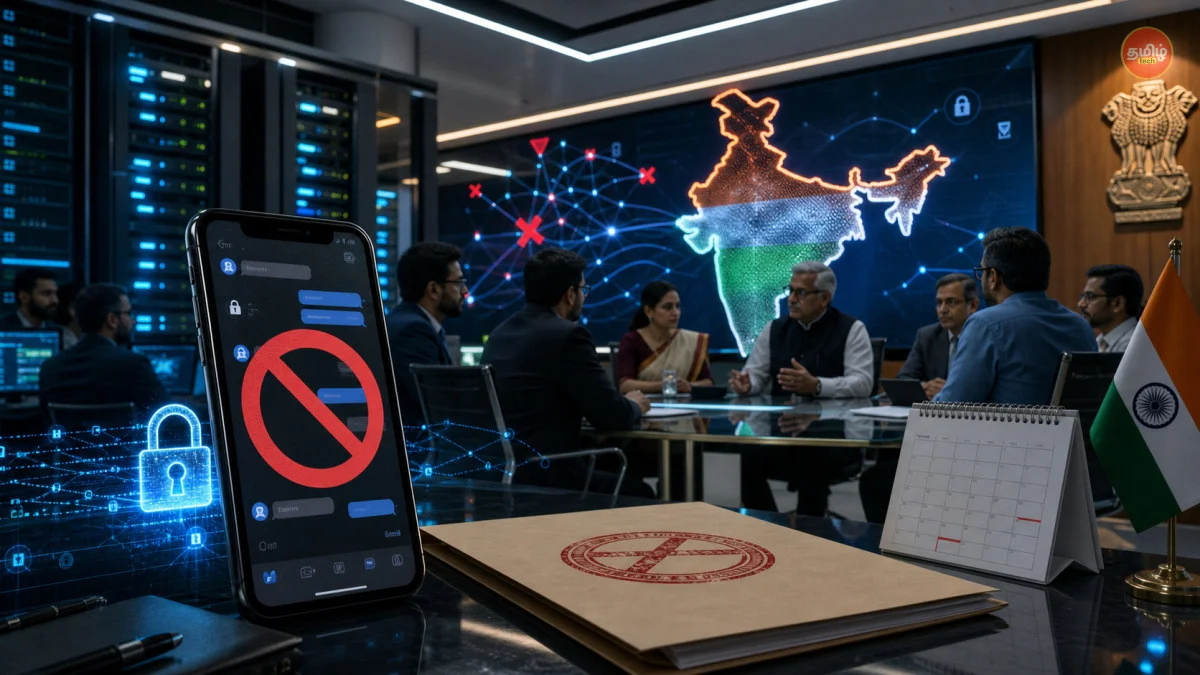
- The Indian government banned BitChat on July 24, 2026, under Section 69A of the IT Act, citing non-compliance with data sharing requests.
- This ban sets a dangerous precedent for any software company using End-to-End Encryption (E2EE) without a built-in law enforcement backdoor.
- Local Indian startups are now facing increased pressure to store 100% of user metadata locally within Indian servers.
- The bottom line: If your app prioritizes privacy over government data requests, your business model is at risk in the current Indian regulatory landscape.
The News: BitChat Disappears from Indian App Stores
So, it finally happened. Over the last 48 hours, BitChat—the app that every developer and privacy enthusiast in India was using—has been wiped from the Google Play Store and Apple App Store. If you try to open the app now, you’ll likely see a connection error because ISPs have been ordered to block their servers. This isn't just another random app ban like we saw with TikTok years ago; this is a direct hit on a tool that was being used for secure professional communication and automated dev-ops alerts. The Ministry of Electronics and Information Technology (MeitY) issued the order citing 'sovereignty and integrity of India,' but the real story goes much deeper than that.
We at TamilTech have been following this closely, and the timing is what makes it interesting. BitChat recently refused to comply with a 'traceability' request regarding a specific group chat. Because BitChat uses a unique decentralized encryption protocol, they literally couldn't hand over the data even if they wanted to. The government didn't take 'we don't have the keys' for an answer. This move sends a clear message to every other tech company operating in India: if we can't see the data, you can't stay in the market. It's a tough spot for companies that built their entire brand on the promise of absolute privacy.
How BitChat Became the Industry Standard
To understand why this is a big deal, you have to look at how BitChat grew. Back in 2024 and 2025, while everyone was complaining about WhatsApp's metadata sharing, BitChat emerged as the 'clean' alternative. It wasn't just for chatting; it had incredible API support. Indian startups were using it to send internal server logs, deploy notifications, and even handle sensitive financial triggers. It was fast, it was open-source, and most importantly, it was encrypted in a way that even the developers of the app couldn't peek into your messages. It became the backbone for many small IT firms in Bengaluru and Chennai who didn't want to pay for Slack's premium tiers.
By early 2026, BitChat had nearly 40 million active users in India. It wasn't just a niche tool anymore; it was a mainstream platform. The reason it grew so fast was the trust factor. In an era where data leaks are happening every other week, having an app that physically cannot leak your messages because it doesn't store them was a huge selling point. But that exact 'feature' is what eventually became its 'bug' in the eyes of the regulators. The government's stance is that no platform can be a 'black box' where they have zero visibility, especially when it comes to national security issues.
The Encryption Conflict: Privacy vs. Law Enforcement
The core of the problem lies in End-to-End Encryption (E2EE). In simple terms, E2EE means only the sender and the receiver have the keys to read the message. In 2026, the technology has advanced to a point where these keys are generated on the device and never touch the server. The Indian government’s IT Rules have been pushing for 'traceability'—the ability to identify the first originator of a message. BitChat’s architecture made this technically impossible. When the government asked for the source of a viral misinformation campaign last month, BitChat's leadership stood their ground, stating that breaking encryption for one would break it for everyone.
This is where the risk to other software companies comes in. If you are a developer building a FinTech app, a health-tech platform, or even a simple private gallery app, you are likely using some form of encryption. If the precedent is that 'untraceable' apps get banned, then every Indian SaaS company is now looking over their shoulder. Does this mean WhatsApp is next? Probably not, because they have a massive legal team and have made certain concessions with metadata. But for the smaller players and the truly 'private' apps, the walls are closing in. We are moving towards a 'comply-or-exit' era for the Indian internet.
The Massive Impact on Indian Software Companies
If you're running a tech company in India right now, the BitChat ban changes your risk assessment entirely. First, there's the issue of 'Data Sovereignty.' The government is increasingly demanding that all data belonging to Indian citizens stay within Indian borders. BitChat used a global mesh network, which meant bits of your data could be sitting on a server in Frankfurt or Singapore at any given time. For a startup, setting up local data centers or using only India-based cloud regions (like AWS Mumbai or GCP Delhi) is significantly more expensive than using a global distributed network.
Secondly, there is the 'Liability' factor. Under the new guidelines emerging in 2026, platform owners can be held personally liable for the content shared on their platforms if they don't have a mechanism to moderate or trace it. This is a nightmare for developers. Imagine building a tool like GitHub or a private cloud storage service and being told you're responsible for what every single user uploads, even if you can't see it because it's encrypted. This ban is basically telling the tech industry that 'Privacy by Design' is no longer a valid legal defense in India. You have to build a 'backdoor by design' if you want to stay in business.
What Should You Do Now? (A Practical Guide)
If your team was relying on BitChat for work, you need to migrate immediately. Don't wait for a VPN workaround, because using banned apps for business can lead to compliance audits that you don't want to deal with. First, audit your internal communication tools. If you're using anything that isn't officially registered or doesn't have a clear Indian entity, you're at risk. We recommend moving to platforms that have a physical presence in India and a clear compliance framework. It's not the 'privacy-first' dream we wanted, but it's the reality of doing business here in 2026.
Secondly, for developers, start looking into 'Hybrid Encryption' models. Instead of full decentralized E2EE, some companies are moving towards models where the metadata (who talked to whom, when, and from where) is stored and accessible to the company, while only the actual message content remains encrypted. It’s a compromise. You should also ensure that your Terms of Service explicitly state your compliance with Indian IT laws. This might feel like you're selling out on user privacy, but the alternative is having your app pulled from the store overnight, which is a 100% loss for your business and your users.
The Alternatives: Where to Go from Here?
So, what are the alternatives to BitChat? Signal is still standing, but they are facing similar legal pressure. WhatsApp is the most 'stable' choice because of its deep integration with Indian commerce and UPI, but many businesses find it too informal. Telegram is an option, but their encryption isn't 'on' by default for all chats, and they've had their own share of run-ins with the law. For professional use, Slack and Microsoft Teams are the safest bets because they are enterprise-grade and have established legal departments in India to handle government requests.
However, if you are a hardcore privacy advocate, you might look into self-hosted solutions like Matrix or Rocket.Chat. By hosting the server yourself on an Indian VPS (like those provided by CtrlS or Nxtra), you fulfill the data localization requirement. But remember, if your service is public-facing, you are still subject to the same traceability laws. There is no easy way out. The 'wild west' of the Indian internet is officially over, and the era of strict regulation is here to stay. You have to choose between absolute privacy and legal availability.
TamilTech's Take: The Future of Privacy in India
At TamilTech, we think this ban is a turning point. While we understand the government's need to track criminals and stop misinformation, banning a tool used by millions of legitimate users feels like using a sledgehammer to crack a nut. The real victims here aren't the bad actors—they will always find a way to communicate—but the small software companies and developers who built their workflows around BitChat. This move creates an atmosphere of uncertainty. If BitChat can be banned today, what's stopping the government from banning a specialized dev tool or a private VPN tomorrow?
What we expect to see next is a wave of 'Indianized' software. We'll see more apps that look like BitChat or Signal but are built by Indian companies with built-in compliance features. While this is good for the 'Make in India' initiative, it's a bit of a setback for the global open-internet movement. Our advice to our readers: always have a backup for your communication stack. Never rely on a single app for your entire business operation. In 2026, the most important feature of any software isn't its UI or its speed—it's its legal durability. Stay tuned to TamilTech for more updates on how these regulations will affect your daily tech life.





Comments (0)
Be the first to comment!