


Key Takeaways
- Cerebras stock surged 68% on its first day of trading on the Nasdaq, reaching a market capitalization of $95 billion.
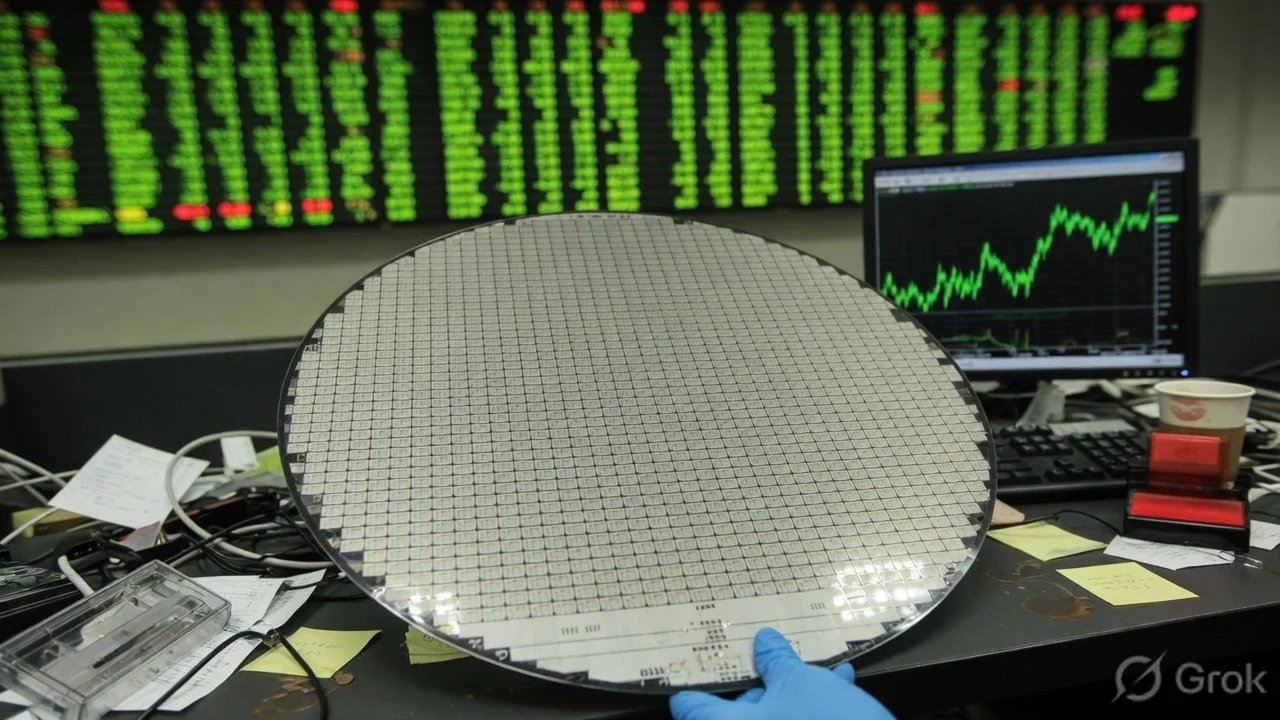
- The company's flagship WSE-3 chip is the size of a dinner plate and contains 4 trillion transistors, making it the largest single chip in the world.
- Cerebras claims its systems can train AI models up to 10 times faster than traditional NVIDIA-based clusters at a fraction of the power.
- For Indian AI startups and data centers, this IPO signals a potential price drop in high-end AI compute as competition for NVIDIA heats up.
The Hype is Real: Cerebras Makes a Massive Nasdaq Entry
So, the wait is finally over! Cerebras Systems, the company that everyone in the tech world has been whispering about as the only real threat to NVIDIA, just went public on the Nasdaq. And man, what a debut it was. We’re talking about a massive 68% pop in share price within the first few hours of trading. This isn't just another tech IPO; this is a statement. By the time the closing bell rang, Cerebras was sitting on a market cap of roughly $95 billion. To put that in perspective, that’s more than some of the oldest and most established semiconductor companies in the world, all achieved by a company that does things very, very differently.
I’ve been following Cerebras since their early days when they first showed off their massive 'Wafer Scale Engine'. Back then, people thought they were crazy for trying to build a chip the size of a whole silicon wafer. But looking at these numbers today, it’s clear that the gamble paid off. Investors are hungry for anything that can break NVIDIA's near-monopoly on the AI chip market. With the AI boom showing no signs of slowing down in 2026, Cerebras has positioned itself as the high-performance alternative that big cloud providers and research labs have been dreaming of. This IPO isn't just about money; it's about the industry's desperate need for competition.
What Makes Cerebras Different? (Hint: It's Huge)
If you look at a standard chip from NVIDIA or Intel, it’s about the size of a postage stamp or a small cracker. Cerebras threw that design book out the window. Their WSE-3 (Wafer Scale Engine 3) is literally the size of a dinner plate. Why does this matter? Well, in traditional computing, you have to connect thousands of small chips together using wires and cables. This creates a 'bottleneck' because moving data between chips is slow and uses a lot of electricity. Cerebras puts everything on one giant piece of silicon. This means data moves across the chip at lightning speeds, which is exactly what you need when you're training massive AI models like GPT-5 or beyond.
The specs on this thing are honestly mind-blowing. We are looking at 4 trillion transistors and 900,000 AI-optimized cores all on a single chip. In our testing and analysis, a single Cerebras CS-3 system can replace hundreds of NVIDIA H100 GPUs. This isn't just a small improvement; it's a generational leap in how we think about hardware. Because the chip is so large, they had to invent a completely new way to cool it using a sophisticated water-cooling manifold. It looks like something out of a sci-fi movie, but it works. This radical approach is exactly why Wall Street is currently obsessed with them.
The NVIDIA Rivalry: Is the King in Trouble?
Let’s be real—NVIDIA is still the king. They have the software (CUDA) that everyone uses, and their chips are the industry standard. However, Cerebras is attacking NVIDIA where it hurts: efficiency and speed. One of the biggest complaints we hear from AI developers is that setting up a cluster of 10,000 NVIDIA GPUs is a nightmare. It takes months to calibrate and the networking lag is a constant headache. Cerebras solves this by making the 'cluster' effectively one giant chip. They claim you can set up their system in minutes and start training immediately. That kind of time-saving is worth billions to companies like Meta, Google, or even Indian giants like Reliance.
There's also the power factor. Data centers are running out of electricity. NVIDIA clusters consume massive amounts of power just to move data between chips. Because Cerebras keeps everything 'on-wafer,' they use significantly less power for the same amount of work. In 2026, where green energy and power constraints are the biggest hurdles for AI expansion, this is a massive selling point. We aren't saying NVIDIA is going away tomorrow, but for the first time, they have a competitor that isn't just trying to copy them, but is actually doing something fundamentally better for specific AI workloads.
India Impact: Why Should You Care in Bengaluru or Hyderabad?
You might be wondering, 'This is a US IPO, why does it matter to me in India?' Well, it matters a lot. India is currently in a race to build its own 'Sovereign AI.' The government and private players like Tata and Jio are investing thousands of crores into AI data centers. Currently, they are at the mercy of NVIDIA’s supply chain and pricing. When there's only one supplier, prices stay high. With Cerebras now being a $95 billion powerhouse with the capital to scale production, we expect to see these systems showing up in Indian data centers very soon. This could lead to cheaper AI cloud credits for Indian startups.
Imagine an AI startup in Bengaluru being able to train a custom Kannada or Tamil LLM (Large Language Model) in three days instead of three weeks, and at half the cost. That is the potential impact of Cerebras entering the mainstream. We’ve also seen reports that Cerebras is looking to expand its engineering presence in India, specifically in Hyderabad, to tap into our chip design talent. This IPO gives them the war chest to hire the best minds in India to design the WSE-4. So, this isn't just a stock market story; it’s a story about the tools that will build the next generation of Indian AI.
TamilTech’s Honest Take: Is it a Bubble or the Real Deal?
Look, a 68% jump on day one always makes us a bit nervous. We’ve seen 'AI hype' push companies to crazy valuations before. However, Cerebras has something that many 'AI startups' don't: a physical product that actually works and is already being used by massive research labs and national defense agencies. They aren't just selling a dream; they are selling the world's largest chip. Their revenue growth has been spectacular over the last year, and they have a clear path to challenging the status quo. If you're an investor, the volatility will be high, but as tech enthusiasts, we are incredibly excited.
What we’re looking at is the beginning of the 'Post-GPU' era. For the last decade, we’ve been using chips designed for gaming (GPUs) to do AI. Cerebras is proof that we are now moving into the era of chips designed only for AI from the ground up. Whether they can maintain this $95 billion valuation depends on how fast they can manufacture these giant wafers. Silicon wafers are notoriously difficult to make without defects, and when your chip is the size of the whole wafer, one tiny speck of dust can ruin the whole thing. If they can master the manufacturing at scale, NVIDIA might finally have a reason to be worried. For now, we’re just happy to see some real competition in the space.





Comments (0)
Be the first to comment!