


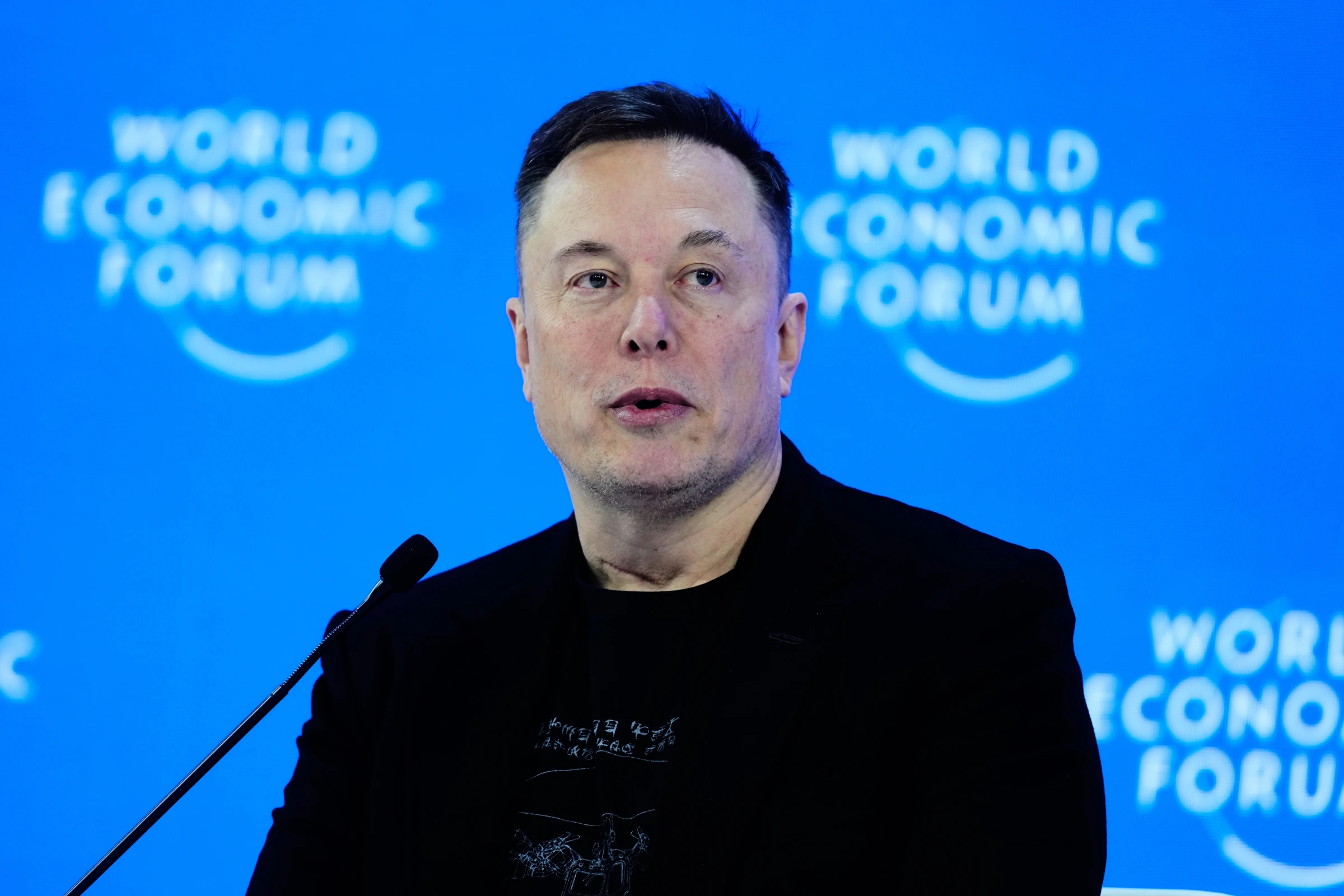
When Nvidia can't supply fast enough, Musk builds his own factory
Most tech companies — even the largest ones — buy their chips from TSMC, Samsung, or Intel Foundry. Building your own chip fabrication facility requires billions of dollars, extraordinarily complex equipment sourced from dozens of global suppliers, and years of operational expertise. It's not something companies do unless they have a very specific, very compelling reason.
Elon Musk has decided he has that reason. He's announced plans to build Terafab — a chip fabrication facility located near Tesla's existing headquarters and Gigafactory in Austin, Texas. It will be jointly operated by Tesla and SpaceX, both companies where Musk serves as CEO. The facility is designed to manufacture semiconductors in-house for use across all of Musk's ventures: Tesla's autonomous vehicles and Optimus robots, SpaceX's orbital data centers, and xAI's Grok AI system.
"That rate is much less than we'd like. We either build the Terafab or we don't have the chips, and we need the chips, so we build the Terafab," Musk said — as direct a statement of industrial necessity as you'll hear.
What Terafab is actually supposed to do
The scale of what Musk is proposing is genuinely ambitious. Terafab is designed to eventually produce a terawatt of computing power per year — with an intermediate milestone of 100 to 200 gigawatts a year of Earth-based computing power, plus an additional terawatt for SpaceX's orbital data center plans.
To put that in perspective: a terawatt of computing power is a number that doesn't really exist in the chip industry today. The entire global output of TSMC — the world's most advanced chip manufacturer — isn't in that territory. Musk is describing an industrial ambition that would require not just building a factory, but potentially building the largest semiconductor manufacturing operation on Earth.
The chips Terafab plans to produce will be at the 2-nanometer process node — the current frontier of semiconductor manufacturing, currently only available from TSMC and Samsung. This means Terafab isn't planning to make older, simpler chips. It's aiming at the most advanced process technology available.
Why Musk specifically needs chips — the demand he's trying to feed
Musk's companies have a genuinely unusual chip demand profile. Tesla's Dojo supercomputer — used to train the neural networks behind Full Self-Driving — requires massive AI training compute. The Optimus humanoid robot project needs custom inference chips. SpaceX's Starlink satellites and planned orbital data centers need space-hardened processors. And xAI's Grok competes directly with ChatGPT and Gemini, requiring the same scale of GPU compute that OpenAI and Google use.
Tesla currently sources chips from TSMC and Micron, and has an agreement with Samsung for production at Samsung's Austin facility. But Musk's assessment is that even with these arrangements, the supply isn't arriving fast enough to support the rate of development he wants across all these fronts simultaneously.
This is not just a Musk problem. Every major AI company — Google, Microsoft, Meta, Amazon — is dealing with GPU and AI chip shortages. Nvidia's H100 and H200 GPUs have had year-long wait lists. The difference is that most companies respond by placing larger orders. Musk is responding by proposing to build a factory.
Tesla and SpaceX running a chip fab together — how does that work?
The joint Tesla-SpaceX structure for Terafab is unusual. These are two separate publicly-traded and private companies respectively, with different shareholders, different missions, and different business models. Running a shared semiconductor facility raises questions about how costs, IP, and production allocation get divided between them.
That said, the technical rationale is clear. Tesla brings manufacturing expertise — it operates Gigafactories at scale and has experience with high-volume precision manufacturing. SpaceX brings the demand for space-grade chips and the engineering culture of building things nobody else is building. Together, they'd have enough combined chip demand to potentially justify the capital expenditure of a fab.
The location near Austin also makes logistical sense. Tesla's Texas Gigafactory is already there. Samsung's semiconductor facility in Taylor, Texas — where Tesla chips are currently made — is nearby. The Austin area is developing into a semiconductor manufacturing cluster in a way that would have been unimaginable a decade ago.
The skepticism — because this is Musk
Let's be real: Elon Musk has a well-documented history of announcing things on ambitious timelines and then delivering them significantly later than promised, or not at all. Full Self-Driving has been "one year away" for six years. Robotaxis were supposed to be everywhere by 2020. The Cybertruck launched years behind schedule.
Building a leading-edge semiconductor fab is a genuinely different category of challenge from anything Tesla or SpaceX has done before. TSMC took decades to reach its current capabilities. Intel has been trying to recover its manufacturing edge for years and is still struggling. Samsung's chip business has faced yield challenges. The institutional knowledge required to run a 2nm fab doesn't just appear because you have money and ambition.
That said: Musk has also delivered things people said were impossible. SpaceX landing and reusing orbital rockets was considered a fantasy before they did it. Tesla building the world's largest battery factories was considered implausible before Gigafactory 1. The pattern with Musk is not that the projects fail — it's that they take much longer and cost much more than announced.
What this means for India's semiconductor ambitions
India is in the middle of its own semiconductor push — the India Semiconductor Mission has attracted investment from Micron (for a chip assembly and test facility in Gujarat), Tata Electronics (for a fab in partnership with PSMC of Taiwan), and other players. The government's PLI scheme for electronics has been explicitly designed to reduce India's dependence on imported chips.
If Terafab succeeds, it adds another US-based chip manufacturing capacity to the global picture, which could reduce supply chain pressure globally. For India's AI ambitions specifically — the IndiaAI Mission and growing data center sector — more global chip supply means less competition for the GPUs and AI accelerators that Indian companies need.
The more interesting indirect effect: if Musk proves that a private company can build and operate a leading-edge semiconductor fab outside the traditional TSMC-Samsung duopoly, it creates a model that could inspire or validate similar efforts globally — including potentially in India as the country's semiconductor ambitions mature over the next decade.
TamilTech's take
The announcement of Terafab fits a pattern with Musk: audacious scale, credible underlying need, uncertain execution. The need is real — his companies genuinely need more chips than they can reliably source. The ambition is real — a terawatt of computing power is a legitimate long-term goal if you're trying to build AGI, autonomous cars, and orbital data centers simultaneously.
Whether Tesla and SpaceX can actually build and operate a 2nm semiconductor fab is a different question. This isn't impossible — it's extremely hard and extremely expensive. The companies currently doing it (TSMC, Samsung) have spent decades and hundreds of billions of dollars reaching their current capabilities.
What's worth watching: Terafab is announced, not funded, not under construction. The track record says add 3-5 years to whatever timeline Musk gives. But the underlying logic — controlling your own chip supply when the global market can't keep up with your demand — is sound industrial strategy, not fantasy.




Comments (0)
Be the first to comment!