


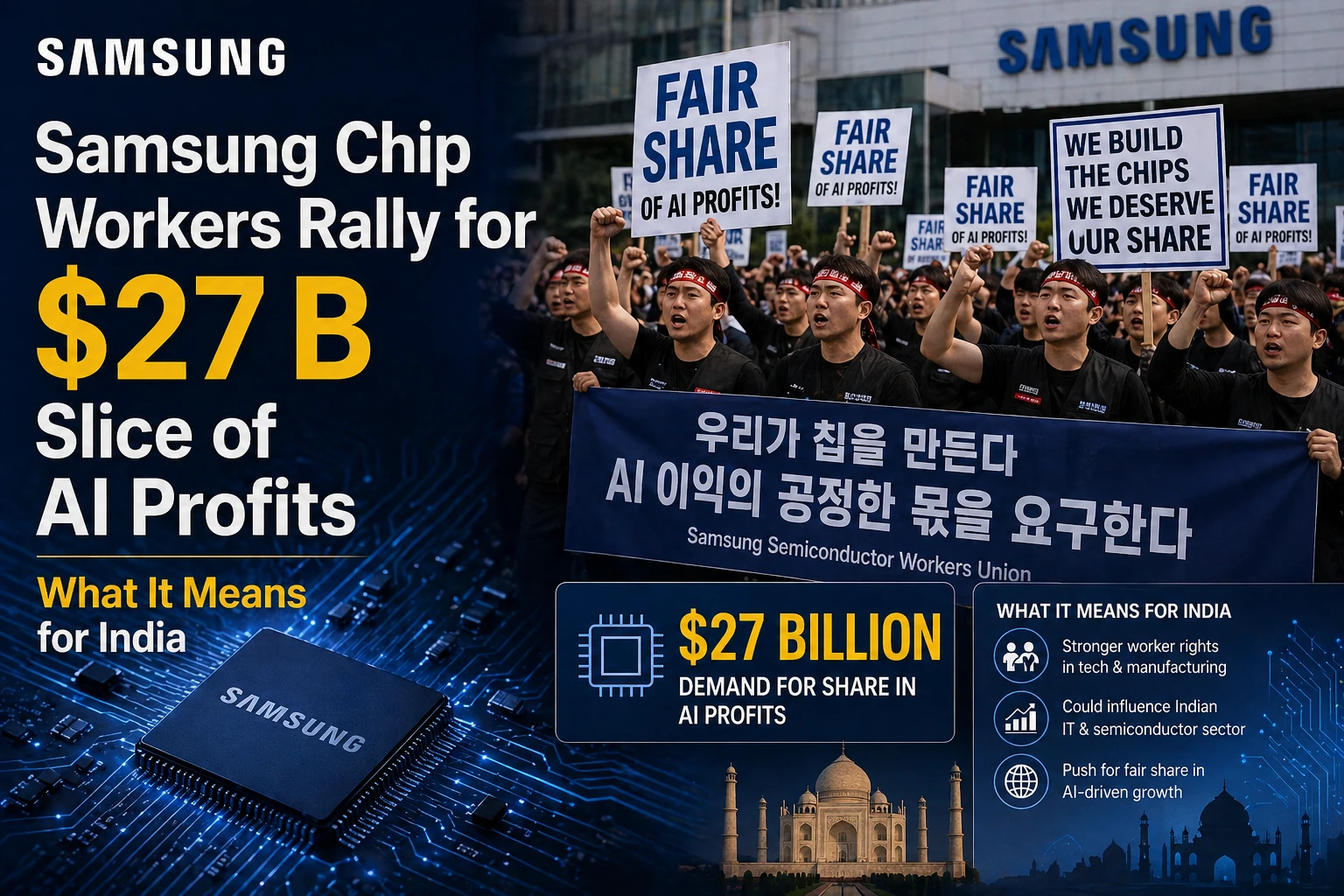
What happened?
On a rainy Tuesday in Seoul, roughly 30,000 Samsung Electronics employees from the semiconductor division marched to the company’s headquarters. Their demand? 15% of the operating profit that the chip business is raking in thanks to the AI surge. In raw numbers that’s about $27 billion – roughly $400,000 for each worker on the picket line.
Why the chip division is suddenly cash‑rich
Artificial‑intelligence workloads are gobbling up semiconductor capacity faster than any other segment. GPUs, high‑end CPUs and custom AI accelerators are selling at premium prices because companies like OpenAI, Microsoft and Google need more silicon to train massive models. Samsung’s foundry, which already supplies Apple’s A‑series chips, is now getting big orders for AI‑optimized dies. The result is a profit surge that dwarfs the company’s traditional handset earnings.
The numbers broken down
Samsung’s latest quarterly report showed the semiconductor division posting an operating profit of $180 billion. The workers’ 15% cut would therefore be $27 billion. Spread across the 30,000 rally participants, that’s $900,000 per person per year – a figure that eclipses the average Indian software engineer’s salary by a factor of ten.
India angle – why Indian techies should care
India’s AI startup ecosystem is exploding. Almost every new unicorn needs custom silicon, and many are already in talks with Samsung’s foundry. If Samsung bows to the union’s demand, it could set a precedent for higher labor costs in the chip supply chain. That might push Indian fab‑less firms to negotiate better terms for local design talent, or even accelerate the push for an indigenous semiconductor fab.
What does this mean for Samsung’s AI roadmap?
Samsung has publicly pledged to invest $30 billion over the next five years to expand its AI‑chip portfolio. A $27 billion profit‑share could force the company to re‑budget, possibly delaying some fab expansions. On the flip side, the publicity could boost Samsung’s brand as a worker‑friendly giant, attracting top talent in a market that’s currently starved of AI‑hardware engineers.
TamilTech’s take – the pros and cons
Pros: If Samsung agrees, the workers get a massive windfall that could improve morale and reduce turnover. It also shines a spotlight on the real money being made in AI chips, something Indian policymakers often overlook.
Cons: Higher labor costs could be passed down the supply chain, making AI‑chips more expensive for Indian startups. It might also trigger similar demands in other Samsung divisions, potentially destabilising the company’s cost structure.
What could happen next?
Samsung’s management has said it will “listen carefully” but hasn’t ruled out a counter‑offer. Expect a few weeks of high‑profile negotiations, possibly mediated by South Korean labor ministries. Meanwhile, Indian AI startups should start budgeting for a modest price increase on Samsung‑fabricated chips and explore alternative suppliers like TSMC or GlobalFoundries.
Bottom line for Indian readers
Even though the rally is happening half a world away, the ripple effect will be felt in Indian data‑centers, AI labs and even in the salaries of local chip design engineers. Keep an eye on Samsung’s next move – it could reshape the cost curve for AI hardware in India for years to come.




Comments (0)
Be the first to comment!