


Key Takeaways
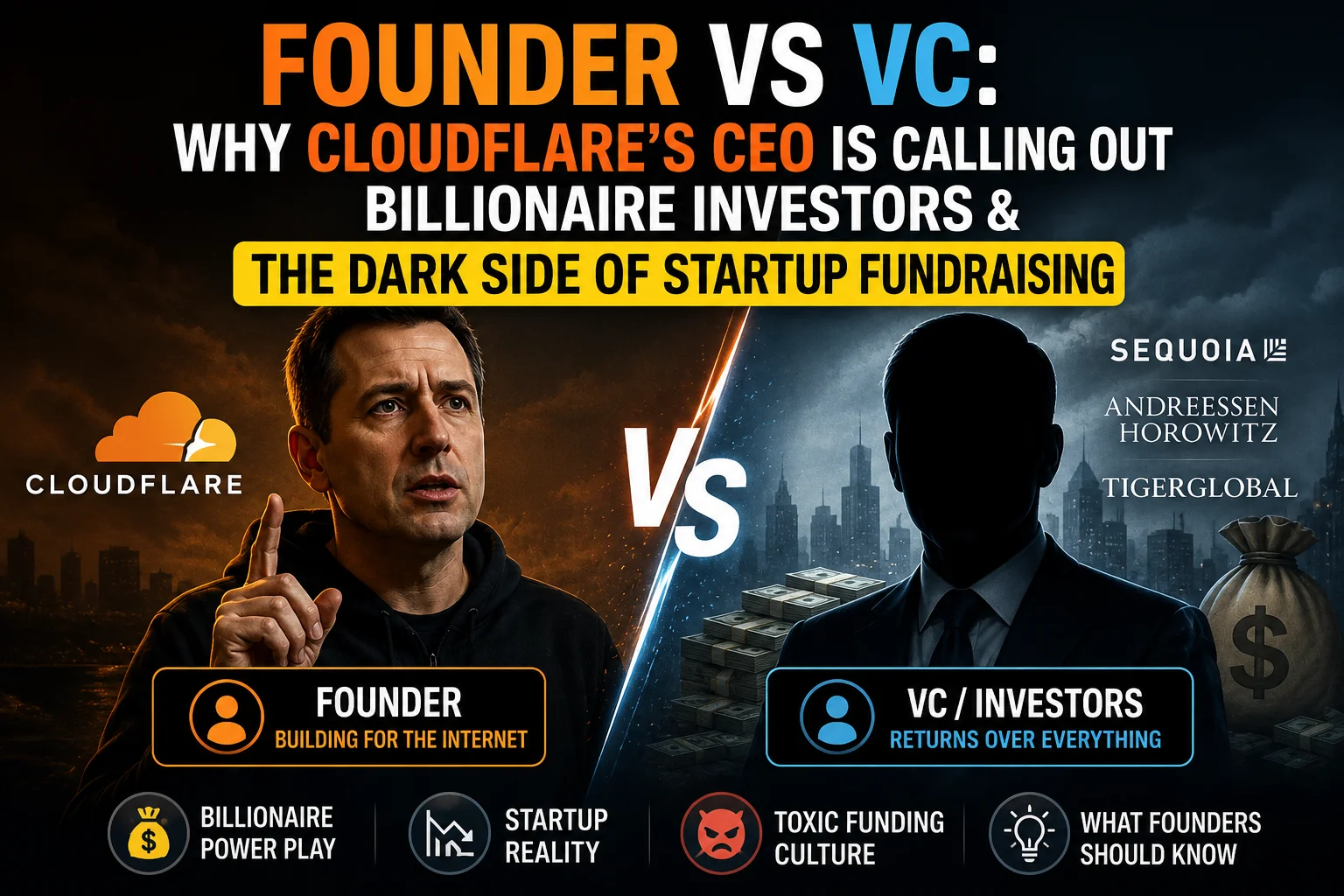
- Cloudflare CEO Matthew Prince has publicly criticized billionaire investor Vinod Khosla, highlighting a growing rift between founders and venture capitalists in 2026.
- Famous founders like Travis Kalanick (Uber) and Mark Pincus (Zynga) have shared 'horror stories' about being humiliated or manipulated during their early pitching rounds.
- The power dynamic in the 2026 tech ecosystem is shifting as founders demand more transparency and respect from institutional investors.
- For Indian entrepreneurs, this serves as a warning to vet investors as thoroughly as they are being vetted to avoid 'predatory' board control.
The Glitz, The Glamour, and The Ugly Truth
If you look at LinkedIn or tech news today in June 2026, it seems like every startup is raising millions and every founder is living the dream. But let me tell you, behind those smiling 'we are happy to announce' photos is a world of massive egos, brutal rejections, and sometimes, flat-out bullying. We’ve been tracking the recent wave of 'founder confessions' where big names are finally dropping the filter. It’s not just about the money anymore; it’s about the respect—or the lack of it—in the boardroom.
The latest spark in this fire comes from Cloudflare CEO Matthew Prince. He didn't just disagree with legendary VC Vinod Khosla; he went full 'public call-out' mode. This isn't just a Twitter spat; it’s a fundamental clash about how billionaires treat the public and the founders they supposedly support. Prince’s frustration mirrors what many young founders feel but are too scared to say: that some VCs act like they own the world just because they signed a check. In 2026, the 'founder-friendly' mask is slipping, and we are seeing what really happens when the cameras are off.
The Matthew Prince vs. Vinod Khosla Showdown
So, what actually happened? Matthew Prince took a very public stand against Vinod Khosla, specifically highlighting issues of billionaire entitlement. While the roots of their disagreement go back to Khosla’s infamous legal battle over beach access in California, Prince used it as a platform to discuss a broader problem: the 'god complex' some VCs carry into the tech world. Prince’s argument is that being a successful investor doesn't give you a free pass to ignore social responsibility or treat others with condescension.
This is a big deal because Khosla is a titan in the industry. Calling him out is a risky move for any CEO, but Prince has the leverage of a massive, successful company like Cloudflare. He’s basically saying, 'We don't need your approval anymore.' This represents a massive shift in 2026. Founders are no longer just grateful for the cash; they are looking at the character of the person behind the money. If you're a jerk, the world is going to hear about it.
Horror Stories from the Trenches: Kalanick and Pincus
It’s not just Prince. Travis Kalanick, the man who built Uber into a global giant, has been opening up about his early days. He’s described pitching to VCs who would literally laugh at his face or check their phones the entire time he was talking. One story involves an investor who told him Uber would never work because 'people aren't that stupid to get into a stranger's car,' only to beg for a piece of the pie a few years later. Kalanick’s takeaway? Most VCs don't have a vision; they just have a fear of missing out (FOMO).
Then you have Mark Pincus of Zynga. He’s shared stories about 'predatory' term sheets where VCs tried to strip him of his voting rights before the ink was even dry. He talks about the 'dark arts' of venture capital—where investors use confusing legal jargon to take control of a company away from the person who actually built it. These stories are a wake-up call. We often celebrate the 'funding round,' but we rarely talk about the founders who lost their companies because they trusted the wrong person with a checkbook.
The Indian Context: Why Desi Founders Need to be Wary
In India, the startup scene in 2026 is more mature, but the 'VC worship' culture still exists. We’ve seen it with several high-profile Indian startups where founders were pushed out by their boards. Whether it’s the pressure to show unrealistic growth or the demand for 'path to profitability' overnight, Indian VCs can be just as ruthless. TamilTech’s take on this is simple: just because an investor has a big name or a fancy office in Bangalore or Mumbai, it doesn't mean they are the right fit for your vision.
We are seeing a trend in 2026 where Indian founders are opting for 'Bootstrapping' or 'Revenue-based financing' to avoid the VC headache. They’ve seen the horror stories of their predecessors and are choosing slow, sustainable growth over the 'blitzscaling' madness that often leads to a loss of control. If you are pitching in India today, remember: you are interviewing them as much as they are interviewing you. Check their track record—not just the successful exits, but how they treated the founders of the companies that failed.
TamilTech’s Honest Take: The Power Shift is Real
At TamilTech, we believe this public airing of grievances is actually healthy for the ecosystem. For too long, VCs held all the cards. But in 2026, information is everywhere. A founder in Chennai can look up the reputation of a VC in Silicon Valley within seconds. The 'horror stories' shared by Kalanick and Prince serve as a manual for the next generation on what to avoid.
Our advice? Don't be blinded by the valuation. A high valuation with a toxic investor is a ticking time bomb. Look for 'smart money'—investors who actually understand the tech and won't panic the moment the market dips. The era of the 'Bully Billionaire' investor is slowly coming to an end, and it’s about time. Founders are the ones building the future; the investors are just the fuel. And as any driver knows, you don't let the petrol tank tell you where to steer the car.
What Happens Next?
Expect more founders to speak out. As the tech industry matures, the 'mystique' of venture capital is fading. We might see more 'founder-led' investment funds where the people giving the money actually know what it’s like to stay up at night worrying about payroll. For Matthew Prince and Vinod Khosla, this feud is likely just the beginning of a larger conversation about the ethics of wealth and power in tech. Stay tuned to TamilTech, because we’ll be right here to break down what this means for your startup journey.




Comments (0)
Be the first to comment!