


Key Takeaways
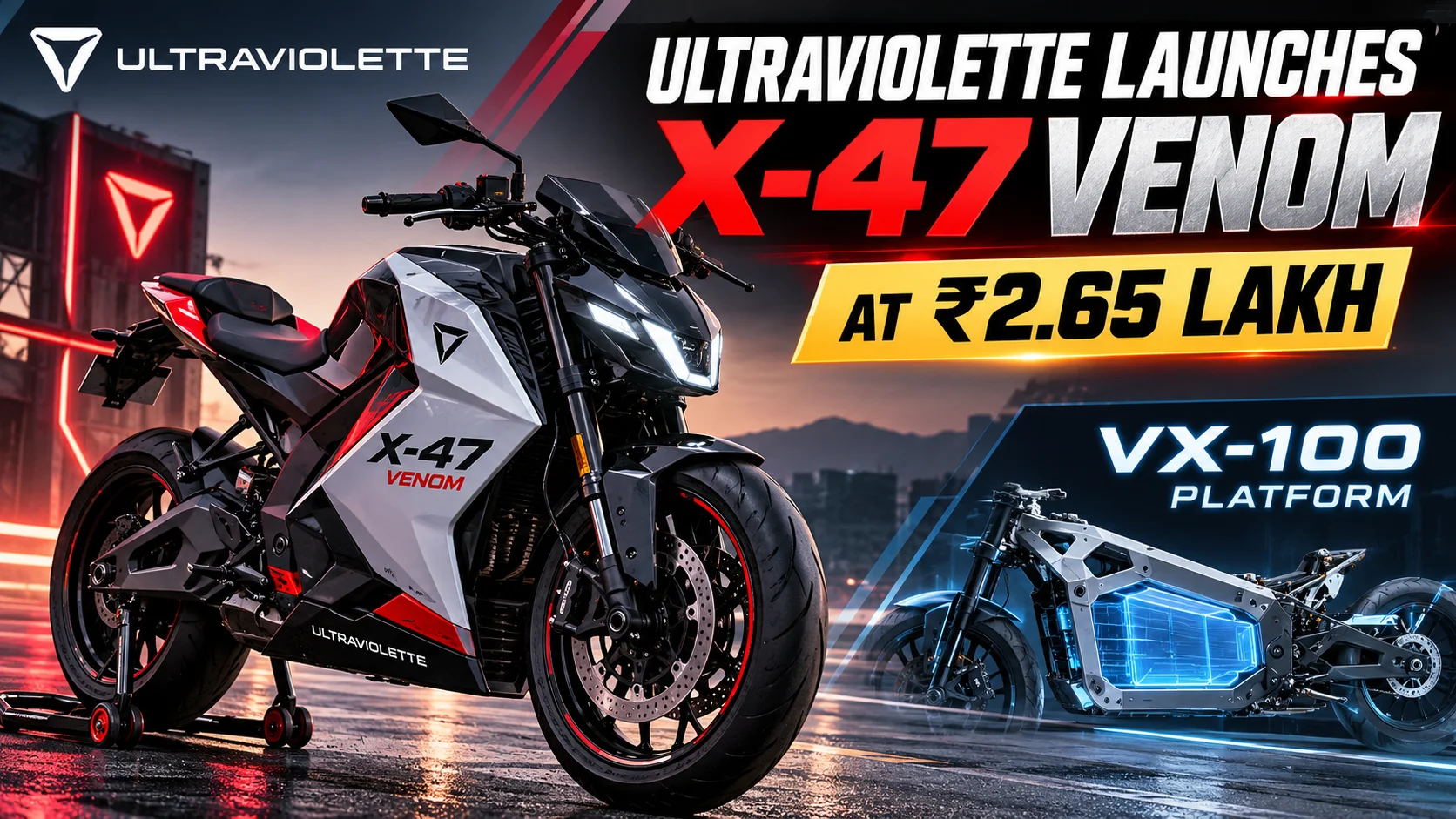
- Ultraviolette has launched the X-47 Venom electric motorcycle at an introductory price of Rs 2.65 lakh.
- The motorcycle debuts the startup's brand-new 100V VX-100 vehicle architecture.
- Customer deliveries across India are scheduled to begin in November 2026.
- The new platform aims to balance sustained high-speed performance with better thermal efficiency for Indian weather.
What just happened?
Bengaluru's own electric motorcycle maker, Ultraviolette Automotive, has pulled the wraps off its latest machine: the X-47 Venom. Alongside the new bike, the company introduced the VX-100 platform, a dedicated 100V architecture designed to power its next line of machines.
If you have been tracking the Indian two-wheeler space, you know Ultraviolette made its name with the F77. That bike showed everyone that an Indian EV could look like something out of an anime series and sprint like an angry cheetah on the highway. But it also carried a serious price tag that kept it strictly in enthusiast garages.
The X-47 Venom arrives with an introductory price tag of Rs 2.65 lakh. That is a noticeable repositioning. Deliveries are set to kick off right around the corner in November 2026, which means riders will not have to wait through years of production delays to see these on the road.
The announcement immediately caught the attention of riders who want a performance motorcycle without having to shell out luxury car booking amounts. It also marks a critical shift for the startup as it attempts to scale from a niche boutique builder to a higher-volume electric powerhouse.
How does this actually work?
At the center of this launch is not just the bodywork, but what sits underneath: the VX-100 platform. The name itself gives away the headline technical detail. It is built around a 100V electrical architecture.
To understand why voltage matters, think about smartphone fast charging. When phone makers wanted to charge batteries faster without turning your phone into an iron box, they tweaked the voltage and current balancing. On an electric motorcycle, stepping up to a 100V architecture works on a similar practical logic.
Higher operating voltage allows the powertrain to deliver the same power output while drawing lower current. Lower current means less heat buildup in the copper windings and battery cells. In a country where summer road temperatures routinely test the limits of electronics, keeping heat under check is half the battle won.
Lower current draw also allows engineers to use marginally thinner wiring harnesses. That reduces overall weight, cleans up the packaging inside the chassis, and leaves more room for structural rigidity and battery packaging. The company designed this platform to handle aggressive throttle inputs without throttling back performance due to thermal warnings after two quick highway sprints.
While full granular spec sheets for every internal component continue to roll out through dealership networks, the mechanical setup keeps Ultraviolette's aggressive posture intact. Expect an inverted front fork, a monoshock rear setup, and an aggressive riding triangle built for twisty weekend roads rather than sleepy office commutes.
What changes for people in India?
Step outside any metro metro station in Bengaluru, Chennai, or Pune, and the EV landscape looks almost entirely like scooters. You see an ocean of Ola, Ather, TVS, and Bajaj electric scooters zipping through traffic signals. They are practical, sensible, and great for buying groceries or carrying laptop bags.
Real electric motorcycles, however, have been painfully rare. A few commuter-oriented electric bikes entered the market over the last few years, but they mostly felt like standard commuter bikes with an electric motor swapped in. They lacked character, highway stability, and the thrills that petrol-heads look for in 250cc to 400cc machines like the KTM Duke or the Yamaha MT series.
The X-47 Venom lands squarely in that aspirational gap. At Rs 2.65 lakh, it sits above regular electric scooters and commuter bikes, but directly in the hunting ground of popular mid-capacity petrol sports bikes. For someone spending Rs 8,000 to Rs 10,000 a month on petrol for highway weekend rides and cross-town commutes, an electric sports bike with serious road presence becomes a practical consideration.
There is also the apartment living reality in India. Installing private EV chargers in residential complexes remains a bureaucratic headache with apartment welfare associations. A performance bike requires a dependable charging routine, whether through a standard 15A socket or dedicated public DC fast chargers springing up along highway fuel bunks.
Ultraviolette's ability to maintain real-world range under heavy throttle will determine how Indian riders use this machine. If riders can comfortably do a morning run from Bengaluru to Kolar or Chennai to Mahabalipuram and return without range panic, the X-47 Venom could convince traditional petrol loyalists to make the jump.
What should you do now?
If your finger is hovering over the booking button, take a breath and weigh your riding needs first. An introductory price of Rs 2.65 lakh is attractive for what the bike promises, but early-batch motorcycles always require patience.
First, evaluate where you live and park. Do you have dedicated access to a grounded 15A three-pin socket in your parking lot? If you live in an apartment where getting permission for a socket requires three committee meetings and a signature campaign, sort that out before putting down money.
Second, check Ultraviolette's service and showroom footprint in your city. Electric powertrains have far fewer moving parts than petrol engines, meaning you do not have engine oil changes or spark plugs to worry about. However, suspension tuning, brake pads, software patches, and tire changes still need accessible service support.
If you already own an electric scooter for daily errands and want a dedicated weekend machine that does not burn expensive high-octane petrol, keep a close watch on initial showroom test-ride slots opening ahead of the November 2026 delivery window. Getting into the saddle will tell you far more about the posture and ergonomics than any spec sheet ever could.
What should you watch out for on the road?
Electric motorcycles face unique challenges when taken outside city borders. While quick highway blasts feel effortless on an electric platform, sustained long-distance touring across Indian national highways requires a dependable fast-charging network. If you plan weekend rides to highway dhabas or hill stations, you have to map out working DC fast chargers along the route, because running out of battery in the middle of a remote bypass road is entirely different from pushing a petrol bike to a nearby pump.
For most Indian motorcycle buyers who treat their two-wheeler as a long-term asset, battery degradation under scorching summer conditions remains a very legitimate question. Ultraviolette claims the VX-100 architecture manages thermal loads far better by drawing less current, but long-term battery health in real-world traffic jams with zero airflow will be the true test. Riders will want clear details on battery replacement costs and warranty coverage before treating this as their sole primary vehicle.
At Rs 2.65 lakh introductory pricing, the X-47 Venom knocks right on the door of established 300cc to 400cc petrol favorites from manufacturers like KTM, Royal Enfield, and TVS. If early deliveries starting in November 2026 prove reliable and build quality holds up over broken monsoon roads, it will force traditional manufacturers to rethink their electric roadmaps, moving beyond utilitarian city commuters toward full-blooded performance machines that youngsters actually dream of riding.





Comments (0)
Be the first to comment!