


Key Takeaways
- JSW has built a Technology Centre in Bengaluru to R&D EV-grade high-tensile steel, a push that could cut India's dependence on imported auto steel.
- JSW Engineering is investing in battery-grade materials and cobalt-free cathodes, which would ease lithium-ion imports from China and put downward pressure on domestic EV battery costs.
- Upgrading existing mills to automotive crash-safety grades would give Tata Motors and Mahindra Electric a domestic tier-1 steel supply chain.
- In-house work on cobalt-free cathodes and rare-earth-free magnets would make JSW a backbone for India's critical-mineral autonomy.
- Auto demand is cyclical. A global construction slowdown can still hit JSW's steel-asset valuations, and thinner auto margins may not fully replace steel cash flows.
From hoppers to highways: JSW's steel-to-EV bet
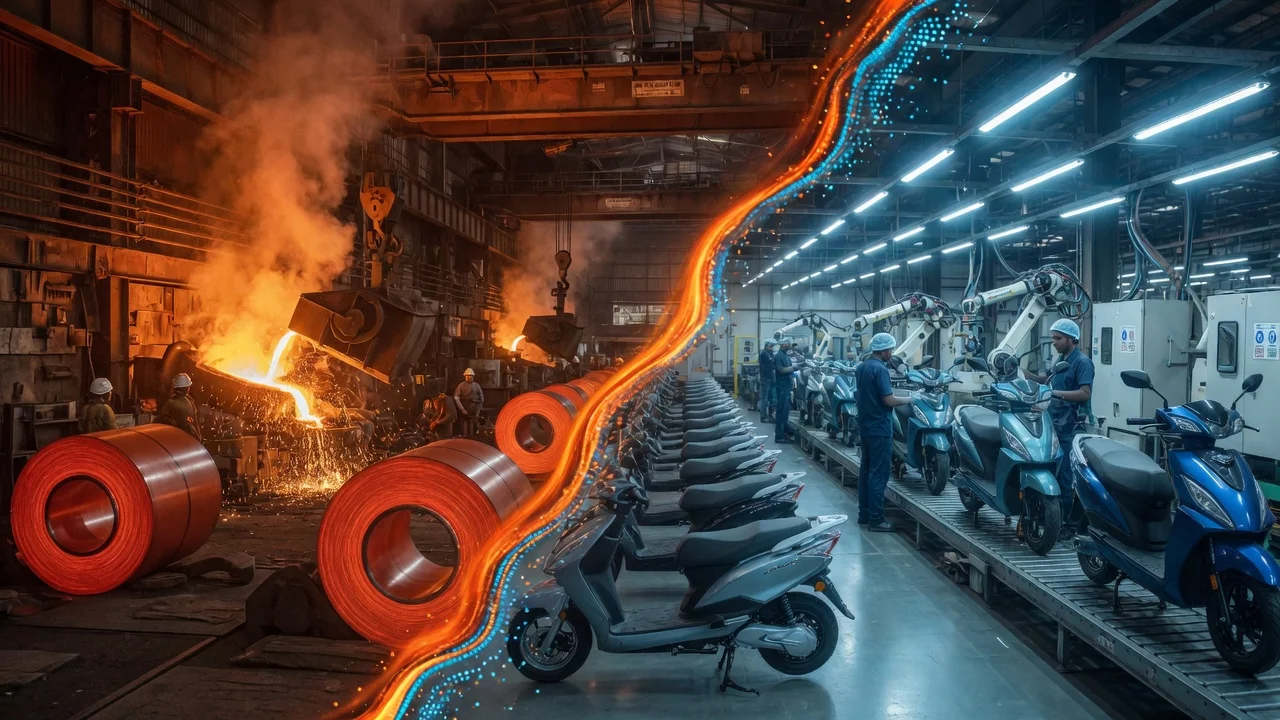
JSW Group executive chairman Sajjan Jindal spent decades building a steel empire. He is now pushing that portfolio into automotive and electric-vehicle components. India is on track for more than 3 million automotive sales in 2026, with light EV penetration heading into double digits. Miss that wave, Jindal's assessment goes, and JSW's integrated steel model gets pushed to the margin.
The group's roots sit in 1980s thermal power, a 1989 real-estate entry in Salem, then steel consolidation in the 2000s. A 2022 capex plan paired JSW Steel with automotive-grade mills. On the 2026 timeline it commissioned about 1.2 million tonnes a day of capacity at Hosur and launched a high-strength steel (HSS) line aimed at AIS crash norms. A Nagpur integrated unit, in the tens of millions of tonnes, is piloting EV-grade plate steel with thermal-efficiency upgrades.
Rebuilding India's EV supply chain: the JSW Technology Centre
The Bengaluru JSW Technology Centre (JTC) started in 2021 and expanded into an EV research facility in 2024. The brief is EV-grade high-tensile steel. India still imports a large share of specialised auto steel from Taiwan, Japan and China. JSW's R&D team is targeting 2200 MPa tensile grades and thinning plate from about 2.0 mm to 1.2 mm — enough, they say, to cut vehicle weight by around 7%, which matters once you electrify the powertrain.
Localising Docol-class and other proprietary grades is how they plan to cut that import bill. A first commercial batch is slated to fill the order book in 2026. JSW has been a supplier into Tata's ecosystem and is now also a competitor. TRIP-assisted and TWIP grades already showed up heavily in the Bharat Stage VI transition.
Battery-grade materials: JSW Engineering's next leg
Subsidiary JSW Engineering is putting money into lithium processing and battery materials. A Coimbatore lithium hydroxide plant is planned for commissioning in 2026, aimed at vanadium redox-flow batteries and NMC cathodes. Downstream, a cathode active-material plant is on a greenfield track after a 2024 pilot produced cathode slurry.
The same window covers cobalt-free cathodes and rare-earth-free magnets. India's lithium-ion component imports from China have surged over the past decade. JSW has talked up a clean cathode polymer around 1200 mAh/g and an 8% cost cut on cobalt-free chemistries in 2026 data. For long-term mineral autonomy, that is the structural piece, not a side bet.
Auto tier-1 supply: crash safety to compliance
If existing mills are upgraded to automotive crash-safety grades, Tata Motors and Mahindra Electric get a domestic tier-1 chain. Tata shop floors already use JSW HSS and HSS-T for pedestrian-impact management. Mahindra has signed a component supply agreement for an electric SUV still in R&D.
On logistics, JSW has explored shared warehousing with Asian Paints and Ashok Leyland, and is seeding supply nodes in Hosur, Bellary and Jamnagar. Auto steel is already a notable slice of the Indian market; 2030 is the larger-share target. Local tier-1 dominance is how they want to smooth year-on-year revenue.
Critical minerals and import substitution
Battery materials are meant to cut lithium imports from China. Estimates put India's EV battery import bill in the billions of dollars by 2025; JSW's localisation plan is aimed at a structural reduction, not a rounding error.
Rare-earth-free magnets sit inside India's Critical Mineral Mission. After a 2024 rare-earth policy draft pushed domestic processing, JSW's Bhubaneswar unit tested alternatives to neodymium magnets and increased hard-ferrite powder use. Hybrid magnet grades could scale into wind turbines and EV motors.
Risks and the cyclical trap
Auto demand is cyclical. A global construction slowdown still hits steel-asset values. Steel margins have run around 20–25%; automotive closer to 5–6%. EV components may need a two-to-three-year runway to breakeven. Global overcapacity can erode steel prices faster than auto volumes cover them. JSW's net debt-to-EBITDA sat around 3.2x in 2023–24; an EV bet raises capital intensity further.
If aggressive rate cuts in the US restrain European design revenue, JSW's auto exports weaken. And if OEMs stay locked into LG Energy Solution and CATL cells, JSW still has to close a quality-versus-cost gap. Third-party validation is not optional.
What this means for India's mobility economy
India's auto-steel import bill runs into hundreds of billions of rupees. Filling that from domestic JSW capacity is real import substitution, and the group is a Make in India / PLI beneficiary. Automotive is about 35% of the 2026 capex plan — a directional signal, not a footnote.
Public commentary has also pointed at EV financing tied into UPI and banking rails, and at using logistics networks (including Flipkart-linked delivery) for last-mile component movement. Cost-effective drivetrain parts would matter most in Tier-2 and Tier-3 electric two-wheeler markets.
Honest take: ambitious or overreach?
Jindal's bet is audacious. Steel cash flows will have to subsidise auto ambitions. If domestic EV adoption stalls, debt service gets harder. The 2026 tape still points to double-digit two-wheeler EV penetration and mid-teens in electric three-wheelers. Over a longer horizon, battery-grade steel supply is non-negotiable for India's auto sector. Export margins to Turkey, Iran or South Korea are a weaker moat than a captive Indian auto ecosystem.
The downside can be severe. JSW does have balance-sheet depth and land-secured plants to ride a cycle. If auto revenues reach a meaningful hundreds-of-millions-of-dollars mark by 2027, the multiple can re-rate. Until then, investors will watch whether the steel cash cows actually fund an EV growth engine — or just a more expensive steel company.
Where the bet shows up
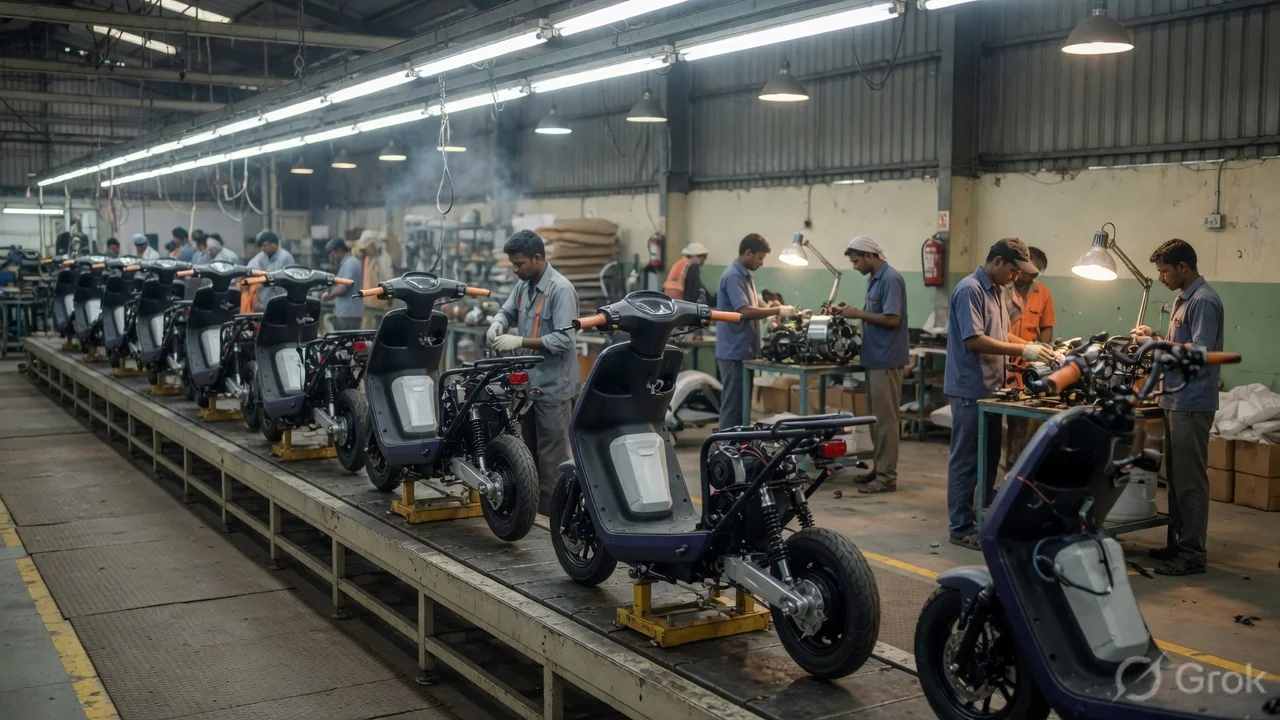
- Two-wheeler clusters: Copper and aluminium die-cast units in Tamil Nadu and Telangana supplying EV motor housings.
- Commercial vehicle parks: Lithium iron phosphate cells from JSW Engineering into battery-swapping stations.
- Passenger EV platforms: Co-development agreements aimed at 2027 launches.

Comments (0)
Be the first to comment!